Live Dealer Roulette in New Zealand: 2026 Rules
 Available in US
A practical guide to licensing, table access, mobile play, roulette odds and the costs of different stakes.

Table of Contents
- New Zealand’s 2026 Licensing Transition for Live Roulette
- Why Live Roulette Is Rarely Available in Free Play
- How Online Casinos Deliver Live Roulette
- What the Live Roulette Dealer Brings to the Table
- Playing Live Roulette on a Smart Device
- Roulette Results, Systems and the House Edge
- European and American Live Roulette: The Edge Difference
- Low-Stakes Roulette and the Cost of a Strategy
- Live Roulette Apps: Tips for the Video Table
- Can a System Guarantee a Win at Live Roulette?
New Zealand’s 2026 Licensing Transition for Live Roulette
Live dealer roulette in New Zealand is entering a new regulatory period in 2026. The change is not a switch from unrestricted local licensing to a Kiwi-specific licence: New Zealand did not previously have a domestic online casino licensing system, and it does not issue a separate licence for Kiwi players. Instead, the Online Casino Gambling Act 2026 establishes the country’s first domestic framework for online casino gambling, including live dealer tables.
The Act took effect on 1 May 2026. It creates a transitional period before the new licensing regime is fully applied. Online casinos that were already serving people in New Zealand before that date may continue operating during the transition, subject to the Act’s provisions. The key operator deadline is 1 December 2026: after that date, only approved operators may legally accept New Zealand players under the new regulations. The Act provides for a maximum of 15 licences across the online casino sector, with live dealer tables included in that category.
Choosing live dealer roulette in New Zealand means finding an option that suits your preferences and offers clear information to consider. This list provides a concise reference for reviewing the available details.
License: Malta Gaming Authority, licence no. MGA/B2C/394/2017 N1 Casino lists a Malta Gaming Authority licence, number MGA/B2C/394/2017.
License: Curaçao Gaming Authority, licence no. OGL/2024/165/0185 BitStarz lists a Curaçao Gaming Authority licence, number OGL/2024/165/0185.
License: Tobique Gaming Commission, licence no. 0000064 Neospin lists a Tobique Gaming Commission licence, number 0000064.
Payout speed: 1-3 business days Lamabet lists a payout speed of 1–3 business days.
License: Tobique Gaming Commission, licence no. 0000091 7Bit Casino lists a Tobique Gaming Commission licence, number 0000091.
License: Tobique Gaming Commission, licence no. 0000002 Ricky Casino lists a Tobique Gaming Commission licence, number 0000002.
License: 07017519840 · Payout speed: 1-3 business days Zotabet lists the licence identifier 07017519840 and a payout speed of 1–3 business days.
License: Malta Gaming Authority, licence no. MGA/B2C/370/2017 Play Grand lists a Malta Gaming Authority licence, number MGA/B2C/370/2017.
Payout speed: 1-3 business days Wintino lists a payout speed of 1–3 business days.
That cap is sector-wide, not a separate allocation for roulette. A live dealer casino offering roulette does not fall into a distinct licensing class simply because its tables use live dealers. Live tables sit in the same online casino licence category as online pokies and digital table games. For Kiwi players, the practical change is therefore about which operators can lawfully continue serving the market, not about a separate roulette permit.
The transition also means the date alone does not establish the status of every site. Operators that were active before the Act began may continue during the transition, while operators without a licence application must stop serving New Zealand players by 1 December. Sites with an application pending may continue without advertising until the Department of Internal Affairs reaches a decision. If an application is declined, the provider must leave the market. The rules distinguish between those situations; treating every offshore site as either automatically approved or automatically barred would obscure the terms that matter.
This is a change from the previous position. Before the new Act, online casinos could not be based in New Zealand, and offshore online casino services were not licensed or supervised by a New Zealand regulator. The new framework does not make offshore access disappear during the transition. Kiwi players are not prohibited from accessing offshore platforms, but access should not be confused with local oversight. In the earlier arrangement, a customer wagering with an offshore site had no domestic government recourse.
For live roulette online, that distinction is material. A site may be accessible from New Zealand without holding a New Zealand licence. During the transition, some operators may be continuing under transitional provisions, while others may need to stop at the deadline. An offshore licence from a recognised gambling body can indicate that the operator is regulated somewhere, but it is not the same as approval under New Zealand’s new system. The relevant status depends on the operator and its position under the domestic transition.
A careful check therefore has two parts. First, establish whether the offshore site is regulated by a recognised gambling body and identify the regulator named by the operator. Second, confirm the operator’s licence status with the Department of Internal Affairs. That confirmation matters particularly as the December deadline approaches, because the legal position depends on whether the provider is approved, has an application pending, or must cease service. A logo or a general claim of regulation does not resolve that distinction.
The limit of 15 licences also gives the transition a defined shape. It does not mean that every currently accessible live roulette dealer casino will remain available, nor does it identify which operators will ultimately receive approval. The Act sets a maximum number of licences; each provider’s status has to be assessed individually. The full licensed regime is expected to become operational in 2027, so the transition period and the longer-term system should not be treated as the same stage.
Attention: After 1 December 2026, only approved operators may legally accept New Zealand players under the new regulations.
For players comparing live dealer roulette in NZ, the main decision point in 2026 is thus regulatory status, not a special national roulette licence. Offshore platforms remain accessible, but their accessibility alone says nothing about New Zealand approval or domestic recourse. The 1 December deadline marks the point when only approved operators may legally accept Kiwi players under the new rules; until then, transitional provisions determine which existing services may continue.
Why Live Roulette Is Rarely Available in Free Play
Free live dealer roulette is an unusual combination: it offers a live table experience without charging the player to take part. The difficulty is on the casino’s side of the arrangement. A live dealer table has operating costs, including the resources needed to run it, whether or not players are wagering. That makes a no-cost version harder to sustain than a game that does not require a staffed live table.
For that reason, live dealer games are typically not available for free play. The limit is practical rather than mysterious: a casino bears costs to keep the table operating, while free play does not produce wagers from participating players. The format therefore tends to be offered as a paid game rather than as a standing practice mode.
The wording around free roulette can blur the distinction between different products. A casino may offer roulette without real-money wagering, but that alone does not establish that the game is live. Free online roulette can refer to a game that runs without a live dealer table. Conversely, a live dealer game can be accessible through an online account without being free to play. The important distinction is whether the game is genuinely live and whether participation requires a wager.

A “fun mode” label does not settle that question either. It describes an intended use, not necessarily the source or format of the game. A no-cost roulette option may provide a way to explore a game interface, but it should not automatically be treated as free live dealer roulette. The two experiences may look similar at a glance while differing in what is being provided.
The same caution applies to a live dealer roulette challenge. A challenge can describe a feature, promotion or activity, but the word does not mean that the underlying live table is available without cost. The relevant terms are the conditions of participation: whether a wager is required and whether the game is actually presented as live. Without those details, “free” is a label, not a clear description of the offer.
This matters because a free version is often expected to serve as a direct substitute for the paid product. In live roulette, that expectation is not reliable. Since operating a live table carries significant costs for casinos, a free mode is not the normal way the live format is made available. A free roulette game may still be useful for familiarising oneself with general roulette choices, but it does not necessarily reproduce the live product.
Nor does “live dealer free roulette” become a different category simply because the phrase is arranged differently. The underlying test remains the same: is there a live dealer table, and can it be used without placing a wager? When both conditions are required, availability is limited. A no-cost roulette option that satisfies only one condition is not the same thing.
- Check if the game is genuinely live
- Verify if participation requires a wager
- Separate the game type from the cost
- Assume “fun mode” means live dealer
- Mistake a challenge for free access
- Treat a free game as a live table
A sensible comparison therefore separates three points: the game is roulette, the game is live, and participation is free. A product may meet one or two without meeting all three. A free roulette game may not be live; a live table may require wagering; and a label suggesting a trial or challenge may leave the actual conditions unstated. Treating these as separate checks avoids mistaking a free game for a free live table.
The cost structure also explains why the free option, where present, should not be assumed to remain available indefinitely or in every casino. The cost of operating a live table does not disappear when a player is not wagering. Free access would need to be supported by the casino in some other way, so it is not equivalent to simply opening a cost-free practice screen. No fixed rule says that every casino must provide such access, and the general pattern is the opposite: live dealer games are typically not offered for free.
For Kiwi players looking for live dealer roulette free play, the practical expectation should be modest. Free roulette may be available in some form, but free access to the live dealer format is rarely the standard offer. The distinction is not semantic. It determines whether the no-cost option actually includes the live table or only a separate roulette game.
How Online Casinos Deliver Live Roulette
Online live roulette connects a remote player to a game taking place at a physical location. The casino streams the session from a dedicated studio or a casino based in a particular country, so play takes place in real time rather than being generated entirely by software. The screen is the link between the online table and the player.

That distinction defines the format. In a standard digital roulette game, the result is produced within the game software. With live dealer roulette, the online casino carries a video feed of an active table, and the game proceeds as the live session unfolds. The video is not merely decorative: it shows the ongoing game that players are joining.
A typical session combines the broadcast with an online interface. The stream presents the table, while the casino’s interface lets players take part remotely. This is how live roulette online casinos make a physical game available across distance: the studio or casino hosts the action, and the online service provides access to it. The precise appearance of the interface can vary, but the central arrangement remains the same.
The location of the broadcast does not have to be in New Zealand. A live game may originate from a studio or a casino in another country and still be offered through an online casino to Kiwi players. The important feature is that the game is being conducted live at its source and delivered over video, allowing play to happen alongside the real session.
This format can be understood as two connected parts: a live table at the broadcast location and an online service that carries the feed to players. The table supplies the real-time game; the digital interface provides the remote point of access. Neither part makes the game a prerecorded video. A recording may show roulette, but it cannot support play in step with a session that is happening now.

The same arrangement applies across live dealer games, including roulette: a broadcast comes from a studio or country-based casino, and players participate remotely while the session is under way. For anyone comparing an online casino live dealer roulette table with a software-only version, the meaningful difference is therefore the source of the action. One is presented through a live video connection to a real game; the other is run within the software itself.
This also clarifies what “online” means in this context. The roulette table is not transported into the player’s home, and the dealer is not a digital character generated by the interface. The game remains at its broadcast location. The online casino makes that distant session accessible through its live video format.
Live video links the physical session to remote play; it does not change where the game is conducted. That is the basic delivery model behind live dealer roulette online: a real table at a studio or casino, a live feed, and an online interface through which players join the session as it happens.
What the Live Roulette Dealer Brings to the Table
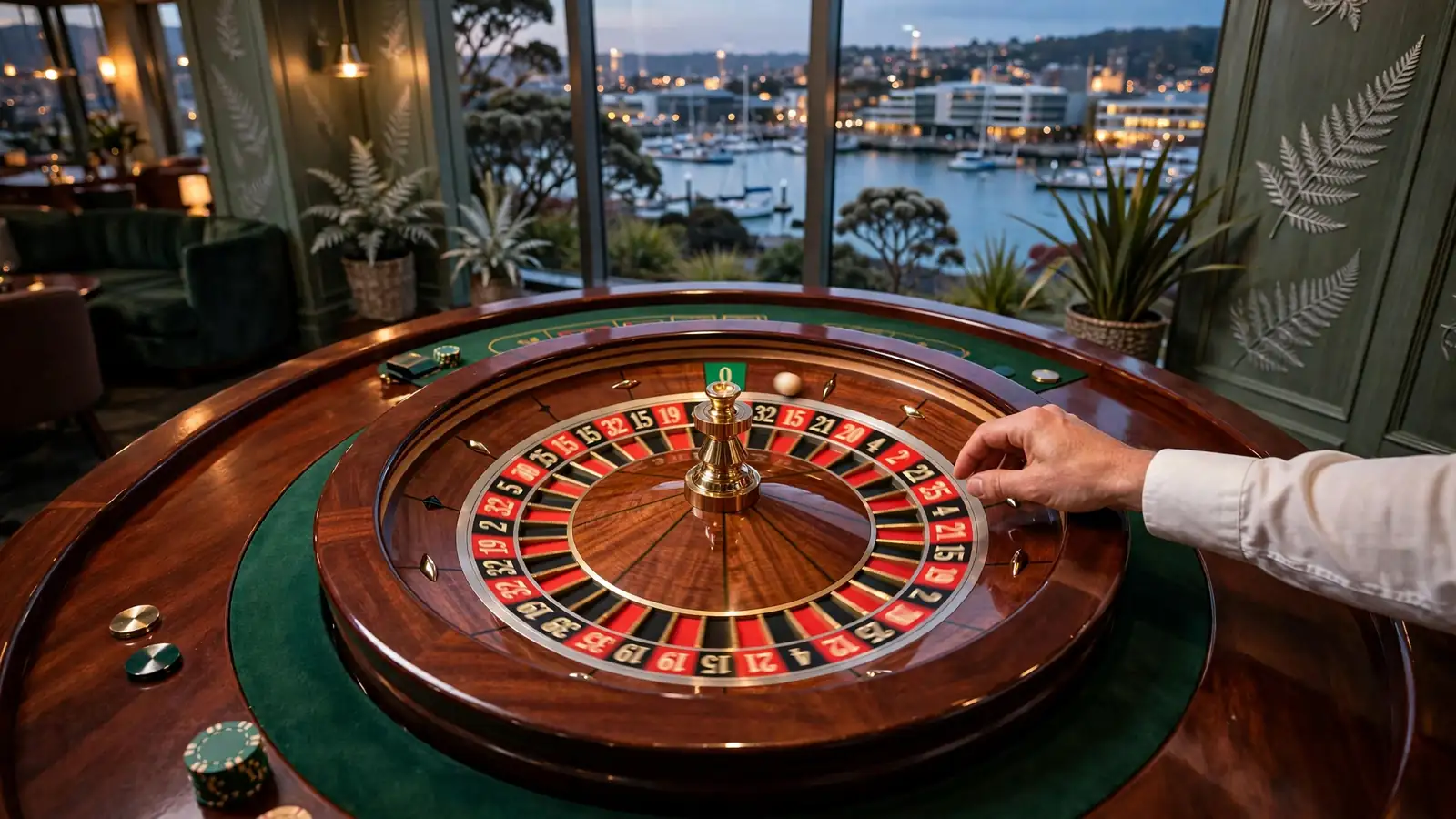
A live roulette dealer is more than a voice attached to a game screen. The table has a professional dealer and a physical roulette wheel, with the action shown through live video. That changes what is visible: the game is presented as activity at a real table, rather than as an entirely digital sequence of results.
The wheel is the central piece of equipment. Its physical presence distinguishes live roulette from a digital table interface, where the wheel and its movement are represented on screen. In a live game, the dealer is working at the table and players can watch the action as it unfolds. The video does not make the outcome predictable; it makes the process visible.

The dealer’s role is to conduct the table and keep its sequence understandable. Players see a professional handling the game rather than interacting only with buttons and animations. That human presence can make the experience feel more immediate, but it does not alter the rules or the financial terms of a bet. A courteous dealer is not a better set of odds; personality and probability are separate line items.
Interaction is another difference. Live dealer games use a video feed that lets players communicate with professional dealers. The degree of interaction depends on the game’s interface, but the defining point is that the dealer is part of the live session, not a prerecorded character. Players can follow the table while placing their bets through the game interface.
The distinction between watching and controlling matters. The dealer operates the physical table; players take part remotely through the online game. The video provides a shared view of the dealer and equipment, while the interface handles each player’s participation. It is therefore a combination of physical activity at the table and digital input from the player.
Cards belong to the wider live-dealer format, not to roulette itself. Live casino games may use real cards as well as real wheels, depending on the game being played. At a roulette table, the wheel is the relevant physical equipment; card handling is not part of roulette’s procedure. This separation helps explain what “live dealer” means without treating every live table as the same game.
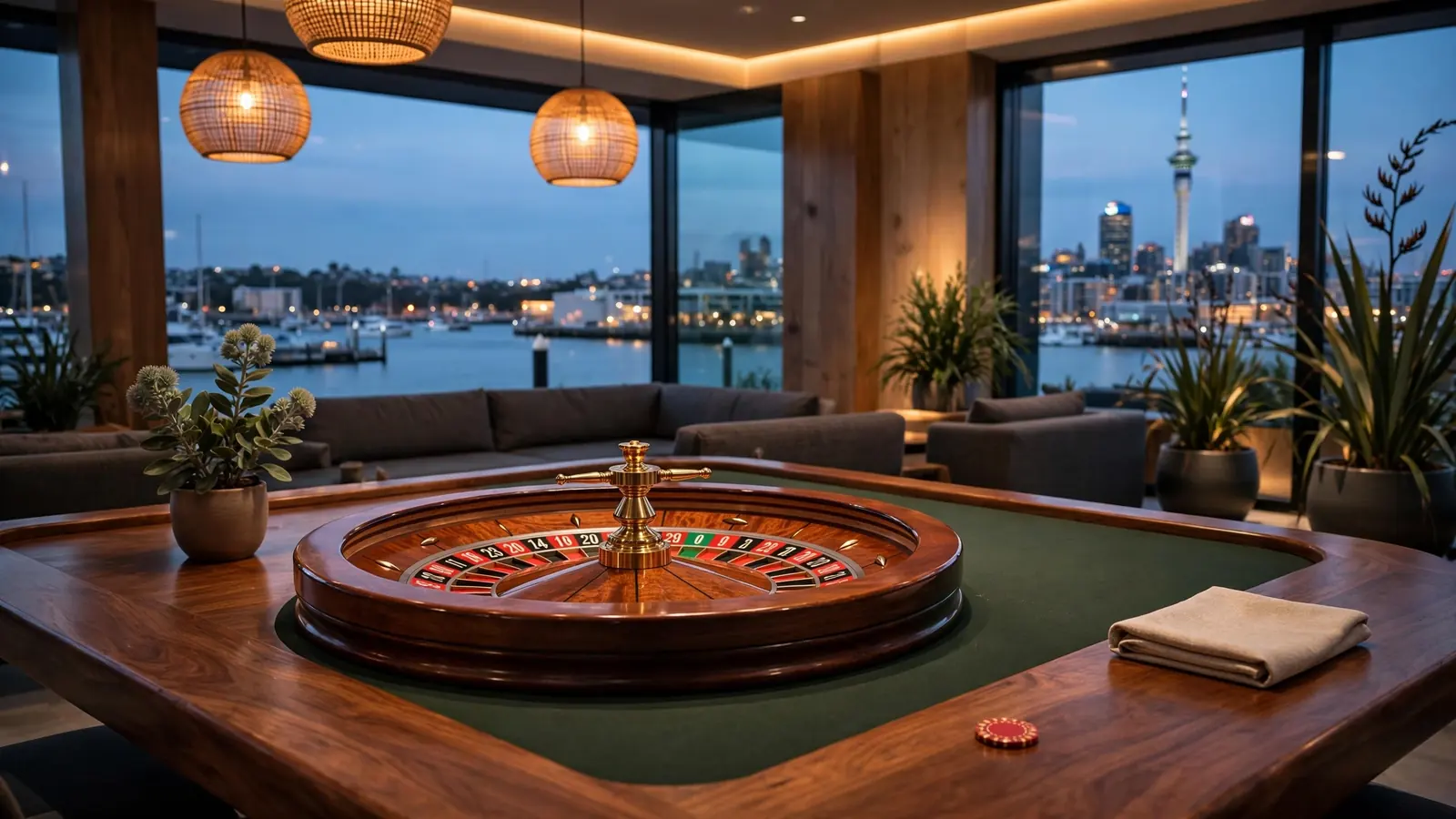
For someone comparing a digital roulette display with a live table, the difference is not simply visual polish. A live roulette dealer brings a person, a physical wheel and direct interaction into the session. The video shows the table in operation, while the player remains at a distance and participates through the interface. That is the practical meaning of a roulette game with a live dealer: real equipment and a professional conducting play, presented to remote players in real time.
Playing Live Roulette on a Smart Device
A smart device makes live roulette accessible through a compact screen, but it does not remove the technical uncertainty attached to an online game. A specialist review has noted that live dealer games can encounter technical problems from time to time. The point is practical: a session depends on the game remaining accessible, and an interruption can affect the experience while play is in progress.
The device is only one part of that arrangement. Access also depends on the casino’s service and the connection between the device and the game. A problem may therefore arise without indicating that the roulette table itself has changed. The distinction matters when a screen stops updating or a session becomes unavailable: a technical interruption is not evidence of a different result or a change in the game’s rules.
Mobile access also puts more of the session on a small interface. Controls, game information and the live image have to share limited screen space. That is a matter of visibility and handling, not a different form of roulette. The physical game remains the same; the device is the point through which it is viewed and used.

A live session is less forgiving of interruption than a page that can simply be reopened later. Betting takes place within the live game, so a disruption during play can leave the user uncertain about what the screen has registered. No general claim about how often this occurs can be made from a report of occasional technical problems. The reasonable conclusion is narrower: live play on a smart device can be interrupted, and the possibility belongs in the assessment of the format.
This also separates device suitability from the promise of an app. An app or mobile site may provide access, but neither label guarantees uninterrupted play. The relevant question is whether the live game remains usable on the device in the conditions of a particular session. If the feed or controls fail, the compact form factor offers no special protection.
For Kiwi players considering whether to play roulette online with a live dealer, mobile access is therefore a format choice, not a reliability guarantee. The game can be reached on a smart device, while technical problems remain possible. That is a modest qualification, but a material one: convenient access and continuous access are not the same thing.
Roulette Results, Systems and the House Edge
A live roulette result is uncertain, but the game’s house edge is not a measure of what any single spin will return. It describes the casino’s mathematical advantage over repeated wagering. For live European roulette, that edge is usually about 2.7%; for live American roulette, it is about 5.26%. The figures provide a way to assess betting systems without treating a run of wins or losses as evidence that the underlying odds have changed.
A system can change the pattern of bets: the amount staked, the selection of numbers or groups, or the point at which a player stops. It cannot change the wheel’s probabilities or remove the house edge. If the same roulette format and rules remain in place, changing the sequence of wagers changes exposure to the game, not the game’s built-in advantage.
That distinction matters when looking at live dealer roulette results. A short session can finish ahead, behind or close to its starting balance. None of those outcomes establishes that a system has overcome the house edge. The edge is a long-run measure; individual results can depart from it, sometimes sharply. A winning session is an outcome, not proof of a reliable method.
Systems that raise stakes after losses may appear to offer a route back to an earlier balance, but they do not improve the probability of the next result. They instead make later wagers larger, so more money is exposed to the same underlying edge. Systems that keep stakes level avoid that escalation, but they also do not alter the roulette mathematics. The label attached to a system has no effect on the wheel.
A useful way to judge a proposed live dealer roulette system is to ask what it actually changes. If it changes only bet selection or timing, it has no mechanism for lowering the house edge. If it increases stakes to pursue a target or recover losses, it changes the size of potential exposure, not the expected terms of the game. Claims of a method that guarantees a better result therefore need more than a record of wins: the result alone cannot establish a changed probability.
The practical comparison is between the system’s betting pattern and the game’s fixed mathematical cost. The house edge remains the relevant baseline, while session outcomes fluctuate around it. Roulette systems may organise decisions, but they do not convert a negative expectation into a positive one.
European and American Live Roulette: The Edge Difference
The key financial difference between live European and American roulette is the house edge: the stated figure is around 2.7% for the European version and around 5.26% for the American version. These are approximate rates, not a promise about the result of an individual round. A short run can produce outcomes that differ sharply from the long-term mathematical expectation.
Features a lower house edge of approximately 2.7%.
Features a higher house edge of approximately 5.26%.
The comparison is useful because it puts the two formats on the same scale. With the same amount wagered, the American game carries the higher theoretical cost. Its house edge is close to twice the European figure, so the difference is not merely a matter of table presentation or dealer style. For someone comparing a European roulette table with an American one, the edge is the more relevant measure of the underlying terms.
“House edge” describes the casino’s mathematical advantage built into the game. It does not indicate what a particular player will lose, or when a loss will occur. A player can win in either format, and a run of winning results does not change the stated edge. Equally, a losing run does not mean that the game has become less favourable; the mathematical advantage remains part of its structure.
The figures should also be treated as estimates rather than exact forecasts for a session. They describe the comparative cost of the two versions over play, not a fixed deduction from every wager or a guaranteed outcome. That distinction matters: applying the percentage directly to a single bet would make the edge sound like a fee charged on that bet, which is not what the figure means.
For a like-for-like choice between live European roulette and live dealer American roulette, the European version has the lower stated house edge. The American version has the higher one. This does not establish that every European table has identical rules or that every session will follow the expected pattern; it identifies the measurable difference supported by the published edge figures.

A demonstration version would not alter that comparison. The relevant distinction remains the game’s stated house edge, not whether a table is being played with or without money. Where the two formats are available, the lower figure gives European roulette the more favourable mathematical terms, while neither figure removes the possibility of losing a particular wager.
Low-Stakes Roulette and the Cost of a Strategy
A low-stakes table can limit the cash committed to each spin, but it does not make a roulette strategy profitable by itself. The house edge remains part of the game’s mathematics regardless of whether bets are small or large. In live European roulette, that edge is around 2.7%; in American roulette, it is around 5.26%.
A betting system changes how money is distributed across outcomes, not the underlying odds. A progression may increase a bet after a loss, while a fixed-stake approach keeps each wager steady. Neither changes the house edge. If play continues, the amount exposed across successive spins can grow even when each individual wager is modest.
That distinction matters when assessing low-stakes live dealer roulette. A small bet can make a losing spin cost less in cash terms, but it does not improve the chance that a chosen number or group of numbers will win. The strategy may shape the size and timing of wagers; it cannot turn an unfavourable expectation into a favourable one.
European roulette carries the lower of the two stated edges, so it has a smaller built-in cost than American roulette. That difference applies at low stakes too. Choosing a lower wager does not narrow the percentage gap between the formats, and switching betting systems does not remove either edge.
Low stakes limit the cash committed to each spin but do not alter the house edge or the underlying mathematical probabilities of the game.
A practical way to assess a live dealer roulette strategy is to separate its effect on spending from its effect on probability. A spending limit can restrict how much is put at risk. A strategy can organise bets within that limit. Neither supplies a reliable route to a win, and a run of results does not cancel the game’s built-in cost.
Low stakes are therefore a control on the size of individual bets, not a financial advantage. The relevant calculation remains the roulette format’s house edge and the total amount wagered over time. A system may make that exposure look orderly; the arithmetic stays unchanged.
Live Roulette Apps: Tips for the Video Table
A live roulette app puts a video table on screen, with play taking place through a live feed rather than a sequence generated solely on the device. The feed also allows interaction with professional dealers. That makes the table experience different from simply tapping through an automated game: the dealer is part of the session, and events are presented as they happen.
A useful starting point is to treat the video and the betting interface as two parts of one table. The feed shows the live action; the app’s controls are where the player follows the session and makes selections. Keeping attention on both helps make the sequence easier to follow. The dealer’s presence is not decoration: it is the human point of contact in a game delivered through video.
Interaction is a feature of the format, but it should not be mistaken for a change to roulette’s terms. A conversation with a dealer does not alter the game’s outcome or turn a bet into a personal arrangement. The table remains a roulette game, while the live feed supplies visibility and a point of contact.

Practical live dealer roulette tips are therefore mostly about following the table, not finding a special app technique. Watch the session before acting, keep track of what is happening on screen, and use the available dealer interaction when a point about the table needs clarification. Any question should concern how the session is being presented, rather than expecting the dealer to influence a result.
The app format can make a live table feel more immediate than a static game screen, but the distinction is presentational. A video feed and dealer interaction provide a live experience; they do not promise a particular result or improve the terms of a bet. A clear view of the table and an understanding of the interaction available are the relevant considerations.
Can a System Guarantee a Win at Live Roulette?
No betting system can guarantee a win at live roulette. A sequence of wins may occur, and a session may finish ahead, but neither outcome changes the game’s underlying house edge. A staking pattern can change how bets are arranged; it cannot make roulette’s results certain.
For live European roulette, the house edge is usually around 2.7%. For American roulette, it is around 5.26%. These figures describe the built-in mathematical advantage held by the casino, not a prediction that every session will end in a loss. Short-term results can vary, but the edge remains in place.
That distinction matters when assessing claims about how to win live dealer roulette. A system may prescribe increasing, reducing or repeating stakes after particular results. None of those steps guarantees that the next result will favour the player, or reverses the house edge. A run of losses can continue, while a run of wins can end; a staking rule cannot set either sequence in advance.
The practical limit is therefore clear: no method can promise a profit from roulette. A system may organise betting, but it does not remove the cost built into the game. Any claim of guaranteed winnings conflicts with the house edge, regardless of whether play takes place at a live table.
Can New Zealand players play real-money live dealer games at offshore casino sites?
Yes. New Zealand players can access offshore live dealer games, but access does not mean the site is approved in New Zealand. Check whether the operator is regulated by a recognised gambling body and confirm its status with the Department of Internal Affairs.
Do live dealer games have a house edge?
Yes. The house edge is usually around 2.7% in live European roulette and 5.26% in American roulette; in live baccarat, it is around 1.06% on banker bets and 1.24% on player bets.
What games can I play at a live casino?
Live casinos offer roulette, blackjack and baccarat. These games are streamed from a studio or casino, where players take part against real dealers.
How do live casinos work?
A live dealer game is broadcast by video from a studio or casino, using real dealers and equipment such as cards or roulette wheels. Players place bets online and can interact with the dealer during play.
Created by the ”Casino Slots Adviser NZ” editorial team.