Live Dealer Casinos in New Zealand: How to Compare
 Available in US
Live tables stream physical games, so comparison depends on rules, costs, timing, payments and the limits of the video format.

Table of Contents
- What a Live Dealer Table Actually Changes
- Live Dealer Casinos in New Zealand: The 2026 Licensing Transition
- How to Assess a Live Dealer Casino Without a Ranking
- Online Live Tables: Timing, Free Play and Technical Interruptions
- What Changes When Other Players Share the Table
- Live Dealer Game Rules: Blackjack and Baccarat
- Payments and Withdrawal Timing at Online Live Casinos
- The Physical Process Behind a Real Live Dealer Game
- Comparing Live Tables by the Cost of Each Bet
- Live Dealer Casino Bonuses: The Offer Is Not the Payout
What a Live Dealer Table Actually Changes
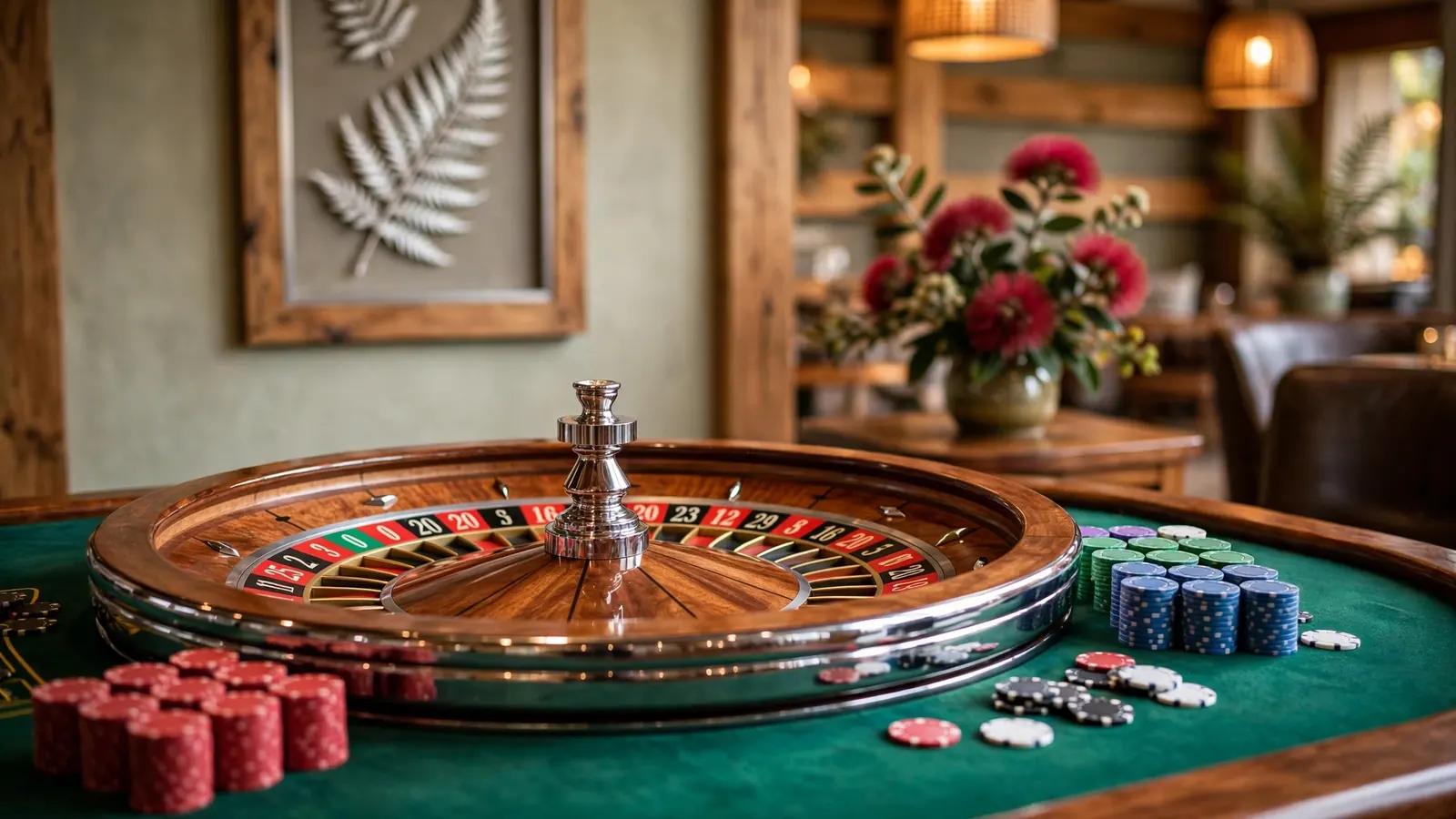
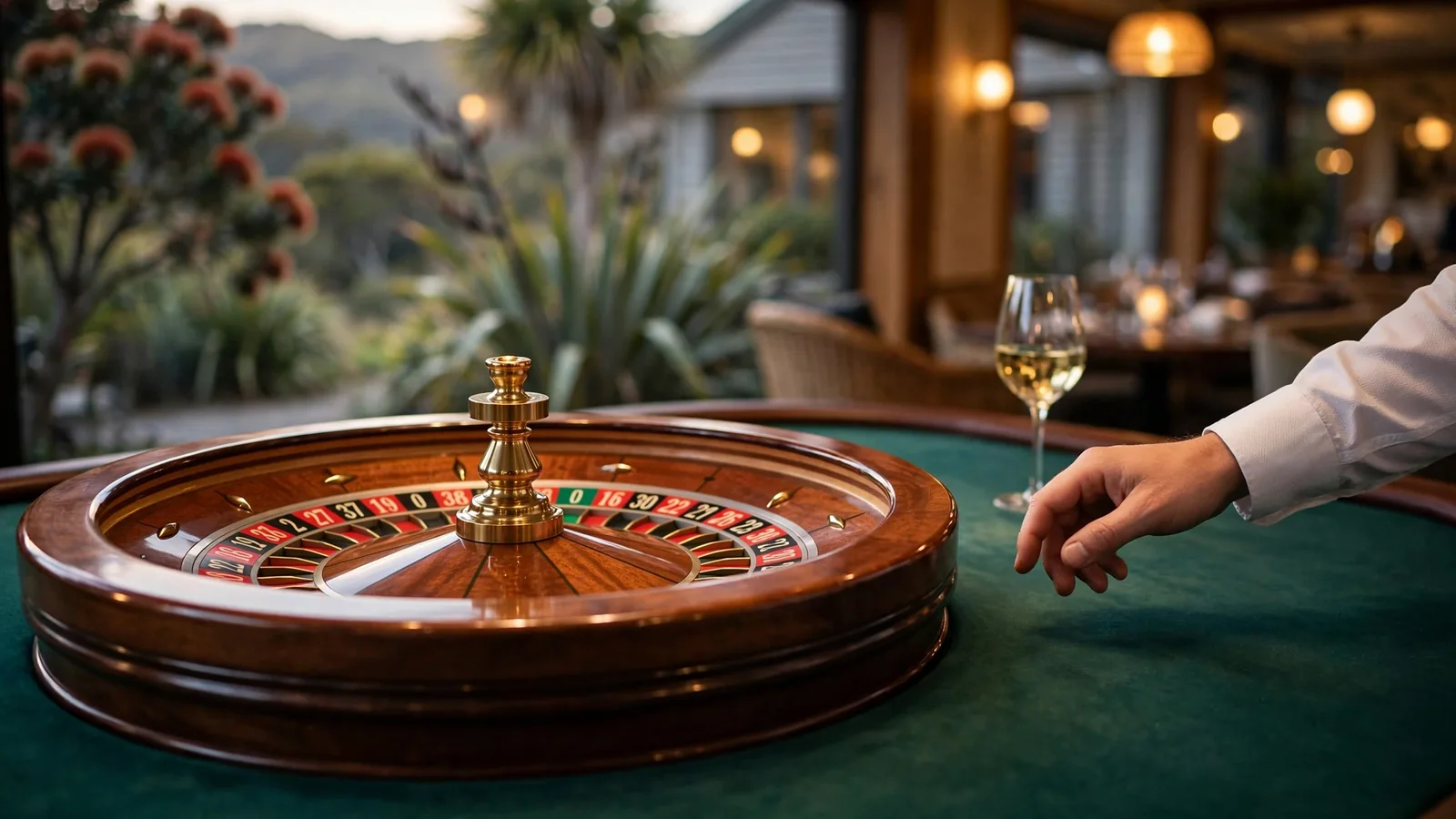
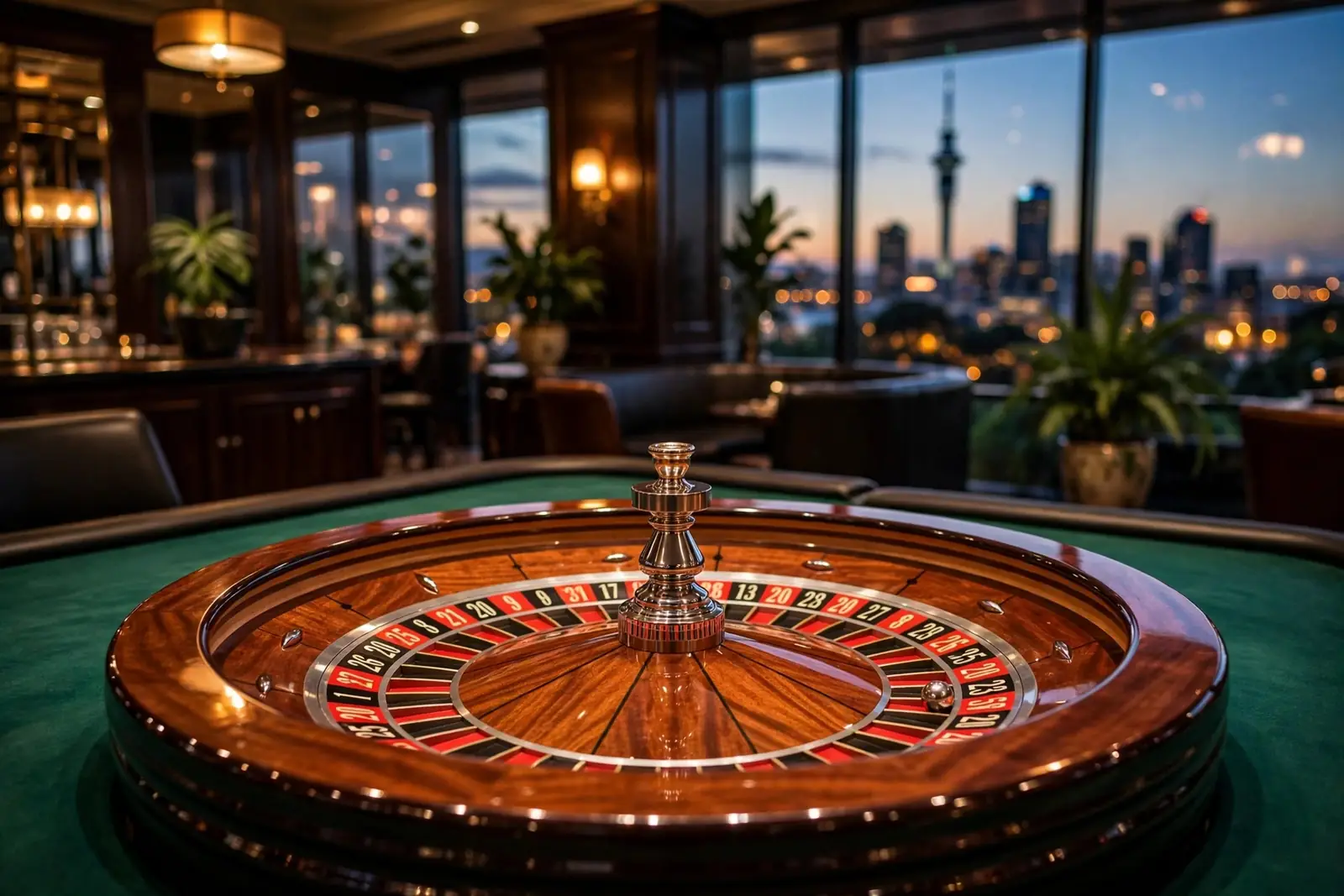
A live dealer casino replaces the digital animation of a table game with a real table shown over video. The cards are physical, the roulette wheel is physical, and a professional dealer runs the game in a studio. The software still provides the online interface, but the action being shown comes from a real game rather than a purely digital simulation.
That changes the source of what appears on screen. In a digital-only game, software generates the dealing or wheel outcome. At a live dealer table, the feed shows a dealer handling equipment and conducting a game in real time. The distinction is not that one format is online and the other is not: both can be played online. It is whether the table activity is simulated or physically taking place.
The video feed also gives the game a human presence. Players can interact with the professional dealer through the table interface, while watching the same proceedings as they unfold. The dealer is not a voice added to an otherwise automated game; the dealer is operating the physical table visible in the broadcast.
Choosing a live dealer casino is easier when you can check the details available for each operator. This list offers a concise reference to help you assess the options for New Zealand players.
License: Malta Gaming Authority, licence no. MGA/B2C/394/2017 N1 Casino is listed with a Malta Gaming Authority licence, number MGA/B2C/394/2017.
License: Curaçao Gaming Authority, licence no. OGL/2024/165/0185 BitStarz is listed with a Curaçao Gaming Authority licence, number OGL/2024/165/0185.
License: Tobique Gaming Commission, licence no. 0000064 Neospin is listed with a Tobique Gaming Commission licence, number 0000064.
Payout speed: 1-3 business days Lamabet’s listed payout speed is 1–3 business days.
License: Tobique Gaming Commission, licence no. 0000091 7Bit Casino is listed with a Tobique Gaming Commission licence, number 0000091.
License: Tobique Gaming Commission, licence no. 0000002 Ricky Casino is listed with a Tobique Gaming Commission licence, number 0000002.
License: 07017519840 · Payout speed: 1-3 business days Zotabet lists licence number 07017519840 and a payout speed of 1–3 business days.
License: Malta Gaming Authority, licence no. MGA/B2C/370/2017 Play Grand is listed with a Malta Gaming Authority licence, number MGA/B2C/370/2017.
Payout speed: 1-3 business days Wintino’s listed payout speed is 1–3 business days.
That format has practical limits. A live table depends on a studio, equipment and a person conducting the game, rather than only software generating a result. The screen therefore presents a shared, observed table experience, not just a sequence of graphics and outcomes. It does not, by itself, change the rules of a particular game or determine whether its terms suit a player. Those are separate questions from what makes the table live.
The useful distinction is simple: live dealer play combines online access with a physical casino table and a live video connection. Digital-only play reproduces table action through software. Both appear on a screen; only one shows a professional dealer handling real equipment.
Live Dealer Casinos in New Zealand: The 2026 Licensing Transition
The legal position for live dealer casinos in New Zealand changes during 2026. Before the new framework, online casino services had no domestic licensing system, although Kiwi players were not prohibited from accessing offshore sites. The Online Casino Gambling Act 2026 establishes the first New Zealand licensing regime for online casino gambling. Its commencement does not mean that every part of the new system takes effect at once: the law sets a transition period, with a key change on 1 December 2026.
The Act came into force on 1 May 2026. From that date, online casino providers already serving people in New Zealand may continue during the transition, subject to the Act’s provisions. The transition ends on 1 December 2026. From then, only operators approved under the new regulations—up to the permitted total of 15—may legally accept Kiwi players. The change is therefore not simply a new label for offshore sites. It creates a domestic approval requirement and a date after which continuing to serve the market depends on approval.
The limit of 15 refers to the maximum number of licences available for the online casino sector, not a guarantee that 15 licences will be issued. Nor does it create a separate quota for live dealer casinos. Live dealer tables fall within the same licensing category as online slots and digital table games. An operator’s online casino licence covers the relevant forms of casino play under that category; live tables are not described as requiring a distinct, Kiwi-specific licence.
That distinction matters because New Zealand does not have a separate local licence devoted to live dealer games. Before the 2026 Act, there was no domestic online casino licensing framework at all. Offshore platforms could be accessed by players, but that access was not the same as operating under a New Zealand casino licence. The new regime replaces that earlier arrangement with a local system for providers serving the country.
The transition is also not a blanket extension for every offshore operator. Its continuation provisions apply to businesses that were already providing services in New Zealand before the Act began. Their ability to keep operating is tied to the transition and its conditions; the calendar does not confer permanent approval. Once the transition ends, the legal position turns on whether an operator has been approved under the new system.
Licensing Transition
From 1 December 2026, only operators approved under the new regulations—up to a maximum of 15 licenses—may legally accept New Zealand players.
For live dealer play, the practical regulatory question is therefore about the operator’s status, not whether a table is streamed from a studio or uses a physical casino setting. The Act places live dealer tables alongside other online casino products in one licence category. A live table does not sit outside the regime merely because a dealer handles real equipment on camera. Equally, offering live tables does not create an exemption from the approval requirement applying to online casino operators.
The number cap gives the transition a defined endpoint, but it should not be read as evidence that the full licensing system will be operating immediately. The Act provides the framework and sets the main dates; the complete licensed regime is expected to be fully operational in 2027. The period between commencement and the end of the transition is consequently a staged change, rather than an instant switch from offshore access to a fully settled domestic market.
For Kiwi players, the central distinction is between access before the transition ends and lawful acceptance by an approved operator afterward. During the earlier offshore-access environment, players were not barred from using international sites simply because those sites lacked a New Zealand licence. From 1 December 2026, however, the permitted market is limited to approved operators, with no more than 15 licences available across online casino services, including live dealer tables. The same change applies whether the casino offers streamed tables, online slots or digital table games.
This transition sets the regulatory backdrop for any assessment of live dealer casinos in New Zealand. It does not itself rank operators or establish that every accessible offshore site will qualify for approval. The material change is narrower and more concrete: a domestic licensing framework begins in 2026, live tables are included within its general online casino category, and acceptance of Kiwi players after 1 December depends on approval under the new regime.

How to Assess a Live Dealer Casino Without a Ranking
A useful assessment of a live dealer casino begins with a question that a table layout cannot answer: which body regulates the operator, and can its licence status be confirmed? A polished live feed, familiar game names or a large studio catalogue do not establish that an offshore site is regulated. Those features describe the product, not the operator’s regulatory standing.
For Kiwi players, the distinction matters. New Zealand has no Kiwi-specific gambling licence for offshore casinos, so an overseas licence should not be mistaken for domestic approval. The relevant checks are whether the operator is regulated by a recognised gambling body and whether its licence status can be confirmed with the Department of Internal Affairs (DIA).
Separate the operator from the table
A live dealer casino may present games supplied by a studio, while a separate company operates the gambling site. A studio name or dealer visible on screen is not, by itself, evidence that the operator holds a valid licence. The regulatory check needs to relate to the company responsible for the site, not simply to a provider whose games appear there.
That distinction is easy to lose in a page filled with logos. The operator’s legal identity and its licence claim are the relevant details to establish before drawing conclusions. If a site refers to a licence, the claim should be attributable to the operator and specific enough to check. A broad statement that a casino is “licensed” leaves the central question unanswered: licensed by whom?
- Identify the operator’s legal identity
- Verify the specific gambling body providing regulation
- Confirm license status with the DIA
- Trust a site based on visual finish or logos
- Assume a studio name proves the operator is licensed
- Mistake an overseas license for domestic approval
The same care applies to the word “regulated.” It should refer to oversight by a recognised gambling body, rather than serving as a general assurance in promotional copy. A claim that cannot be tied to an identifiable regulator is not a verification; it is only a claim.
Treat the DIA check as a separate step
Checking an offshore regulator’s claim and confirming an operator’s licence status with the DIA are distinct parts of due diligence. One concerns the body said to regulate the operator; the other is the recommended New Zealand status check. Neither should be inferred from the appearance of the site or from a live dealer’s presence on screen.
The check should be about the operator named in the licence claim, not a similarly named business or a game provider. A difference in company name can make a result difficult to interpret. Where the operator’s identity or the licence claim is unclear, the uncertainty is itself material: there is no sound basis for treating the claim as confirmed.
A DIA check should not be stretched into a broader conclusion than it supports. In particular, an overseas licence and a New Zealand-specific licence are not interchangeable labels. New Zealand does not have a Kiwi-specific gambling licence for offshore sites. The point is to verify status through the relevant channel, not to turn a foreign licence into evidence of local approval.
Compare evidence, not presentation
Once the operator and its regulatory claim are identifiable, the assessment can be made on evidence rather than on the number of tables or the visual finish of the site. A live dealer casino may look professional and still leave basic questions about who operates it unanswered. Conversely, a concise presentation does not establish a problem; it simply cannot replace verification.

The useful comparison is therefore not a ranking of the best live dealer casinos by appearance. It is a comparison of how clearly each operator identifies itself, names the gambling body said to regulate it, and allows its licence status to be checked with the DIA. These are verifiable operating conditions. They do not depend on whether a particular table is popular or whether a dealer is engaging.
A claim that remains difficult to verify should not be upgraded because it appears repeatedly across casino pages. Repetition is not independent confirmation. Nor does a list of available games answer the regulatory question. A live casino dealer can be visible, the stream can function, and the operator’s status can still require a separate check.
What a ranking cannot establish
A ranked list can organise options, but a position on the page does not prove that an operator is regulated. The label “best live dealer casino NZ” has no regulatory force. For an assessment that can be checked, the operator’s identity and licensing position matter more than a verdict attached to a name.
This approach does not require a complicated scoring system. The core test is narrow: identify the operator; establish which recognised gambling body is said to regulate it; and confirm the operator’s licence status with the Department of Internal Affairs. If one of those steps cannot be completed, the status remains unverified. That is a more useful result than a confident ranking built on presentation alone.
Regulatory Verification
- Identify the company responsible for the site
- Establish which recognised gambling body regulates the operator
- Confirm the operator’s status with the Department of Internal Affairs
Online Live Tables: Timing, Free Play and Technical Interruptions
An online live table runs to a schedule set by the game, not to the player’s preferred pace. Most live games give a limited window for placing a bet before the dealer proceeds. That makes the session move forward in defined stages: a betting period opens, bets close, and the game continues. The window is part of the format, not a setting that can necessarily be extended.
This matters most when attention is divided. A player who is still deciding when the betting period ends may miss the chance to place a wager for that round. The practical distinction is between watching a live table and being ready to act while betting is open. A feed can be clear and responsive while the opportunity to bet is still brief.
The timer also changes how a session feels compared with a game that waits for an individual input. There is less room to pause over a decision once the table has moved into its betting phase. That does not make the game inherently better or worse; it makes the timing condition explicit. The relevant question is whether the pace suits the way the session is being managed.
Free play is another point where expectations can be misplaced. Live dealer games are typically not offered in a free-play mode. Operating a live table involves significant costs for a casino, so the economics differ from a game that can be run without a dealer and a live studio. A player looking for a no-stakes trial may therefore find that the live version is unavailable for that purpose, even if other casino games offer free play.
That distinction should be checked before treating a live table as a low-cost way to explore a game. A free-play version, where offered for other games, does not establish that the live table itself can be tested without placing a wager. Nor does the label “live” tell anything about whether a particular table has a practice mode. Availability has to be confirmed for the specific game interface; assuming a demo exists is not a sound basis for planning a session.

Technical interruptions are possible as well. A specialist review has reported that live dealer games can experience technical problems, but that is a report rather than a guarantee that every table, operator or session will be affected. The live format depends on a video connection and the software carrying the game to the screen, so an interruption can affect what is visible or how the session proceeds. The exact response depends on the operator and the circumstances; it should not be assumed that every interruption is handled identically.
Before starting, it is useful to distinguish an issue with the live feed from a decision about a bet. A frozen image, delayed video or lost connection may leave the state of a round unclear, while a betting window may simply have closed as scheduled. Those are different situations. The interface and the operator’s stated help or dispute process are the appropriate places to check what happened to a session, rather than guessing from a paused screen.
A cautious approach is to avoid making another wager while the status of the current round is uncertain. If the feed resumes, the displayed game state may clarify whether play continued; if it does not, the operator’s support channel is the route for checking the account record. This is a procedural precaution, not a promise about how a particular casino will settle an interrupted round. The applicable terms and the operator’s records determine the outcome.
The practical costs of live play are therefore not limited to the amount staked. A short betting window can make timing more demanding, free play may not be available, and a technical fault can interrupt the session. None of these conditions establishes that a particular live dealer casino is reliable or unsuitable. They are operating features to verify before treating an online table as interchangeable with a game that can be paused, replayed or tried without a wager.
For Kiwi players comparing live dealer options, the useful distinction is between what the interface displays and what the operator commits to do. The countdown is visible at the table; free-play availability is a feature to confirm; interruption handling belongs in the operator’s terms or support information. Keeping those categories separate prevents a timer, a demo label elsewhere on the site or a temporary connection failure from being mistaken for a financial term.
What Changes When Other Players Share the Table
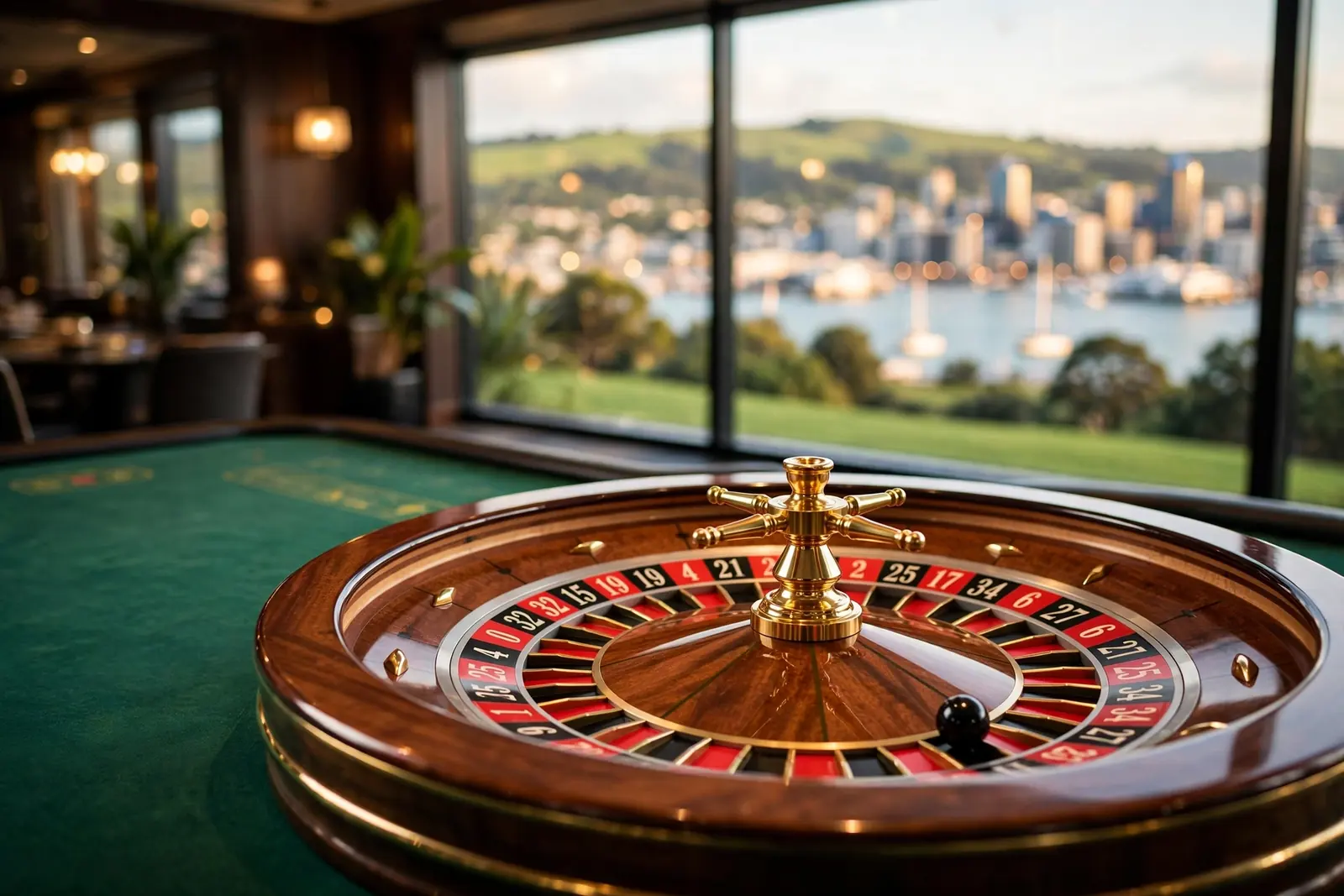
At a live blackjack table, a hand is not a private exchange between one player and the dealer. Other players take their turns within the same round, so the time before the next hand depends partly on decisions being made elsewhere at the table. This is the main reason live blackjack can move more slowly than its RNG equivalent: the software version does not have to wait for a group of people and a dealer to complete each turn.
That difference changes the relationship between a session and the clock. With RNG blackjack, one player can move directly from one decision to the next. At a live table, the same player may finish a decision and then wait while others act. The wait is part of the shared format, not an extra charge or a separate game rule. It does, however, affect how many hands fit into a period of play.
The effect is easiest to notice when comparing the two formats side by side. Digital play can keep progressing at the pace of one person’s choices. Live play has a collective pace: each player’s turn contributes to the round’s duration, and the dealer’s turn follows. A player who makes decisions quickly cannot make the rest of the table do the same. For anyone measuring play by time rather than by hands completed, that distinction matters.
A casino with live dealers therefore offers a different kind of pacing from an automated table. The appeal is the shared round, but the cost of that format is waiting. Neither point needs to be dressed up as a technical advantage. A slower pace means fewer opportunities to make a new bet during the same stretch of time, all else being equal. It does not establish that the session will last longer in every case, or that the total amount wagered will necessarily be lower; those outcomes depend on how long play continues and what is staked.
For an online casino with live dealers, the table’s shared rhythm also means that time spent connected is not the same as time spent making decisions. Some of a session may consist of waiting for other players to act. A budget set by time alone can therefore produce a different number of completed hands from one session to another. A budget set by a fixed number of hands is more directly tied to play, although the time required to reach it can vary with the table’s pace.
This is a practical distinction, not a claim that one format is better. RNG blackjack suits a faster, individual rhythm; live blackjack follows the sequence of a shared table. Someone choosing between them is also choosing how much of the session is controlled by their own decisions. At a live table, other players form part of the timing, even though they do not change the basic fact that each player is playing their own hand against the dealer.
The financial comparison should stay narrow. A slower round does not by itself prove that live blackjack is cheaper, safer, or more favourable. It only changes the rate at which decisions and new bets can occur. The relevant measure is not the label attached to the game but the actual pace of the session and the amount staked as it proceeds. In live blackjack, that pace is shared.

Live Dealer Game Rules: Blackjack and Baccarat
Blackjack: closer to 21
In live blackjack, each player competes against the dealer rather than against the other people at the table. The aim is to finish with a hand total closer to 21 than the dealer’s, without exceeding 21. A total above that target cannot win by being closer: going over 21 defeats the objective.
The result therefore depends on two comparisons: whether the player stays at or below 21, and how the resulting total compares with the dealer’s. A hand can be strong in isolation and still lose if the dealer finishes closer to 21 without exceeding it. The rule is direct, but the dealer’s hand remains the reference point; beating another player is not the test.
Baccarat: choose a hand outcome
Baccarat uses a different target. The winning hand is the one closest to 9, with the player hand compared against the banker hand. The bet is placed on an outcome, not on getting a hand closer to 21.

The available outcomes are a banker win, a player win, or a draw. A banker bet succeeds when the banker hand is closest to 9; a player bet succeeds when the player hand is closest. A draw is the third possible result, rather than a banker or player victory. This makes the wager’s direction clear, even though the winning hand is determined only by comparing the two totals.
The practical distinction
The games ask for different decisions. Blackjack centres on the player’s own total against the dealer’s, with 21 as the ceiling. Baccarat centres on predicting which of two named hands will finish closer to 9, or whether the result will be a draw. In both cases, the outcome follows the game’s stated objective; the labels on a bet do not change the condition for winning.
That distinction matters when comparing live dealer casino games. Blackjack is a contest against the dealer under a numerical limit, while baccarat offers a choice among three result categories. The rules can be stated plainly, but they should not be collapsed into a single idea of “picking the better hand”: the reference point and available bet outcomes differ.
Payments and Withdrawal Timing at Online Live Casinos
Payment terms matter after a live table session ends: a displayed balance is not the same as money received. Processing time depends on the method, and published timing figures should be read as claims from a specialist review rather than as a fixed standard across online casinos.
Payouts reported to clear in under an hour.
Payments typically taking 24 to 48 hours.
Processing times ranging from 5 to 7 business days.
That review reports crypto payouts clearing in under an hour, POLi and e-wallet payments taking 24 to 48 hours, and bank transfers taking 5 to 7 business days. These are materially different windows. A bank transfer may leave funds pending for several business days, while the reported crypto timing is much shorter. Neither figure establishes how a particular operator handles a specific withdrawal.
Neteller, Skrill and Bitcoin are identified in specialist coverage as methods that can support fast deposits or withdrawals. The same coverage notes that fees or limitations may apply. “Fast” is not a complete payment term: a method can be quick at one stage and still carry a charge or restriction that changes its practical value. The applicable conditions need to be checked against the operator’s current cashier information.
Many operators also accept deposits and withdrawals in New Zealand dollars. That can avoid converting the account balance for a Kiwi player, but the currency label alone does not establish the fee, processing period or amount ultimately credited. Those details depend on the payment route and the operator’s stated conditions.
A useful comparison separates three things: the currency used, any fee or limitation, and the time claimed for a withdrawal. Deposit availability does not prove that the same method can be used to withdraw, and a published estimate is not a guarantee of completion. The stated timings above are attributed to specialist review material; they should not be treated as a market-wide promise or as current terms for every live dealer casino. The operative figures are the ones attached to the chosen method in the relevant account’s payment information.
The Physical Process Behind a Real Live Dealer Game
A real live dealer game joins a physical table to the software view shown on screen. In blackjack, the cards are real, and their identities need to be reflected accurately in the digital game state. A scanner reads coded markings or chips built into the cards, allowing the software to stay aligned with the cards used at the table.

That link matters because the software display is not a separate, simulated deal. It represents the same hand being played with physical cards. The dealer handles the cards, while the scanning system helps register them in the game software. The video feed shows the table; the scanned card information keeps the digital record consistent with it.
This distinction is specific to the live-table process. A simulated game generates its play digitally, rather than showing a dealer handling cards at a physical table. In live blackjack, the visible deal and the software record are connected through the card-reading process. The arrangement depends on the physical cards being recognised correctly, not on the screen inventing a hand independently.
The games still have separate objectives. In blackjack, the aim is to finish with a total higher than the dealer’s without exceeding 21. In baccarat, the bet concerns which of the player’s or banker’s hands will have the higher value. These aims describe what the table is resolving; they do not alter the role of the physical process behind the feed.
For a real-table blackjack hand, the essential sequence is therefore straightforward: cards are handled at the table, their embedded identifiers are read, and the software reflects those cards in the game. That connection is what makes the digital display a representation of a physical deal rather than a standalone computer-generated round.
Comparing Live Tables by the Cost of Each Bet
House edge gives a common basis for comparing live roulette and baccarat. It describes the casino’s mathematical advantage over the amount wagered across play; it is not a fee deducted from each individual bet. A lower figure indicates a smaller theoretical cost to the player over time, but it does not determine the result of a particular round.
For live European roulette, the stated house edge is around 2.7%. In American roulette, it is around 5.26%. The difference makes the roulette format material: the American version carries a substantially higher theoretical edge than the European one. A table’s live video and dealer do not change that calculation; the relevant comparison is the stated edge for the game variant.

Baccarat’s figures are lower. The house edge is around 1.06% on a banker bet and around 1.24% on a player bet. On those figures, the banker option has the smaller theoretical cost, while a player bet is still below the stated edges for both roulette variants.
These percentages are long-run measures, not a forecast of an individual session. Outcomes vary, and a short run can diverge sharply from the average implied by the edge. The figure also does not mean that the same percentage is removed from every winning or losing wager. It is a comparison of the game’s built-in mathematical terms over repeated betting.
For a cost-focused comparison, the available figures place baccarat bets below the stated roulette edges, with the banker option lowest among the listed choices. That does not make every baccarat table a better fit: bet selection, limits and the pace of play are separate considerations, and the edge alone does not describe them. The arithmetic is useful precisely because it stays narrow. It compares the expected mathematical cost, not the likelihood of a win on the next hand or spin.
Live Dealer Casino Bonuses: The Offer Is Not the Payout
A promotion is a condition attached to an account, not money already available to withdraw. Its headline value says little about the amount that can ultimately leave the account. The relevant figure is the cash balance after the offer’s conditions have been met, any restrictions have been applied and the operator has processed a withdrawal.
For a live dealer casino bonus, the written terms matter more than the label. They determine whether an offer applies to live table play, which games qualify, how any promotional credit is treated and what must happen before funds can be withdrawn. If live games are excluded or count differently, a bonus described broadly may have little practical value at a live table. The distinction should be stated in the terms, not inferred from a banner.
A useful calculation starts with the amount that can actually be withdrawn without relying on promotional credit. Then the bonus can be assessed separately: what conditions attach to it, which play counts, and whether a deadline or other restriction changes the likely value. If those terms are unclear, the offer cannot be priced reliably. A large displayed figure does not resolve that problem.
New Zealand’s rules also set boundaries for promotions. Bonus offers are capped at NZ$100 or 200% of the deposit, and advertising by online casino operators is restricted during the transition period. Licensed operators may advertise only under tight rules. These limits do not make every promotion equally useful; they set a ceiling, while the individual offer’s conditions determine its value.
The clean comparison is therefore between cash that is withdrawable now and promotional value that remains conditional. Those are different balances, even when an interface presents them together. A promotion with narrow eligibility or demanding conditions can contribute less than its headline suggests; without clear terms, its practical value is unknown.
No bonus should be treated as a payout until its conditions have been satisfied and the resulting balance is available for withdrawal. The accounting is simple: advertised value is not cash, and conditional credit is not a completed return.
Can New Zealand players play real-money live dealer games at offshore casino sites?
Yes, New Zealand players are not prohibited from playing at offshore sites. Check that the operator is regulated by a recognised gambling body and confirm its licence status with the Department of Internal Affairs.
Which live dealer games can New Zealand players usually access?
Live blackjack, roulette and baccarat are among the games available to New Zealand players.
Are live dealer games legal for NZ players now?
New Zealand players are not prohibited from accessing offshore casino sites. The Online Casino Gambling Act 2026 came into force on 1 May 2026, and from 1 December 2026 operators must be approved under the new regulations to legally accept New Zealand players.
Can players deposit and withdraw using New Zealand dollars at live casinos?
Yes, many operators allow deposits and withdrawals in New Zealand dollars. Neteller, Skrill and Bitcoin are among the listed payment methods; fees or other limitations may apply.
What games can I play at a live casino?
Live casinos offer games such as blackjack, roulette and baccarat, played with real equipment and professional dealers on a video feed.
Published by the Casino Slots Adviser NZ team.