European Roulette in New Zealand: Odds and Rules
 Available in US
A practical guide to the single-zero wheel, bet types, payouts and the limits of betting systems and free play.
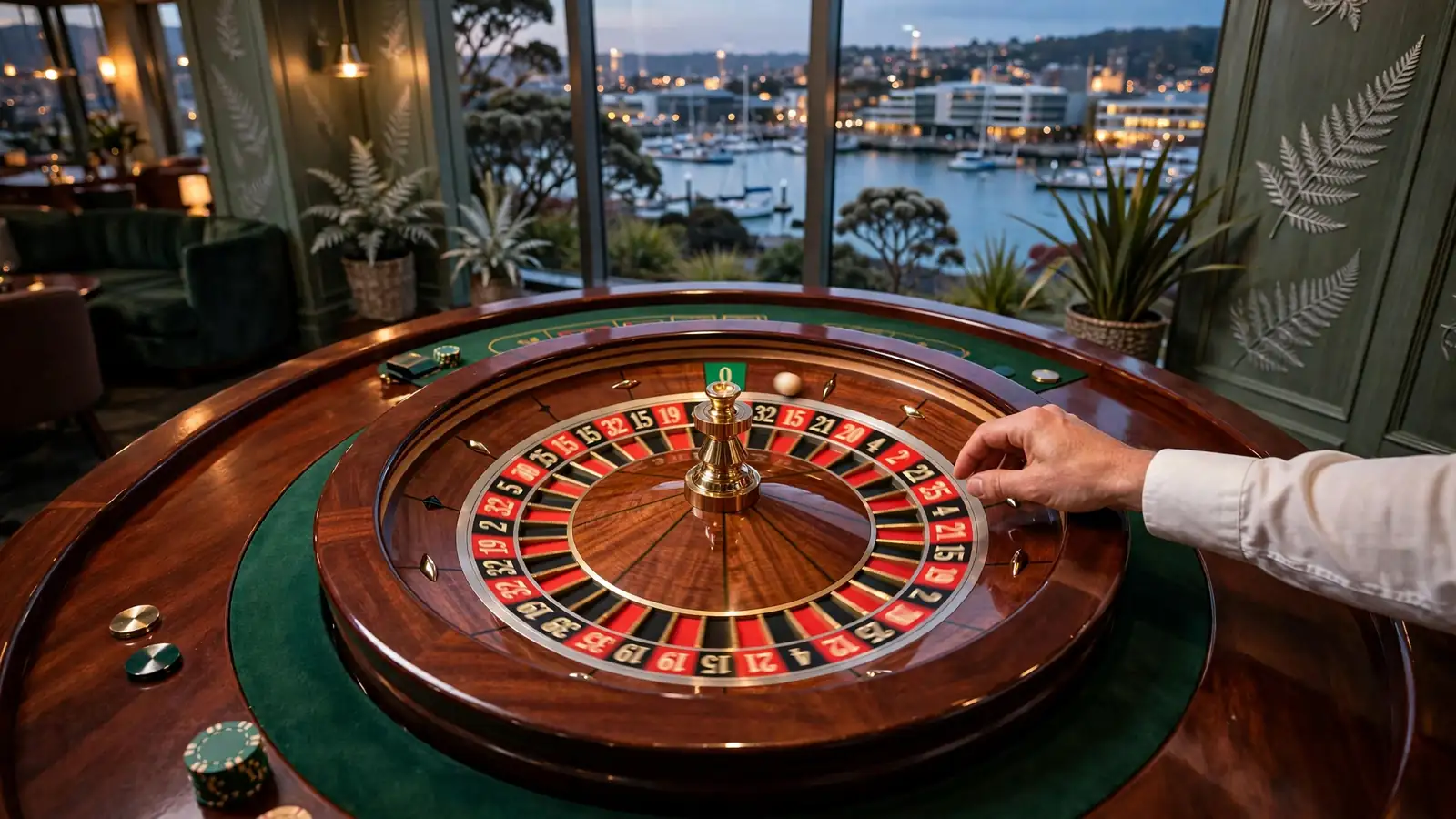
Table of Contents
- European Roulette’s Single-Zero Wheel
- What Free European Roulette Can—and Cannot—Show
- European vs American Roulette: The Zero Changes the Cost
- Reading the Roulette Layout and Payout Table
- European Roulette Odds: Bets, Probability and the House Edge
- Roulette Betting Systems Do Not Change the Mathematics
- Online European Roulette in New Zealand: The 2026 Framework
- How to Place a European Roulette Bet
- Bonuses, Free Spins and Roulette Promotions: The Conditions in Cash Terms
- Finding Online European Roulette Play Without Treating It as a Recommendation
European Roulette’s Single-Zero Wheel
European Roulette is built around a wheel with 37 pockets: numbered pockets from 1 to 36 and one green zero. That single zero is the defining feature of the standard European layout. The wheel and the betting table are separate parts of the game: the wheel determines where the ball lands, while the table provides marked areas for placing bets on numbers and groups of numbers.
In an online European Roulette game, the same basic structure appears on screen. A digital version presents a simulated wheel; a live version shows a physical wheel and a dealer through a video feed. The presentation changes, but the single-zero format remains the reference point. A title or graphic can look elaborate without changing that underlying structure, so the relevant detail is the wheel itself rather than the visual theme.
A European Roulette game also has a fixed mathematical cost built into its standard layout: the house edge is 2.70%. That figure describes the game’s long-run structure, not the outcome of a particular spin or a guaranteed deduction from any one stake. The zero is the reason the wheel is not an even contest between player and casino. A single result can return a stake, produce a win or lose it; the wheel does not make a real-money wager safe.
Choosing a European roulette site in New Zealand for 2026 calls for checking the details that are available about each operator. These verdicts offer a brief reference point based on the information provided.
License: Malta Gaming Authority, licence no. MGA/B2C/394/2017 N1 Casino is listed with a Malta Gaming Authority licence, number MGA/B2C/394/2017.
License: Curaçao Gaming Authority, licence no. OGL/2024/165/0185 BitStarz is listed with a Curaçao Gaming Authority licence, number OGL/2024/165/0185.
License: Tobique Gaming Commission, licence no. 0000064 Neospin is listed with a Tobique Gaming Commission licence, number 0000064.
Payout speed: 1-3 business days Lamabet’s stated payout speed is 1–3 business days.
License: Tobique Gaming Commission, licence no. 0000091 7Bit Casino is listed with a Tobique Gaming Commission licence, number 0000091.
License: Tobique Gaming Commission, licence no. 0000002 Ricky Casino is listed with a Tobique Gaming Commission licence, number 0000002.
License: 07017519840 · Payout speed: 1-3 business days Zotabet has the listed licence identifier 07017519840 and a stated payout speed of 1–3 business days.
License: Malta Gaming Authority, licence no. MGA/B2C/370/2017 Play Grand is listed with a Malta Gaming Authority licence, number MGA/B2C/370/2017.
Payout speed: 1-3 business days Wintino’s stated payout speed is 1–3 business days.
Free play and real-money play
A free European Roulette game online allows spins without staking cash. It can show how the wheel and table are presented, and it separates the act of interacting with the game from committing money. A simulator may use generated outcomes rather than a live wheel, but it still displays a game format organised around the same single-zero arrangement.
Real-money play changes the financial consequence, not the wheel’s structure. A stake is exposed to the result of each spin, and every real-money bet can lose. The European layout retains its 2.70% house edge whether the game is displayed in a browser, an app or a live stream. A practice balance is not cash, and a sequence of free outcomes does not establish what a later paid session will return.
That distinction matters when a game is labelled “free” or “real money.” The words identify whether funds are being staked; they do not by themselves describe the wheel, the table rules or the way a game generates results. Those details belong to the specific game presentation. The core European wheel still has 37 pockets and one zero.

The wheel is not a prediction tool
An online European Roulette simulator can demonstrate the layout, but it cannot supply a method for knowing what comes next. There is no online roulette cheat that changes the wheel’s structure, and no dependable way to win European Roulette every time. A run of results may look patterned after the fact; that appearance does not turn it into information about a future result. Roulette outcomes are random, and previous spins do not make a particular next result due.
This is also why “how to win” claims need to be read as claims, not as a property of the game. The single-zero wheel sets a defined house edge; a betting approach cannot erase it. Even when a session begins with free spins or a practice balance, those outcomes do not create a reliable forecast for real-money play. The arithmetic does not become more favourable because the interface is online.
European Roulette is sometimes discussed alongside French and American versions, but those names do not make the wheels interchangeable. The European game described here is the 37-pocket, single-zero format. Its basic identity is therefore easy to check before considering any other feature: locate the zero, count the pockets and confirm that the game is presented as European Roulette.
The practical distinction is plain. Free play can be an unpriced interaction with that format; real-money play attaches a cash stake to an uncertain result. The wheel remains the same kind of wheel, but the financial exposure does not. Any real-money session should be limited to money that can be lost without affecting essential costs.
Financial Risk
Any real-money session should be limited to money that can be lost without affecting essential costs.
What Free European Roulette Can—and Cannot—Show
A free European Roulette session can make the table feel familiar before any money is involved. It gives a player a chance to see the single-zero wheel and the betting layout together, follow how a round is presented, and practise recognising where different areas of the table are. That is useful orientation. It is not evidence that a real-money session will produce similar results.
The distinction is simple: a no-stakes game removes the financial consequence of a wager, not the uncertainty of the result. A run of wins in free play does not establish that a particular number, colour or group is more likely to appear next. Roulette spins are independent; earlier outcomes do not change the probability of outcomes on later spins. A practice session can show how a game behaves on screen, but it cannot supply a forecast.
What practice can establish
Free play is most useful for learning the interface at an unhurried pace. The wheel and table can be viewed without the pressure of deciding whether a real stake is acceptable. The player can become familiar with the placement of the betting areas, the way a selection appears once made, and the sequence from a submitted wager to the displayed result. These are practical observations about the game’s presentation, rather than a test of skill.

A free European Roulette game may also help distinguish the wheel from the table. Numbers appear in one arrangement on the wheel and in another on the betting layout; the two serve different purposes. Recognising that the screen contains both reduces confusion during play. It does not make number selection more predictive.
Some versions are offered as browser-based play, so a download may not be necessary; that depends on the game and the provider’s setup. A live-dealer version, where available in a free format, can show a streamed table and its on-screen controls. The presence of a live image does not turn a no-stakes session into a real-money test. Nor does it establish that every live table has a free mode.
What free play cannot establish
A free session does not measure how a player would respond when a loss affects their balance. It also cannot demonstrate that a betting pattern will produce a return, or that a sequence seen during practice will repeat. Results can cluster in ways that look meaningful after the fact. The next spin remains independent of the previous ones, regardless of whether the last few results were alike or varied.
Free-play credits are not cash and do not represent a withdrawable balance. A result displayed in a demo is not a promise of an equivalent result when money is at stake. The distinction matters even when the interface, wheel animation and pace appear identical: the financial exposure is different, while the outcome remains uncertain.
A no-stakes session can reduce unfamiliarity with the screen and the table, but it cannot remove chance or validate a betting system.
“Free spins” can mean something different from a free-play mode. Promotional spins may be subject to conditions, and any resulting winnings may have separate requirements before withdrawal. Bonus money must be wagered 50X within 30 days; winnings from free spins must be wagered 50 times within 7 days. A withdrawal request voids all active or pending bonuses. Those terms make promotional play a conditional offer, not unrestricted cash. The time limit and turnover requirement belong in the calculation before a promotion is treated as having monetary value.
A no-stakes session therefore has a narrow but genuine use: it can reduce unfamiliarity with the screen and the table. It cannot remove chance, validate a system, or establish what a real-money session will return. Moving from practice to wagering changes the cost of a mistake, not the independence of the spin. Any real-money play can lose, so the amount at risk should never exceed what can be afforded to lose.
European vs American Roulette: The Zero Changes the Cost
The difference between European and American Roulette is concentrated in one extra pocket. A European wheel has 37 pockets: numbers 1 through 36 and a single zero. An American wheel has 38: the same numbered range, a single zero and a double zero. The betting layouts may look familiar across both versions, but the second zero changes the mathematical cost of play.
On the European wheel, the house edge is 2.70%. On the American wheel, it is 5.26%. The gap is 2.56 percentage points, created by adding a pocket that belongs to neither the red nor black side, nor to odd or even. The extra pocket gives the house an additional outcome on each spin without increasing the number of winning outcomes for a standard bet.

That difference is not a matter of appearance or a rule that can be offset by choosing a different part of the table. It is built into the wheel. A bet that wins on a particular numbered outcome faces one zero on the European version and two zero outcomes on the American one. For even-money outside bets, either zero interrupts the ordinary red-or-black, odd-or-even pattern. The American wheel therefore imposes the higher house edge across the game.
The cost comparison is clearest when the two versions are treated as separate games rather than interchangeable layouts. A player moving from European to American Roulette encounters an additional losing pocket, not a cosmetic change. The difference applies whether the session is played for real money or in a free European roulette game: free play can remove the financial stake, but it does not turn a double-zero wheel into a single-zero wheel. The version name and the wheel itself determine which structure is in use.
This is why the number of pockets matters more than the resemblance between the betting tables. Both games display numbered spaces and familiar outside-bet areas. On the wheel, however, the single zero in European Roulette has a different effect from the single and double zero in American Roulette. The second zero is not another number that improves the player’s coverage; it is another result that increases the house edge.
37 pockets (single zero) with a house edge of 2.70%.
38 pockets (double zero) with a house edge of 5.26%.
French Roulette is a separate comparison. Its wheel uses the same single-zero arrangement as European Roulette, while special rules can apply to eligible even-money bets when zero lands. That distinction concerns the treatment of certain bets, not an additional pocket. European and French Roulette can therefore share the wheel structure without being identical in every rule. American Roulette remains different at the wheel level because it has the double zero.
The useful comparison is narrow and measurable: 37 pockets and a 2.70% house edge for European Roulette; 38 pockets and a 5.26% house edge for American Roulette. The lower edge does not make a spin predictable or guarantee a winning session. It means the single-zero format carries a smaller built-in cost than the double-zero format. No tip or choice of layout removes the extra pocket from an American wheel.
Reading the Roulette Layout and Payout Table
A European roulette table has two visual parts: the numbered betting area and the outside-bet spaces arranged around it. The numbered area is often called the inside layout; the surrounding spaces group broader selections. The wheel and the table serve different purposes: the wheel determines the result, while the table records where a stake has been placed and provides the reference for the corresponding return.
A European roulette pay table sets out the return attached to each bet category. It is worth separating that figure from the total amount credited: a stated payout may refer to winnings, while the original stake may be returned as well. The table’s wording or help panel should make clear which convention applies. If it does not, the displayed figure is not enough to calculate the full settlement.

Zero has its own numbered space on the layout. Its return is therefore listed with the numbered selections, rather than treated as an outside category. The payout table is the place to confirm the amount credited when zero is selected and wins. That does not make zero a special exception to the table’s accounting: the relevant line still needs to distinguish winnings from stake returned.
The overall payout percentage is a different kind of measure. A specialist review reports a 97.30% payout percentage for European roulette and 94.70% for American roulette. These figures describe the share of stakes expected to be returned across extended play under the stated calculation, not the result of one session or a promise about a particular table. A player-facing pay table should be checked separately, since it shows how a specific winning selection is settled.
The distinction matters when comparing interfaces. A live table, an online game, or a mobile display may arrange the betting spaces differently on screen, but the payout reference should still identify the applicable bet categories and returns. On a smaller display, some selections may sit behind menus or require scrolling; the practical check is whether the full table and its payout information remain accessible before a stake is placed. A play-money table can show the layout and where its payout information appears, but its display alone does not establish the terms of a real-money game.
Before Placing a Bet
- Confirm the chosen game variant
- Check the return for each relevant bet type
- Verify if the listed return includes the original stake
A payout table is useful as a settlement reference, not as a forecast. It tells how a winning selection is credited according to the listed terms. The percentage figure describes a long-run return measure; it does not say what will be returned on the next spin, nor does it ensure that the amount staked will come back within any particular period. Those are different questions, and combining them turns a reference figure into a claim it cannot support.
Before play, the essential entries are the chosen game variant, the return shown for each relevant bet type, and whether the listed return includes the original stake. If those details are unclear or absent, the final credit cannot be reliably calculated from the headline payout percentage alone.
European Roulette Odds: Bets, Probability and the House Edge
European roulette odds describe two different things: the chance that a particular bet wins, and the game’s built-in long-run cost. Those figures are related, but they are not interchangeable. A bet can have a comparatively high chance of winning and still carry a negative expectation because its return does not fully compensate for the possibility of losing.
The European wheel has thirty-seven pockets, including one zero. For a bet covering a particular set of numbers, the chance of a win depends on how many of those pockets the bet covers. More covered outcomes mean a greater chance of a hit, but the potential return is adjusted accordingly. The exact calculation therefore depends on the bet, not on the name of the game alone.

What the house edge measures
Single-zero European Roulette has a house edge of 2.70%. In practical terms, that is the game’s mathematical advantage across repeated wagering, not a deduction applied as a fixed charge to each individual stake. A session can finish ahead or behind that expectation; the percentage describes the long-run balance between stakes and returns.
The edge does not say that a particular bet will lose, nor does it specify when a loss will occur. It describes the effect of the rules over time. Individual results vary, while the underlying advantage remains part of the game. A winning run does not cancel the edge, and a losing run does not increase the probability of a win on the next spin.
This distinction matters when comparing odds across different bet types. A narrow bet may win less often and return more when successful; a broader bet may hit more frequently but offer a smaller return. Neither description alone establishes which choice is financially favourable. The house edge is the relevant measure of the game’s long-run cost.
Every spin starts on the same terms
Roulette spins are independent. Previous results do not change the probability of any outcome on a later spin. A sequence of the same colour, a long absence of a number, or a recent cluster of results provides no mathematical signal that the next result is due to reverse course.
Attention: Roulette spins are independent; previous results do not change the probability of any outcome on a later spin.
That independence also applies when considering call bets or other bets defined by wheel positions. Their odds depend on the outcomes they cover, not on a pattern in earlier spins. Labels such as “gold” or “premium” do not alter the underlying probability unless the game’s rules actually change the covered outcomes or returns; a title by itself is not a mathematical feature.
The phrase “European roulette odds” therefore needs a specific reference: the bet being considered, the outcomes it covers, and the house edge of the game. Without those distinctions, a claim that one option has better odds may be comparing hit frequency with return as though they were the same measure.
Roulette outcomes are random, and every real-money bet can lose. The house edge remains in force regardless of whether stakes are small or large, and no individual result can be treated as a reliable forecast. Money placed on the table should not exceed what can be afforded to lose.
Roulette Betting Systems Do Not Change the Mathematics
A betting system can change the sequence and size of stakes, but it cannot alter the wheel. European Roulette has 37 pockets, including a single zero, and its house edge is 2.70%. That advantage remains in place whether stakes stay constant, rise after a loss or change in response to a win.
Progression systems often present a simple promise: adjust the next stake and a later win will recover earlier losses. The arithmetic is conditional, though. Recovery depends on a win arriving while the required stake remains affordable and within any table limits. A losing run can instead make the next prescribed stake larger than the available bankroll. Even if a system reaches a recovery win, that does not remove the house edge from subsequent bets.
The same limit applies to strategies built around recent results. Roulette spins are independent: earlier outcomes do not change the probability of the next result. A number that has not appeared for some time is not thereby due, and a recent run does not establish what the wheel will produce next. Systems based on patterns may organise staking decisions, but they do not turn past results into predictive information.
A practical European Roulette strategy is therefore a spending rule, not a method for overcoming the mathematics. A fixed stake can make the cost of each decision easier to track than a progression, but it does not improve the expected return. Setting a total amount that can be lost without affecting essential spending, then stopping when it is gone, limits exposure; it does not make play profitable. No one should risk more than they can afford to lose, because every real-money bet can lose.
The term “European Roulette tactics” can cover choices about when to stop, how much to stake and whether to continue after a win or loss. Those choices affect the path of a session and the amount exposed, not the underlying advantage of the game. A table, app or roulette “slot” label does not change that distinction: changing the interface or the staking pattern is not a change to the wheel’s mathematics.
Betting Strategy
A betting system can change stake size or timing, but it cannot erase the fixed house edge.
Claims about a best European Roulette strategy should be assessed against what the method actually changes. If it changes only stake size or timing, it cannot erase the fixed house edge. A useful plan is one that keeps spending within a defined limit and avoids treating a temporary result as evidence of a coming one. The arithmetic remains the same; only the amount put at risk varies.
Online European Roulette in New Zealand: The 2026 Framework
The legal position for online European roulette in New Zealand changed during 2026. The Online Casino Gambling Act 2026 took effect on 1 May, creating the country’s first domestic licensing system for online casino gambling. That change does not mean the full system was operating immediately: the licensed regime is not expected to be fully operational until 2027.
A transition runs from 1 May to 1 December 2026. During that period, only providers that were already serving people in New Zealand before the Act took effect may continue, and only under its transitional provisions. Those providers must stop offering online casino gambling in New Zealand by 1 December if they have not applied for a licence. The transition is a defined legal window, not a general permission for new services to enter the market.
The Department of Internal Affairs is New Zealand’s primary gambling regulator and oversees the online casino licensing framework. The Gambling Commission handles the licensing decisions: it hears and determines casino licence applications, issues online casino licences and approves changes to licence conditions. These roles distinguish oversight of the framework from decisions about individual applications.

Before the new Act, online casino gambling supplied from outside New Zealand was not licensed or supervised by a New Zealand regulator. Customers using offshore websites during that period had no domestic government recourse. The Gambling Act 2003 also prevents online casinos from being based in New Zealand; the 2026 legislation establishes a domestic licensing regime rather than removing that restriction on locally based casinos.
The transition also places limits on promotion. Online casino gambling must not be advertised to people in New Zealand during this period. Providers without a licence may face enforcement action and fines of up to NZ$5 million, while unlicensed operation is expected to become an offence around mid-2027. Licensed operators will have to apply stricter age and identity checks.
For anyone assessing a European roulette casino or live European roulette service, the relevant distinction in 2026 is therefore regulatory status and timing, not the game label. The presence of an online table does not by itself establish that its provider is licensed in New Zealand. In this transition, the licensing framework is still being implemented, and its full operation lies ahead.
How to Place a European Roulette Bet
European Roulette uses a betting layout beneath the wheel, but those two visual arrangements serve different purposes. The layout is where standard table bets are placed; called bets describe groups of numbers by their positions around the wheel. A number’s place on the layout does not determine whether it belongs to a called bet.
Placing a Bet
Select the value of the chip you wish to use.
Place the chip on a specific number box, row, or colour on the layout.
Verify the selection on the display and confirm before the spin begins.
On a digital table, the basic sequence is to choose a chip value, select a betting area, and place the chip on the layout. A single number is selected by placing the chip on its number box. Other areas mark combinations, such as a row or a colour. The table display shows which area the chip covers; the game’s rules or information panel identifies the corresponding bet and return. Interface details vary, so the displayed bet name matters more than the chip’s appearance.
A physical table follows the same distinction: chips are placed on the layout, and the selected position or area defines the wager. The dealer may call the closing of betting, after which no new wager can be added to that spin. In an app or simulator, controls may replace the dealer and chips, but they do not change what the selected table position represents.
Called bets work differently. They refer to wheel neighbours or other wheel-based groups, rather than a row or cluster on the betting layout. A racetrack-style display may help identify those wheel positions; where a game offers called bets, its controls can place the associated wager on the layout. Availability and presentation depend on the game, so a called-bet label should be checked before confirming.
A useful way to learn how to play European Roulette is to follow one selection from control to confirmation: identify the number or group named, check where the game has placed the wager, and confirm before the spin begins. European Roulette has 37 pockets, including a single zero. That wheel structure does not make any individual result certain.
Free play can be used to practise finding the controls without staking money. A simulator or roulette app may present a different interface from a live table, so familiarity with its buttons is not proof that another game works identically. In real-money play, every bet can lose; outcomes are random. Stakes should never exceed what can be afforded to lose.
Bonuses, Free Spins and Roulette Promotions: The Conditions in Cash Terms
A European roulette bonus has a cash value only after its conditions are accounted for. The offer may specify who is eligible, which games contribute to wagering, when the offer expires and what happens if a withdrawal is requested. These terms determine whether the advertised amount can be converted into withdrawable funds; the headline figure alone does not.
Bonus money must be wagered 50X within 30 days. Winnings from free spins must be wagered 50 times within 7 days. Those are separate conditions: a free-spin offer can have its own deadline and wagering requirement, even if the same account also has a bonus. A withdrawal request voids all active or pending bonuses, so withdrawing before completion can remove their remaining value.
Game contribution matters too. If roulette contributes only partly—or does not qualify—the total qualifying play may take longer than the stated deadline allows. Expiry can also end the offer before the wagering condition is met. A no-deposit offer is not automatically unrestricted or withdrawable: eligibility, game contribution, expiry and withdrawal terms still determine its practical value.
- Check eligibility and expiry dates
- Review game contribution percentages
- Account for wagering requirements
- Assume headline figures are cash
- Ignore withdrawal voiding conditions
- Overlook turnover time limits
The wheel’s number layout is fixed: European roulette has 37 pockets, including a single zero. A promotion does not alter those numbers or make a particular number more likely to appear. Any bonus balance remains subject to its own conditions, separately from the game’s standard rules.
Championship-related promotions require the same accounting. The label does not establish how entry works, which games count, how prizes are awarded or whether a bonus is attached. Those details depend on the stated terms; without them, the word “championship” has no reliable cash value.
The useful comparison is therefore between the amount offered and the conditions attached: eligibility, qualifying games, expiry, the required wagering, and the consequence of requesting a withdrawal. If any of these terms makes completion impractical, the advertised amount is not equivalent to cash available for withdrawal.
Finding Online European Roulette Play Without Treating It as a Recommendation
Online European Roulette can refer to different ways of viewing and participating in the game. A digital table may display a simulated wheel, while a live table shows a streamed dealer and physical equipment. Both can use the European single-zero format, but the presentation is not the same. The label alone does not establish whether a game is free, whether it involves real money, or what other conditions apply.
A request for the “best” European Roulette online is not enough to identify a suitable option. That judgement depends on what is being assessed: the wheel variant, the availability of a free mode, the way a live table is presented, or the terms attached to real-money play. A polished interface or a live video feed is not evidence of better financial terms. Nor does the European label establish that every table has identical rules beyond the wheel format.
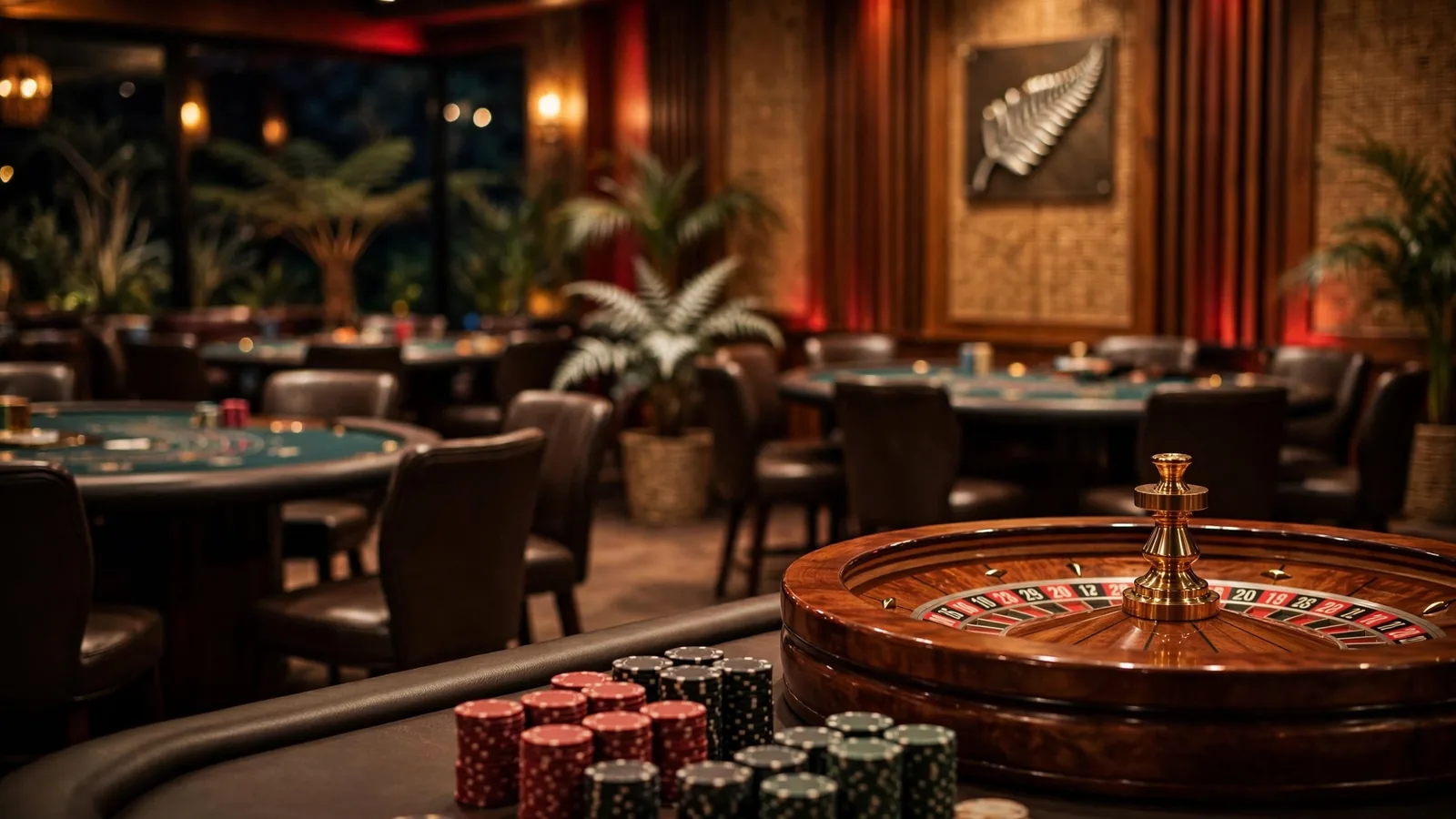
The defining reference point is the wheel: European Roulette has 37 pockets, one of them zero. Its house edge is 2.70%. That figure describes the game’s mathematical structure, not a forecast for an individual session or a measure of whether a particular site is suitable. A real-money bet can lose, and no presentation format changes the underlying exposure.
Free online play and real-money play are different activities, even when their screens look alike. A no-stakes mode can show how a digital or live-style interface presents a table, but its results do not establish what will happen in later play for money. The absence of a cash stake is also not proof that a real-money version has the same conditions. These are separate questions, and treating one as an answer to the other confuses demonstration with financial terms.
For real-money play, the relevant comparison is not merely between interfaces. The displayed rules, the table’s European designation, and the conditions attached to the account all affect what is being offered. Promotional terms can change the amount that must be played before a balance is withdrawable; a headline offer is not the final cash value. Those conditions should be assessed separately from the roulette format.
Live play adds a viewing component, not a different mathematical advantage by itself. A streamed dealer may make the action easier to follow, while a digital table may present it more compactly. Neither feature supplies winning tips. Roulette outcomes are random, and previous results do not make a future result more predictable. Betting systems do not remove the house edge.

Online availability should not be read as an endorsement, ranking, or assurance about a service. Search results and product labels describe what is being presented, not whether its terms suit a particular budget. Any real-money session carries the possibility of loss; stakes should never exceed what can be afforded to lose. The useful distinction is straightforward: free play is a demonstration, live play is a format, and real-money play is a financial risk.
Published by the Casino Slots Adviser NZ team.