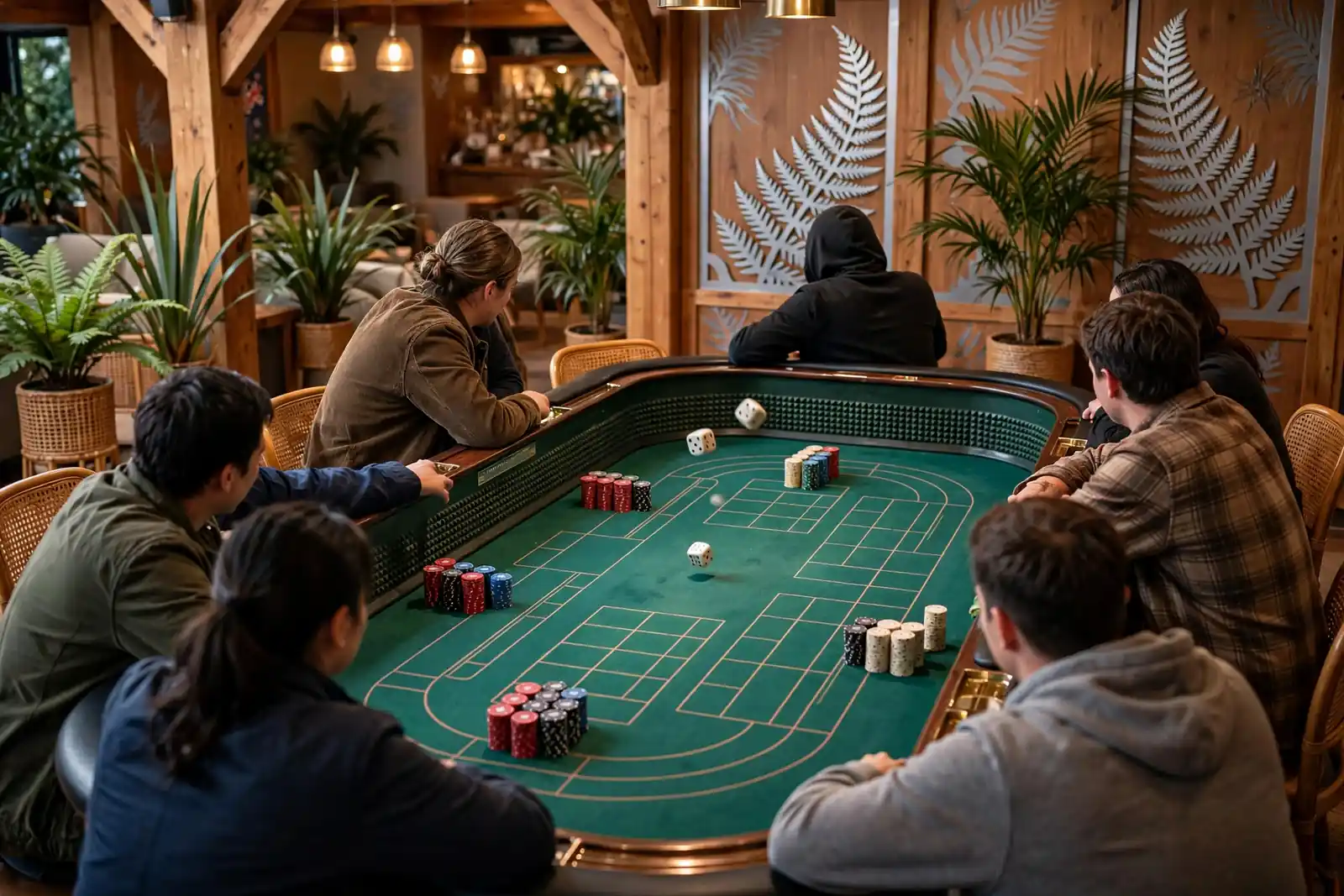
French Roulette in New Zealand: Rules and Odds
 Available in US
French Roulette uses a single-zero wheel, while table rules such as La Partage and En Prison shape how some bets settle.

Table of Contents
- Free French Roulette: What a Practice Session Can—and Cannot—Show
- French Roulette Online in New Zealand: Rules, Access and Terms
- Live and Auto French Roulette: Read the Wheel, Not Just the Screen
- French Roulette Bets: La Partage, En Prison and How They Settle
- French Roulette Probability: The Edge and the Limits of Strategy
- French vs American Roulette: The Cost of the Extra Zero
- French Roulette Payouts: What the Published Percentages Mean
- French Roulette Calls: Wheel-Based Bets and Dealer Procedure
- French Roulette or Blackjack: Comparing the House Edge Carefully
- French Roulette Gold Live: Check the Rules Behind the Label
Free French Roulette: What a Practice Session Can—and Cannot—Show
A free French roulette game can be useful for learning where controls sit and how a betting screen responds. It gives a player room to inspect the single-zero table layout, select chips, place a wager and clear or repeat choices without risking money. That is a narrow but practical purpose: it can reduce uncertainty about the interface before any real-money play is considered.
French Roulette shares its single-zero wheel arrangement with European Roulette. Its French identity comes not from a different set of pockets, but from rules that may include La Partage and En Prison. A practice table can help distinguish the game’s name and presentation from its underlying wheel layout, although the precise rules available depend on the table being used. The label alone is not a substitute for checking the displayed rules.
During free play, the useful observations are operational. The table shows where the numbers and betting areas appear; the controls show how a selection is made and how the interface confirms it. A player can become familiar with the difference between choosing a number and selecting a broader betting area, and can see what happens when a selection is removed or changed. These are interface skills, not evidence about which outcome is more likely.
Choosing French roulette in New Zealand means checking the details that matter to you before settling on a casino. This list offers a concise reference to the information available for each operator.
License: Malta Gaming Authority, licence no. MGA/B2C/394/2017 N1 Casino lists a Malta Gaming Authority licence, number MGA/B2C/394/2017. This is the licensing information provided for this operator.
License: Curaçao Gaming Authority, licence no. OGL/2024/165/0185 BitStarz lists a Curaçao Gaming Authority licence, number OGL/2024/165/0185. This gives readers a specific licensing detail to consider.
License: Tobique Gaming Commission, licence no. 0000064 Neospin lists a Tobique Gaming Commission licence, number 0000064. Its stated licence is the available detail for this listing.
Payout speed: 1-3 business days Lamabet lists a payout speed of 1-3 business days. This gives readers a stated timeframe to consider when reviewing the operator.
License: Tobique Gaming Commission, licence no. 0000091 7Bit Casino lists a Tobique Gaming Commission licence, number 0000091. This is the specific operator detail available here.
License: Tobique Gaming Commission, licence no. 0000002 Ricky Casino lists a Tobique Gaming Commission licence, number 0000002. Readers can use this as a licensing detail when considering the listing.
License: 07017519840 · Payout speed: 1-3 business days Zotabet lists licence number 07017519840 and a payout speed of 1-3 business days. These are the stated details available for this operator.
License: Malta Gaming Authority, licence no. MGA/B2C/370/2017 Play Grand lists a Malta Gaming Authority licence, number MGA/B2C/370/2017. This provides a specific licensing detail for readers to review.
Payout speed: 1-3 business days Wintino lists a payout speed of 1-3 business days. This is the available detail to consider when reviewing the operator.
That distinction matters because practice mode removes the financial consequence while retaining the visual rhythm of a game. A result may appear, the interface may update, and another round may begin. The sequence can feel informative simply because it is visible. It is not a forecast. A practice record cannot identify a number that is due, establish that a colour is likely next, or demonstrate that a particular sequence will repeat when money is involved.
Roulette spins are independent. The result of one spin does not alter the probability of a result on the next spin. A run of one colour, a long gap without a particular number, or a sequence that looks unusual has no predictive force for the next outcome. The wheel does not retain a memory of the demonstration, and a free session does not train it to behave differently.
Free French roulette online also cannot reproduce the full financial conditions of real-money play. With no stake at risk, a mistaken click has no monetary cost, and a sequence of losses does not reduce a balance. Real-money play changes that part of the experience, not the independence of the spins. Every real-money bet can lose, so a practice session should not be treated as proof that a player is prepared for financial risk or likely to make a return.

There is a practical difference between learning the controls and rehearsing a betting plan. The former is observable: a player can determine whether the interface makes a selection clear and whether the available actions are understandable. The latter can create false confidence if a short run of simulated results is mistaken for evidence. Free play may show how a chosen sequence of clicks is entered; it cannot show that the sequence has a reliable advantage.
The same caution applies to any apparent pattern in a practice history. A screen may preserve previous outcomes, but that record describes what has already happened. It does not change the odds of later spins. Treating recent results as a signal risks confusing a display feature with a property of the game. The interface can make past outcomes easy to review; it cannot turn them into information about the next result.
A sensible assessment of a free session is therefore limited. It can answer whether the table is legible, whether the controls make sense and whether the player understands how to enter and revise selections. It cannot establish a winning approach, validate a system or make future outcomes more predictable. Once the practice screen is closed, none of its results carry over as an advantage.
This boundary also helps clarify what “free” means in context. It describes the absence of a real-money stake in the practice session; it does not mean that results are a reliable preview of later play. A demonstration can be educational at the level of navigation, while remaining irrelevant as evidence about future outcomes. Those are separate functions, and only the first is served by rehearsal.
Attention: A practice session is a tool for learning the interface and navigation, not a forecast of future outcomes or evidence of a winning strategy.
For anyone who later chooses to play for money, the financial limit belongs outside the practice screen: never risk more than can be afforded to lose. Familiarity with buttons and table markings can reduce avoidable interface mistakes, but it cannot remove the chance of loss. Free play is best treated as a tour of the controls and layout—not a rehearsal that makes roulette predictable.
French Roulette Online in New Zealand: Rules, Access and Terms
French roulette is an online casino game, but its availability in New Zealand sits within a changing legal framework. The Online Casino Gambling Act 2026 took effect on 1 May 2026, establishing the country’s first domestic licensing system for online casino gambling. The transition period runs from that date until 1 December 2026. Providers that were already serving New Zealand customers before the Act took effect may continue during this window, subject to the transitional provisions.
That does not mean the full licensing regime is already operating. Its complete implementation is expected in 2027. Until then, the transition rules matter: a provider’s ability to continue operating depends on its status under the Act, not simply on whether a website can be reached from New Zealand.
The distinction is important because domestic online casinos were not permitted under the Gambling Act 2003. Before the 2026 Act, offshore online casino services were not licensed or supervised by a New Zealand regulator, and customers using them had no domestic government recourse. The new law creates a route to domestic licensing; it does not make every offshore site locally licensed by default.
The Department of Internal Affairs is New Zealand’s primary gambling regulator and oversees the online casino licensing framework. The Gambling Commission hears and decides casino licence applications, issues online casino licences and approves changes to licence conditions. These roles are separate: oversight of the framework sits with the Department, while licensing decisions and specified changes fall to the Commission.

Advertising is also subject to the transition context. Online casino gambling services must not be advertised to people in New Zealand during the transition period.
Read bonus terms as a set of conditions
A bonus headline is not the amount available to withdraw. An offer may depend on eligibility rules, wagering requirements, an expiry date, game-contribution rates and withdrawal restrictions. Each condition changes the practical value of the promotion, so the terms should be read together rather than treating the headline as cash already earned.
The required wagering terms are specific: bonus money must be wagered 50X within 30 days. Winnings from free spins must be wagered 50 times within 7 days. A withdrawal request voids all active or pending bonuses. That last condition can change the result of withdrawing even when the bonus has not expired; the offer’s remaining value is lost when the request is made.
Game contribution also matters. If a game contributes differently towards wagering, the apparent progress shown by a session may not match the amount required by the offer. Eligibility, expiry and withdrawal conditions can narrow the offer further. The relevant calculation is therefore not just the bonus credited, but what must be wagered, by when, under which game rules, and what is forfeited on withdrawal.
For French roulette in New Zealand in 2026, the practical checks are distinct: whether the provider falls within the transition provisions, whether advertising rules are being respected, and whether any bonus terms fit the intended play. Roulette remains gambling, not a way to convert promotional credit into a certain return. Every real-money bet can lose, and no bonus condition changes that exposure.
Check Before Playing
- Confirm the provider falls within the Online Casino Gambling Act 2026 transition provisions
- Review the full bonus terms, including wagering requirements and expiry dates
- Check the game-contribution rates for the specific roulette table
- Verify the withdrawal restrictions and their effect on active bonuses
Live and Auto French Roulette: Read the Wheel, Not Just the Screen
Live and automated French roulette present the same basic distinction in different ways: the wheel is circular, while the betting layout is arranged as a grid. The French wheel has one zero and shares its number arrangement with European roulette. The French identity comes from the rules attached to the game, including La Partage and En Prison, not from a separate sequence of wheel pockets.
In a live game, the screen typically combines a view of the wheel and table with a digital betting area. In an automated game, the wheel and its result are shown through the game interface rather than a live table presentation. Either way, the display should be read as two related but different maps. The wheel shows where numbers sit around the rim; the layout organises the available selections for placing bets.

That distinction matters when a selection refers to wheel positions. A number’s neighbour on the circular wheel is not necessarily the number printed beside it on the betting grid. The grid is built to make bet placement legible, not to reproduce the wheel’s physical order. A French roulette layout can therefore show the single zero in a familiar position within the table arrangement while the wheel depicts it among the pockets around the rim. One view is not a rearrangement of the other.
What to check on screen
Before placing anything, the displayed game name and table information should identify the version being played. A French title alone does not show every relevant rule: the single-zero wheel is shared with European roulette, while the French rules distinguish how eligible bets are treated. Those rules belong to the table’s stated conditions; they should not be inferred from the colour scheme, dealer view, or the word “French” in a menu.

The betting panel is a control surface, not a picture of the wheel. Its number grid and outside-bet areas indicate where selections can be made. A chip placed on a table position records a choice on that layout; it does not move a number to a different position on the wheel. This is especially important in a live interface, where a camera view may make the physical wheel seem more prominent than the betting panel, and in an automated interface, where the grid may occupy most of the screen.
In both formats, the wheel result and the table selection serve different purposes. The wheel determines the pocket shown as the outcome. The layout records the bet. Keeping those functions separate makes it easier to read the display without treating neighbouring cells as neighbouring pockets.
A desktop display may leave the wheel and betting grid visible together, while a smaller screen may give one element more space at a time. The relevant check is not the size of the screen but whether the table version, wheel and selection panel remain identifiable. If a view hides the wheel order or makes the selected area unclear, the display provides less information for confirming a choice. Interface presentation can vary; the single-zero arrangement does not become a different wheel because the screen is rearranged.
The wheel determines the pocket outcome, while the betting layout records the selection; these are two separate maps and should not be treated as interchangeable.
Live and automated play are therefore presentation formats, not separate definitions of French roulette. The wheel remains the reference for pocket order, and the grid remains the reference for placing a selection. A clear display keeps both visible enough to distinguish; it does not make them interchangeable.
French Roulette Bets: La Partage, En Prison and How They Settle
The difference between La Partage and En Prison appears only in a specific situation: zero lands while an even-money outside bet is active. These rules do not apply to every wager on the layout. An even-money bet is one whose ordinary winning return matches the stake, such as a bet on red or black. The two rules change what happens to that stake after zero; they do not change the bet’s category.
With La Partage, half of the stake is returned and the other half is collected. The bet is settled on the zero result, so the returned portion is not left on the table for another spin. For a stake treated as a whole, the result is straightforward: one half comes back, and one half is lost. The return is not a win in the ordinary sense; it is the portion of the original stake that the rule preserves.

En Prison handles the same zero result differently. Instead of immediately returning part of the stake, the table carries the even-money bet forward. The original stake remains committed to a later spin. If that spin produces a result that wins the bet, the stake is returned, but no additional winnings are paid. If the later result loses the bet, the stake is collected.
That distinction matters when recording the outcome. Under La Partage, zero produces an immediate partial return and a partial loss. Under En Prison, zero leaves the stake unresolved: it is neither returned nor collected at that point. The following spin determines whether the original stake comes back or is lost. A carried bet is not a fresh wager and does not earn a normal even-money profit if it wins.
| Rule | What happens when zero lands on an eligible bet | What happens next |
|---|---|---|
| La Partage | Half the stake is returned; the other half is collected. | The bet is settled. |
| En Prison | The stake is held and the bet is carried forward. | A winning result returns the original stake without extra winnings; a losing result means the stake is collected. |
The table conditions should be read before placing a bet, because the French label alone does not tell how a particular table handles zero. Both rules concern even-money outside bets only. A bet placed on another part of the layout is not covered by these settlement terms simply because it is on a French table.
For someone learning the French betting terms, the useful distinction is between a split settlement and a delayed settlement. La Partage divides the stake’s outcome immediately. En Prison suspends the decision on the stake until the next spin. The French names are not interchangeable: one describes sharing the stake’s loss, while the other refers to keeping the bet in play.
French and European roulette use the same single-zero wheel layout, but French roulette may apply these additional rules to qualifying bets. The practical difference is therefore not the location of the bet on the layout; it is the settlement instruction attached to an eligible outside wager when zero appears. The bet must already be an even-money outside bet for either rule to apply.
- Check the table conditions for zero settlement rules
- Distinguish between split (La Partage) and delayed (En Prison) settlement
- Ensure the bet is an even-money outside wager for the rule to apply
- Assume the “French” label automatically defines the settlement rule
- Apply zero settlement rules to inside bets or other layout areas
- Confuse a carried bet under En Prison with a fresh wager
A clear record of the stake, the zero result and any carried status prevents the two outcomes from being confused. With La Partage, the returned half is available immediately. With En Prison, the full original stake remains tied to the carried bet until the next spin resolves it. Neither rule turns zero into a winning result; each specifies how the stake is treated when that result occurs.
French Roulette Probability: The Edge and the Limits of Strategy
When La Partage or En Prison applies, the house edge in French roulette is 1.35% on eligible even-money bets. That figure describes the game’s mathematical advantage over repeated play under those rules; it is not a deduction made from every stake, nor a forecast of the result of a particular session. A French roulette table without the relevant rule should not be assumed to offer the same edge.
The reduction is tied to what happens when zero appears on an even-money outside bet. La Partage and En Prison limit the loss in that situation, which is why French roulette offers its strongest odds on those bets. The effect does not extend to every wager on the layout. A strategy that mixes bet types cannot treat the lower edge as though it applied uniformly to all stakes.
The 1.35% figure is small enough to be easy to misread. It does not mean that a player will lose that proportion of their money during a short visit, or that a win is likely on any particular spin. Actual results can finish above or below the long-run expectation. A run of wins does not erase the mathematical edge, and a run of losses does not mean the game owes a recovery.

Roulette spins are independent. The wheel does not retain a record that changes the probability of its next result. Recent reds do not make black more likely on the following spin; a number that has not appeared for a while is not thereby due. A sequence can look patterned after it happens, but that appearance is not a reliable signal for the next outcome.
This is where common betting systems fail as probability tools. Increasing a stake after a loss, alternating between bet types, or following a recent-results pattern changes the size and timing of exposure, not the underlying odds. A system may produce a different distribution of wins and losses across a limited session, but it cannot remove the house edge or make future spins dependent on past ones. Any apparent short-term success remains a result, not evidence that the wheel has become predictable.
The practical calculation is therefore conditional: the 1.35% edge applies when the French rules cover the even-money bet in question. The table’s stated rules matter, as does the type of wager being placed. Even with the favourable rule in force, every real-money bet can lose. A fixed spending limit can control the amount exposed; no betting progression can make that exposure risk-free. Do not risk more than can be afforded to lose.
French vs American Roulette: The Cost of the Extra Zero
French and European roulette use the same single-zero wheel: 37 pockets, with one pocket marked zero. American roulette adds a double-zero pocket, bringing its total to 38. That extra result changes the underlying cost of a bet: the stated house edge is 2.70% for European roulette and 5.26% for American roulette.
Uses a single-zero wheel; house edge can be 1.35% on eligible even-money bets with La Partage or En Prison.
Uses a single-zero wheel with a standard house edge of 2.70%.
Uses a double-zero wheel, resulting in a higher standard house edge of 5.26%.
French roulette shares the European wheel, but its rules can change the edge on eligible bets. When La Partage or En Prison applies, the house edge is 1.35% for even-money outside bets. Those rules concern what happens when zero lands; they do not remove zero from the wheel. The distinction is between the number of possible outcomes and how a qualifying bet is settled.
The comparison is therefore not simply “French versus American” as two labels. A French table with the relevant rule gives eligible even-money bets a lower stated edge than the standard European figure, while the standard American layout has the highest edge of these three. For other bet types, the French zero rules do not apply, so the 1.35% figure should not be treated as the cost of every French bet.
There is a qualification on American tables. A specialist review describes some tables in Atlantic City as returning half of an even-money stake when either zero or double zero appears. That arrangement is not a standard American roulette rule, and its presence should not be inferred from the game name or the two-zero layout. Without such a provision, the American table’s stated edge is 5.26%.
For someone comparing French roulette with American roulette, the relevant details are the wheel’s pockets and the table’s stated rules—not just the label on the screen. A single-zero wheel sets French and European roulette apart from the standard American layout, while the French settlement rule can further reduce the edge on its specified bets. The extra American pocket has a measurable cost; an occasional table rule does not change the general comparison.

Roulette results remain random, and every real-money bet can lose. No variant makes a loss avoidable, so only money that can be lost without affecting essential expenses belongs in play.
French Roulette Payouts: What the Published Percentages Mean
A payout percentage is a long-run theoretical measure, not a promise about the amount returned during a particular session. A specialist roulette review reports a 97.30% payout percentage for European Roulette and 94.70% for American Roulette. These figures describe the variants covered by that review; they are not a forecast for a particular table or a guarantee that an individual player will receive those proportions back.
The European figure corresponds to a stated house edge of 2.70% for single-zero European Roulette. The two percentages describe the same long-run relationship from opposite sides: the payout percentage represents the theoretical share returned, while the house edge represents the theoretical share retained. Neither measure predicts the result of the next spin, or totals up neatly over a short visit.
That distinction matters when assessing a French roulette payout. French Roulette uses a single-zero wheel, but its available rules can affect the treatment of eligible bets. A headline percentage should therefore be read alongside the table’s actual rules, not treated as a universal property of every game carrying the French label. A published figure without its variant and rule context is incomplete information.
Even a correctly stated theoretical return does not set a minimum return for a session. Roulette results are random, and every real-money bet can lose. A session may finish above or below a theoretical percentage; the percentage is not a refund rate, a target, or a timetable for a return. The calculation describes repeated play in theory, not a personal balance sheet after a limited number of spins.
Financial Risk
Every real-money bet can lose regardless of theoretical payout percentages; never risk more than you can afford to lose.
For anyone choosing to play French Roulette for fun, the practical distinction is between entertainment spending and expected return. The percentage can help compare the stated mathematics of variants, but it cannot make a losing session unlikely or turn play into income. Any amount staked should be money that can be lost without affecting other commitments. A table’s published return is useful context, not a spending limit and not a guarantee.
French Roulette Calls: Wheel-Based Bets and Dealer Procedure
A called bet is defined by a group of numbers in relation to their positions around the wheel. It is not defined by where those numbers happen to sit on the betting layout. That distinction matters because the wheel and the table serve different purposes: one arranges pockets in a physical sequence, while the other provides spaces for placing wagers. A call refers to the wheel grouping, not a cluster of neighbouring boxes on the felt.
This is the practical point behind French roulette call bets. The term describes a way of specifying a wheel-based group, rather than a separate wheel or a different set of pockets. The table layout remains the place where the bet is represented, but the group itself follows the wheel’s order. Treating a visually convenient patch of the layout as a wheel group can therefore produce the wrong interpretation.
French roulette uses the same single-zero wheel arrangement as European roulette. Its distinct French feature is La Partage, a rule exclusive to French roulette. That label identifies a rule attached to the game, not a call or a wheel sector. Keeping the categories separate avoids a common confusion: calls describe which wheel positions are grouped, while La Partage describes a rule of play.

At the table, clear wording is more useful than pointing vaguely at the layout. A call should identify the intended wheel grouping; if the dealer repeats or clarifies it, that confirmation helps establish what has been placed. This is practical table communication, not a way to alter the probabilities or predict where the ball will land. The arrangement of numbers around the wheel is fixed, but each spin remains random.
For anyone learning the procedure, the useful check is whether a stated group refers to wheel positions or simply to nearby spaces on the betting layout. Those are not interchangeable descriptions. French roulette is not defined by its calls alone: the single-zero wheel is shared with European roulette, while La Partage is the French-specific distinction named here.
Dealer etiquette does not change the wager’s mathematical terms. Calls should be made plainly, and any ambiguity should be resolved before treating the bet as understood. No call makes an outcome certain; every real-money bet can lose, so stakes should remain within what can be afforded to lose.
French Roulette or Blackjack: Comparing the House Edge Carefully
A comparison between French Roulette and blackjack needs a defined basis. French Roulette has a stated house edge of 1.35% when La Partage or En Prison applies to eligible even-money bets. That figure describes the game’s mathematical cost under those conditions; it is not a forecast of the result of an individual session.
Comparing house edges between games requires matching the specific rule sets and conditions of both the roulette table and the blackjack game.
Blackjack does not have one universal edge that can be placed beside that figure without qualification. The calculation depends on the table’s rules and the decisions made during play. A comparison that gives a single blackjack percentage without specifying those terms may appear precise while comparing unlike conditions. The more reliable approach is to identify the French Roulette rule set and the blackjack conditions first, then compare figures calculated on the same basis.
The 1.35% figure also has a defined scope. It applies when the French rules are in force and concerns eligible even-money bets; it should not be treated as a blanket cost for every wager at a French Roulette table. A table’s name alone is not enough to establish which rules apply. In New Zealand, the distinction matters when comparing games offered by online casinos: the relevant terms are those attached to the specific table, not the broad label used in a menu.
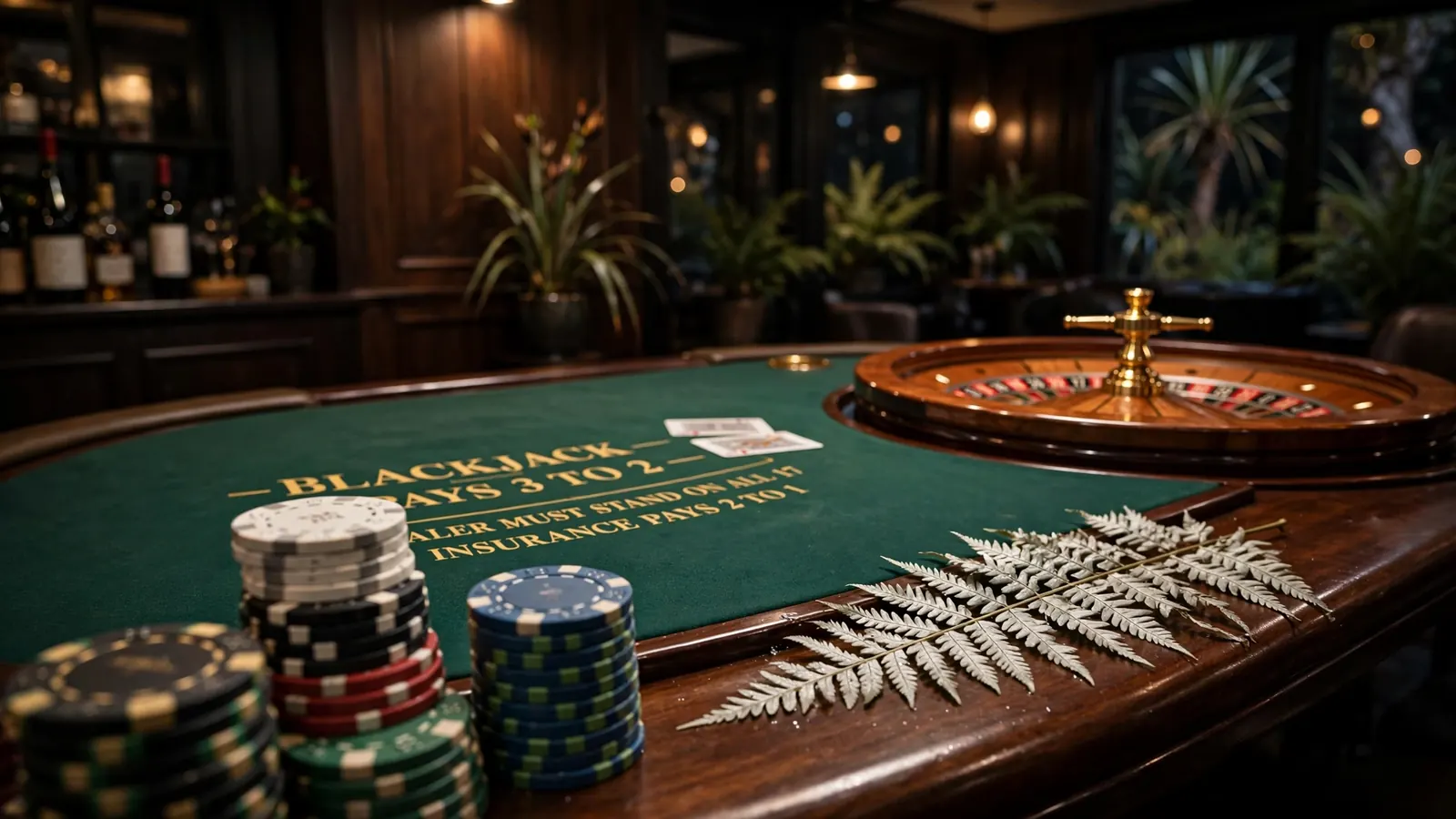
Calling French Roulette the game with the “smallest edge” would therefore overstate what the figure establishes. It supports a narrower conclusion: under the stated French rules, the house edge for qualifying even-money bets is 1.35%. It does not prove that French Roulette is cheaper than every blackjack game, or that its cost is lower in every session. A blackjack comparison is meaningful only when its rules and assumptions are stated alongside the roulette conditions.
Neither figure turns a gambling result into a certainty. Roulette outcomes are random, and earlier spins do not change the probability of later ones. A run of wins does not remove the risk attached to the next bet, and every real-money wager can lose. Betting systems do not erase the house edge; they change the pattern of stakes, not the underlying game advantage.
For a cost comparison, the useful record is simple: the French table’s applicable rules, the type of bet being assessed and the blackjack rules used for its calculation. Without matching those conditions, a ranking between French Roulette and blackjack is not a sound financial comparison. Gambling remains entertainment with a possible cost, so stakes should never exceed what can be afforded to lose.

French Roulette Gold Live: Check the Rules Behind the Label
“Gold” is a product label, not a roulette rule. It does not, by itself, establish a different wheel, a special payout schedule or a change to the game’s mathematics. The relevant details are the wheel and the rules attached to the table.
French Roulette has a single-zero wheel, as does European Roulette. Its distinguishing rules can include La Partage and En Prison, which affect eligible even-money outside bets when zero appears. Those rules, rather than a decorative name, are what make a table identifiable as French Roulette. The label alone does not confirm that either rule is active.
Before treating a Gold-branded table as French Roulette, the published game rules should identify the wheel as single-zero and state whether La Partage or En Prison applies. If the terms do not specify the relevant rule, the name is not enough to settle the point. A gold-themed title may describe presentation; it cannot substitute for a rule statement.
This distinction matters because roulette names can combine a recognised game variant with a product label. The variant determines the underlying structure; the label may identify a particular presentation or release. Without explicit rules, assumptions about a Gold version’s features would be just that: assumptions.
The same check applies when a table is described as live. “Live” says nothing by itself about whether French rules are in force, and “Gold” adds no confirmation. The useful evidence is the table’s stated wheel and rule set. Where those show a single-zero wheel and French rules, the game can be assessed on that basis; where they do not, the branding has no accounting value.
There is no need to infer a special Gold-specific advantage from the title. French Roulette’s defining distinction remains its single-zero wheel alongside rules such as La Partage and En Prison. Any claim beyond those stated mechanics should be checked against the table’s own rules, not derived from the word “Gold.”
Written by the editors at Casino Slots Adviser NZ.