Blackjack Sites in New Zealand: Rules and Play
 Available in US
A practical guide to licensing, table conditions, real-money terms, payment claims and what online card counting can—and cannot—do.

Table of Contents
- New Zealand’s Online Casino Licensing Framework in 2026
- What Makes Blackjack Tables Different
- Live-Dealer Blackjack: Real Cards, Different Conditions
- Online Blackjack and Software-Shuffled Games
- Real-Money Blackjack: Payouts and the Cost of the Terms
- Card Counting Online: What Mental Calculation Can and Cannot Do
- How a Blackjack Hand Works Online
- Blackjack Sites and Payment Claims: What Can Be Verified
- Comparing Blackjack Websites Without a Ranking
- Bitcoin Blackjack: Separate the Payment Claim from the Game
New Zealand’s Online Casino Licensing Framework in 2026
The legal position for blackjack sites in New Zealand in 2026 is shaped by a transition from offshore provision without domestic oversight to a licensing system created under the Online Casino Gambling Act 2026. The Act took effect on 1 May 2026, but its commencement did not mean that the full licensing regime was immediately operational. The transition period runs until 1 December 2026, and the complete system is not expected to be in place until 2027.
The Department of Internal Affairs (DIA) is New Zealand’s primary gambling regulator and oversees regulation of the online casino licensing framework. The Gambling Commission has a distinct decision-making role: it hears and determines casino licensing applications, issues online casino licences and approves changes to licence conditions. The division matters. The DIA provides regulatory oversight; licensing decisions and amendments to licence conditions sit with the Commission.
A change from offshore oversight to domestic licensing
Before the 2026 Act, online casino gambling supplied from outside New Zealand was not licensed or supervised by a New Zealand regulator. A customer who wagered with an offshore website during that period had no domestic government recourse. That position should not be confused with a system in which an overseas licence automatically gave a site New Zealand regulatory status. It did not.
Choosing a blackjack site in New Zealand can involve checking the details available for each operator. This list offers a concise reference to the stated licensing or payout information.
License: Malta Gaming Authority, licence no. MGA/B2C/394/2017 N1 Casino lists a Malta Gaming Authority licence, no. MGA/B2C/394/2017. This provides a specific licensing detail to consider when reviewing it for blackjack.
License: Curaçao Gaming Authority, licence no. OGL/2024/165/0185 BitStarz lists a Curaçao Gaming Authority licence, no. OGL/2024/165/0185. The licence information is a concrete detail for readers assessing the site.
License: Tobique Gaming Commission, licence no. 0000064 Neospin lists a Tobique Gaming Commission licence, no. 0000064. Its stated licensing information is relevant when considering it for blackjack.
Payout speed: 1-3 business days Lamabet lists a payout speed of 1–3 business days. This gives readers a stated timeframe to take into account.
License: Tobique Gaming Commission, licence no. 0000091 7Bit Casino lists a Tobique Gaming Commission licence, no. 0000091. This specific licence detail may help readers review the operator.
License: Tobique Gaming Commission, licence no. 0000002 Ricky Casino lists a Tobique Gaming Commission licence, no. 0000002. The licence number is a concrete detail to consider when reviewing it.
License: 07017519840 · Payout speed: 1-3 business days Zotabet lists the identifier 07017519840 and a payout speed of 1–3 business days. The stated payout timeframe offers a practical detail for readers to note.
License: Malta Gaming Authority, licence no. MGA/B2C/370/2017 Play Grand lists a Malta Gaming Authority licence, no. MGA/B2C/370/2017. Its stated licensing detail gives readers a specific point of reference.
Payout speed: 1-3 business days Wintino lists a payout speed of 1–3 business days. This stated timeframe is the available practical detail for readers to consider.
The Gambling Act 2003 prevents online casinos from being based in New Zealand. The 2026 legislation establishes the country’s first domestic licensing regime for online casino gaming, changing the framework for providers serving local customers. The change concerns the status and oversight of operators, not the rules of an individual blackjack table.
There is a defined bridge between the former position and the intended licensed system. Online casinos that were already providing services to people in New Zealand before 1 May 2026 may continue operating during the transition, subject to the Act’s transitional provisions, until 1 December 2026. This permission is temporary; it is not the same as having received a licence under the new regime. The transition also does not establish that every site available to New Zealand residents qualifies to continue.
The Commission’s licensing decisions
The Gambling Commission is responsible for considering applications and deciding whether to grant online casino licences. It also approves proposed changes to licence conditions. These functions place the Commission at the centre of entry into the future domestic regime and of formal changes to the terms under which a licensee may operate.
An application, a licence and a change to licence conditions are separate regulatory matters. The Commission’s role is not simply to record which websites offer casino games. It hears and determines licensing applications, while the DIA oversees the wider regulatory framework. For a blackjack casino site, that distinction is more material than a label such as “best” or “licensed” used in promotional copy: the relevant question is whether the provider’s legal status fits the stage of the regime then in force.


The full licensed system is expected to become operational in 2027. Until then, the transitional provisions govern which existing providers may continue, and for how long. Providers that have not applied for a licence must cease conducting online casino gambling in New Zealand by 1 December 2026. If an application is declined, the provider must stop all online casino gambling operations in the country and leave the market. Unlicensed operation is expected to become an offence from around mid-2027. Those milestones describe operator obligations; they do not turn the transition into a blanket approval of all offshore sites.
What the framework means during the transition
The 2026 framework is therefore staged. The DIA oversees regulation, while the Commission handles licensing applications, grants licences and approves changes to licence conditions. Existing providers may continue under transitional rules until the specified end date, but that temporary allowance should not be described as a completed licensing approval.
Advertising is also constrained during this period: providers are prohibited from advertising online casino gambling services to people in New Zealand. Later, advertising by licensed operators is permitted only under tight rules, and sponsorships are prohibited. The shift to domestic licensing consequently involves more than granting permissions. It also defines when providers must stop operating and limits how licensed services may be promoted.
Licensing Deadlines
Providers that have not applied for a licence must cease conducting online casino gambling in New Zealand by 1 December 2026.
For people comparing blackjack casino sites in New Zealand, 2026 is not a single, settled licensing snapshot. The applicable position depends on the date and whether a provider falls within the transition provisions, has applied under the new system, or has obtained a licence once the regime is operating. A site’s presence online, an offshore authorisation or a marketing claim alone does not establish its status under New Zealand’s framework. The practical distinction is between temporary continuation under the Act’s transition and formal participation in the domestic licensing system.
What Makes Blackjack Tables Different
A blackjack table is defined by more than its name. The number of decks, the dealer’s action on soft 17, whether surrender is allowed and the payout for a natural blackjack can differ between games. These are rule settings, not cosmetic details: together they affect the choices available and can change both strategy and the house edge.
Deck count is one point to compare when looking at blackjack casino sites in New Zealand. A single-deck table may sound preferable, but deck count alone does not establish that a game offers better terms. The other rules still matter. A table with one deck can have conditions that differ from those at another table with one deck, so the label is not a complete comparison.
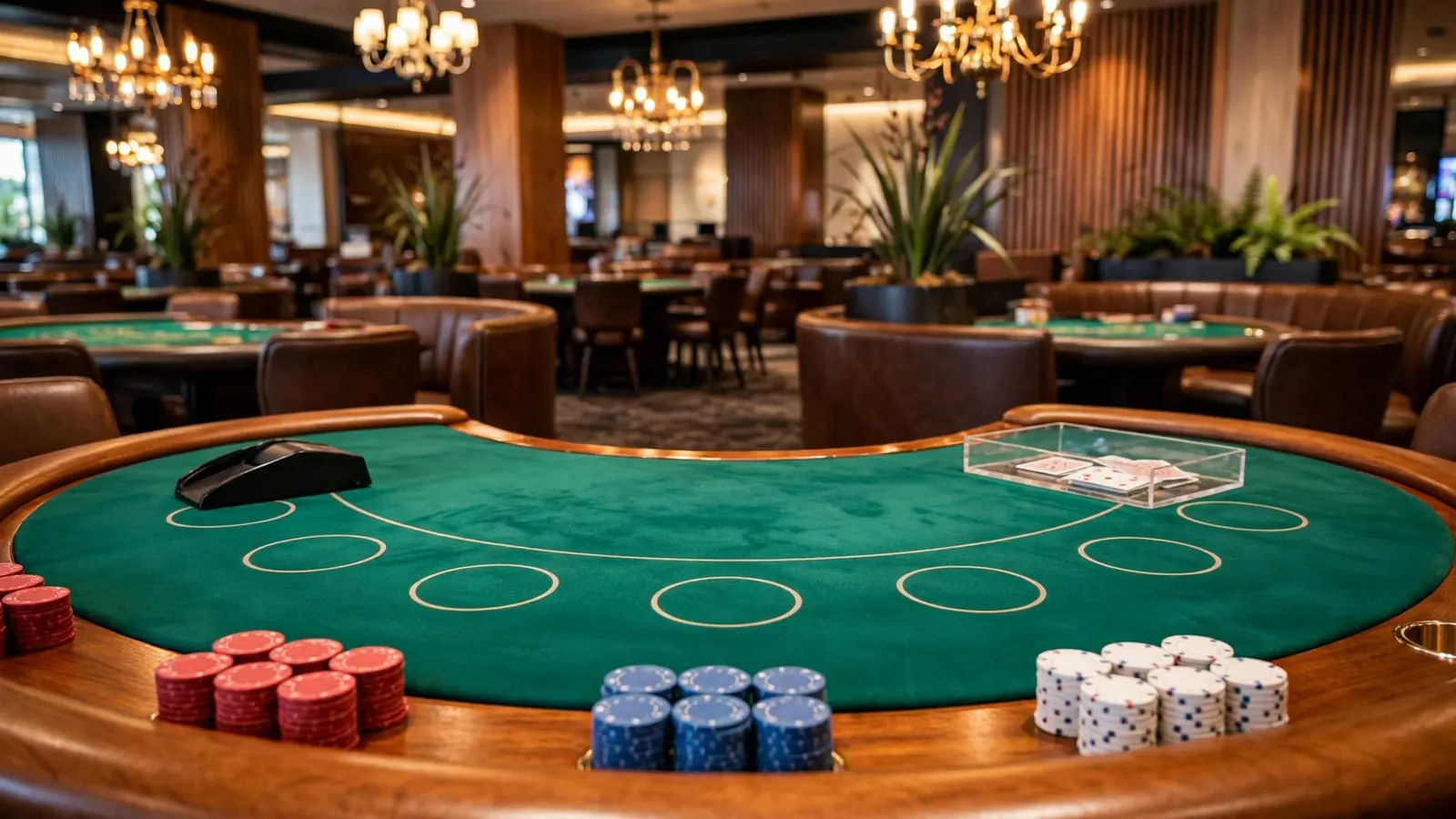
Soft 17 means a dealer hand totalling 17 that includes an ace counted as 11. Whether the dealer must draw again or stop at that point changes the table’s rules. The same is true of surrender: its availability gives a player an option that may not exist at another table. A comparison that records only deck count misses these differences.
Payout claims also need careful wording. A specialist review reports that some games pay a natural blackjack at 3:2, while others pay 6:5; that is a reported distinction, not a guaranteed rule across current tables. The payout stated in the game’s own rules is the relevant term for that table. A headline label such as “single deck” cannot substitute for it.
For someone looking for online tables with one deck, the useful distinction is between a search preference and a full set of conditions. Record deck count alongside the soft-17 rule, surrender availability and natural-blackjack payout. If any of those terms is unclear, the table cannot be compared on that point. Claims about the “best” blackjack sites have little value without the rules attached to the specific game.
These differences can affect strategy and house edge, so tables with the same broad blackjack label are not necessarily equivalent. A comparison based on stated rules is more informative than choosing by deck count alone.
Live-Dealer Blackjack: Real Cards, Different Conditions
Live-dealer blackjack uses physical cards dealt at a casino table and shown through a video stream. That separates it from a game in which software shuffles and deals virtual cards. The streamed format presents an actual table, but it does not remove the practical conditions of online play: the connection can introduce a delay, and some live tables may require higher bets.
Live Dealer Experience
Live-dealer blackjack uses a video stream of physical cards and a dealer, which may introduce connection delays and higher minimum bet requirements compared to software-run games.
The delay matters because the game unfolds through a stream rather than solely through software. A pause in the picture or a lag between the table and the screen can make a decision feel less immediate. It may also affect how quickly a hand proceeds. That is a difference in the playing experience, not evidence that the cards are dealt differently. The relevant question is whether the stream and decision window suit the pace of play.
A live table may also have a higher bet requirement than a software-run game. That changes the amount needed to take part, regardless of the fact that both formats are called blackjack. The table’s stated conditions therefore matter more than the general label. If a minimum bet is above the amount intended for a session, the format is a poor fit before any hand is dealt.
When assessing a live blackjack site, separate the table experience from the conditions attached to the game. The presence of a dealer and real cards describes how play is presented; it does not establish that the table has suitable bet requirements or an uninterrupted stream. Those details need to be visible in the table information. A polished video cannot compensate for unclear terms.


The main trade-off is straightforward. Live play offers a view of actual cards and a physical dealer, while the stream can add delay and the table may call for higher bets. A software-run game avoids the streamed table format, but that is a separate way of playing rather than a variation in how a live table is presented. Neither label, by itself, determines which option fits a particular budget or preference.
A sensible comparison of live tables begins with the conditions that affect participation: the stated bet requirement and the practical reliability of the stream. These are more useful than broad claims that a live blackjack website is the best. “Best” has no stable meaning without a defined priority. A player seeking a physical-card presentation may value that feature; someone focused on keeping the required stake lower may weigh the table conditions differently.
The actual-card format is not a guarantee of a better outcome. It changes the setting in which the game is shown, while the stream and bet requirement remain costs of access. In financial terms, the decision is simple: a table is only suitable if its stated conditions and pace are acceptable. Live presentation is a feature, not a substitute for checking what participation requires.
Online Blackjack and Software-Shuffled Games
In software-shuffled blackjack, the cards are handled by the game software rather than dealt by a live dealer from a physical shoe. The key practical difference is pace: RNG blackjack allows faster play than live-dealer tables. A hand does not have to follow the timing of a streamed table, so the format can move from one decision to the next more quickly.
RNG
Refers to the software-run format where cards are shuffled by software rather than by a dealer physically mixing cards.
That speed changes the feel of a session without changing the basic identity of blackjack. The game remains a contest against the dealer; what changes is how the cards are presented and how quickly play can proceed. A digital table may look like a conventional casino table, but its appearance does not make it a live game. The relevant distinction is whether actual cards are being dealt on camera or the game is using software shuffles.
“RNG” refers to the software-run format. In this context, the cards are shuffled by software, rather than by a dealer physically mixing cards. That description identifies how the game is run; it should not be confused with a claim about a particular website’s quality. A polished interface, familiar table layout or casino-style graphics do not, by themselves, establish anything beyond presentation.
The quicker pace can be useful when a player wants a less time-intensive format, but it also means decisions can arrive in rapid succession. A session that feels brief may still contain many hands. Speed is therefore a feature of the format, not evidence that the game is more favourable or that its outcome can be controlled. Software shuffles do not turn blackjack into a predictable sequence.
A practical way to assess the format is to separate three questions. First, is the game software-shuffled or live-dealer? Second, does the pace suit the intended session? Third, are the game’s displayed rules clear? The first two concern format and experience; the third concerns the conditions of a particular table. Keeping them separate prevents visual design or speed from standing in for information about how the game operates.

The word “online” covers both software-run tables and streamed dealer games, so it is not a useful description of pace on its own. A blackjack website may offer either format, and a page showing a digital table is not enough to identify which one it is. The game description should make the distinction clear. If the format is not stated, the interface alone cannot settle it.
Faster play also makes deliberate pacing relevant. A session can be ended between hands, and taking a pause interrupts the flow rather than changing the game’s rules. The point is straightforward: a quicker format compresses the time between decisions. It does not make each decision less consequential, nor does it establish that a player will finish sooner in any meaningful financial sense. Keeping a budget and avoiding attempts to recover losses by continuing are sensible controls when play moves quickly.
For a straightforward format choice, software-shuffled blackjack is the option when a live stream is not wanted and faster play is the priority. It is not a substitute for checking the individual game’s terms, and it does not provide a basis for assuming that all software-run tables work identically. The format answers how cards are shuffled and how play is paced; the specific table determines its own conditions.
Real-Money Blackjack: Payouts and the Cost of the Terms
A real-money table has two separate prices: the rules that determine what a hand pays, and any conditions attached to funds used for play. A favourable-looking bonus does not change the table’s payout, and a stronger blackjack payout does not remove restrictions attached to a bonus. They need to be assessed separately.
- Check the payout for a natural blackjack in the specific table rules
- Read bonus wagering requirements and maximum-bet rules before accepting
- Assume a site-wide description represents the rules of every table
- Treat a promotional bonus value as cash that can be withdrawn without conditions
A natural blackjack is described as paying 3:2 in a specialist review, while some tables are reported to pay 6:5. These are not interchangeable terms: for the same stake, 3:2 returns more on a natural blackjack than 6:5. The difference applies to that hand, not to every winning hand. It is therefore a mistake to treat the headline payout as a summary of the table’s entire value.
The payout should be checked in the rules for the specific table, rather than inferred from a site-wide description. The wording needs to establish what qualifies as a natural blackjack and what payout applies to it. Where the table description and the game’s rules do not agree, the effective terms are unclear; a promotional label cannot settle the discrepancy.
Bonus funds have their own cost
A bonus is not equivalent to cash that can be withdrawn without conditions. Before real-money play, the relevant terms include wagering requirements, the games that count towards them and any maximum-bet rule that applies while wagering. Blackjack may contribute differently from other games, so the stated bonus value alone cannot show how much play is required or how much of that play will count.
The calculation is conditional: the bonus has value only to the extent that its rules allow blackjack play to contribute and the restrictions can be met. If blackjack contributes less than other games, the apparent value of the offer may not translate into an equivalent reduction in the remaining wagering requirement. A maximum-bet rule also matters because exceeding it during wagering can affect eligibility under the terms.
These conditions should be read before a bonus is accepted, not after play has begun. The same applies to restrictions on withdrawals and to any rule that changes which bets qualify. If the wording does not make the treatment of blackjack clear, the monetary value of the offer cannot be calculated reliably.
Compare the terms, not the label
A claim to be the best online blackjack site for real money has little analytical value on its own. A meaningful comparison starts with the payout shown for a natural blackjack, then separates cash play from bonus play and checks the conditions attached to each. No single promotional figure captures both.
The final amount at stake is also controlled by the player’s own budget. A fixed budget sets the maximum exposure; increasing it to recover losses removes that boundary rather than improving the terms. Chasing losses does not change the payout rule or the bonus conditions.
A site’s real-money proposition is therefore not one number. It is the table payout, the bonus contribution rules, the wagering restrictions and the amount allocated to play. If any of those conditions are unclear, the apparent offer cannot be treated as a known final value.
Card Counting Online: What Mental Calculation Can and Cannot Do
Card counting is a mental method for keeping track of cards that have appeared and using that information to assess the cards still unseen. In New Zealand, doing this through mental calculation is not illegal. That legal position does not establish that a particular online blackjack format gives the count practical value, or that a site permits every form of play.
Attention Mental card counting is only effective if the game does not shuffle cards between hands or reset the sequence.
The arithmetic starts with the value of each card. Number cards retain their face value, while jacks, queens and kings count as ten. An ace can be treated as either one or eleven, depending on the hand. These values matter both when making ordinary decisions during play and when maintaining a running mental picture of cards already dealt.
The limitation online is continuity. A count can inform a decision only when the cards seen so far remain relevant to what may appear next. If the game’s software shuffles between hands or otherwise resets the sequence, earlier cards offer no dependable information about the next deal. Mental arithmetic cannot recover a pattern that the game has erased. The format and its dealing procedure therefore matter more than the mere presence of a blackjack table.
A streamed table using physical cards presents a different information flow from a software-run game, but that alone does not establish that conditions are suitable for counting. The dealing sequence, the point at which cards are reshuffled and the rules for the specific table all affect whether observations can be carried forward. Streaming delay or table access conditions can also make observation less practical. A label such as “card-counting friendly” is not a substitute for checking how the game actually deals.
A search for the best online blackjack site for card counting therefore has no useful answer based on legality alone. A meaningful comparison would need verifiable information about the game’s card handling and rules. Without that, a claim that a site is the best place to count is packaging, not a calculation. Nor does a mental count guarantee a winning result; it is information, not a betting system that removes risk.
Real-money play still has its own terms. Bonus conditions should be checked on trustworthy sites and casino pages before play: blackjack may contribute differently to wagering requirements, and maximum-bet rules can apply while wagering. A separate budget, with no attempt to chase losses, keeps the financial exposure defined. Counting changes neither those conditions nor the amount at risk.
How a Blackjack Hand Works Online
Blackjack is a contest against the dealer, not a race to reach 21 exactly. The aim is to finish closer to 21 than the dealer without going over. A hand that exceeds 21 cannot meet that objective, so each decision balances the value of improving the total against the risk of taking too much.
The available choices are hit, stand, double down and split. A hit adds a card to the hand, which may improve its total or push it beyond 21. Standing ends the player’s decisions on that hand. The basic trade-off is direct: another card can help, but it can also remove any chance of finishing within the limit.
Doubling down is a choice to increase the stake while taking a further card. It makes the decision more consequential because the additional stake is exposed to the result of that card. Splitting applies when the hand contains a pair: the pair is separated into two hands, each of which then has its own result to resolve. These choices do not alter the objective; they change how the hand is played and how much is at stake.
Blackjack Hand Options
- Hit: Adds a card to the hand to improve the total.
- Stand: Ends the player’s decisions on the current hand.
- Double Down: Increases the stake while taking exactly one more card.
- Split: Separates a pair into two independent hands.
The dealer is the opponent against whom the final comparison is made. A strong-looking player total is not enough on its own: the relevant result depends on where the dealer finishes as well. A hand can therefore be assessed in two stages. First, the player’s own total must remain at or below 21. Then it must be compared with the dealer’s total. The first condition is within the player’s control; the second depends on the other side of the table.
Online play keeps this decision structure intact, whether the cards are dealt through a stream or handled by software. The interface may present the choices as buttons, but the economic substance is unchanged: each selection determines whether the hand stops, takes another card, or changes its stake or structure. The screen is only the delivery mechanism.
A sensible hand decision is not a promise of a winning result. The same action can produce different outcomes as cards vary, and a favourable decision can still lose. Nor does a betting system remove that uncertainty. The useful distinction is between controlling a choice and controlling the result: the former belongs to the hand, the latter does not.
For that reason, a blackjack site is only a setting for the game, not an explanation of its decisions. Understanding the purpose of each action makes the table easier to follow, while the specific rules determine which choices are available and on what terms. The hand remains a comparison with the dealer, bounded by 21; every extra decision sits inside that boundary.

Blackjack Sites and Payment Claims: What Can Be Verified
A payment logo establishes, at most, that a payment method is being presented as relevant to a site. It does not establish that the method can be used by a New Zealand customer, that deposits and withdrawals follow the same process, or that a blackjack table is available after an account is opened. The claim “blackjack sites that accept PayPal” therefore needs to be treated as a claim to check, not as evidence of suitability.
The site’s own payment information should be consistent across its cashier, terms and conditions, and any stated eligibility rules. If those pages describe different options, or leave important conditions unclear, the logo cannot resolve the discrepancy. A visible method also says nothing by itself about processing time, fees, limits, or whether the account holder’s circumstances meet the stated requirements. Those details need to be established from the applicable terms rather than inferred from a graphic or a short promotional description.
The same distinction applies to labels such as “top” or “best”. They express a judgement, not a measurable feature. A site might be labelled highly without that label establishing which blackjack games are available, what their rules are, or whether the displayed payment methods suit a particular customer. A “top ten” heading is still only a heading unless the basis for the order is clear and supported by comparable information. Ranking language does not turn an unverified feature into a verified one.
Verify Site Terms
- Match payment logos with the actual terms and conditions
- Confirm if the payment method is available for New Zealand customers
- Check the bonus contribution rate for blackjack
- Verify the maximum-bet rule during wagering
- Establish a fixed budget before starting play
Blackjack access itself is a separate question from payment access. A listed cashier option does not show which tables are offered or whether a particular game permits the choices relevant to its rules. Depending on the table, a hand may allow hitting, standing, doubling down, splitting or surrendering. Those conditions belong to the game, not the payment method; neither a logo nor a ranking label answers them.
Before any real-money play, the fine print and bonus conditions should be checked on trustworthy sites and casinos. Blackjack may count differently toward wagering requirements, and maximum-bet rules may apply while wagering conditions are active. A bonus headline is not a summary of those terms. The usable value depends on the conditions attached to it, not on the size or prominence of the claim.
For New Zealand customers, payment claims should not be treated as proof of regulatory status either. A payment option cannot establish that a site is licensed locally or that a player has domestic government recourse. These are separate matters requiring separate evidence.

The practical test is narrow: identify what the site claims, locate the terms that govern it, and check that the information agrees. Set a budget before play and do not chase losses. When the relevant conditions cannot be established, the claim has no dependable value for a money decision.
Comparing Blackjack Websites Without a Ranking
A useful comparison of blackjack websites starts with what can be checked on the game table, not with a “best” label. A prominent position on a page does not establish that a site offers suitable rules, a preferred format or terms that fit a particular budget. The comparison is stronger when each claim can be matched to a game description, table information or the terms that apply to play.
Start by separating the website from the games it displays. A site may offer more than one blackjack table, and the rules can differ between them. A specialist review notes that deck count, the dealer’s action on soft 17, surrender availability and natural-blackjack payouts are among the conditions that can vary. That report is a reason to inspect the selected table itself, rather than assume every game on a website follows the same rules.
Comparing Blackjack Sites
- Verify table-specific rules like deck count and payouts rather than relying on site labels
- Distinguish between RNG software-shuffled games and live-dealer streamed formats
- Evaluate real-money bonuses based on wagering requirements and blackjack contributions
- Base comparisons on verifiable evidence and current details rather than ranking labels
The next comparison is format. Online RNG blackjack uses software shuffles and permits faster play than live-dealer blackjack. That is a practical distinction, not a quality verdict. A faster round pace may mean more decisions in the same playing period; a streamed table operates at a different pace. A site’s general description is not enough to establish which format a particular table uses, so the game label and its rules should agree.
A comparison based on evidence
A compact record makes differences easier to see:
| What to compare | What can be checked |
|---|---|
| Table rules | Deck count, soft-17 action, surrender and payout conditions stated for the specific game |
| Play format | Whether the game is software-shuffled RNG blackjack or a live-dealer table |
| Table selection | Whether the stated conditions apply to the selected table, rather than to blackjack in general |
| Real-money terms | Bonus conditions, wagering requirements, blackjack contribution and maximum-bet rules during wagering |
| Claims about “best” | Whether the claim is supported by comparable, current details rather than a ranking label |
This approach avoids treating a site-wide headline as a table rule. If one game description names a payout and another does not, the missing detail remains unknown; it should not be filled in from a neighbouring table or from a general statement about blackjack. The same applies to features described only in promotional copy.
For real-money play, bonus terms belong in the comparison because they can alter the conditions attached to funds. Check whether blackjack contributes differently to wagering requirements and whether a maximum bet applies while wagering those terms. A bonus headline without its conditions is not a usable measure of value. If the terms cannot be read clearly, the calculation cannot be completed reliably.
A comparison should also separate game suitability from playing limits. A set budget defines the amount available for play; losses do not increase that amount. Chasing losses changes the exposure without improving the terms of the game. This is a basic control, not a claim that any table or strategy removes risk.
What a ranking cannot establish
A list of the best blackjack websites may combine unlike things: game rules, formats and promotional terms. Without a common basis, the order does not show which site has the preferred table conditions. Nor does an “unblocked” label establish that a game is suitable, that its rules are clear or that its format is as described. Accessibility language is not evidence about the game itself.
For blackjack sites in New Zealand, the most defensible comparison is therefore specific and conditional: identify the table, record the rules displayed for it, confirm whether play is RNG or live-dealer, and read any real-money terms that apply. A website can be compared on those visible conditions without turning the result into a universal winner. If a material condition is not stated, the comparison should leave it unresolved rather than award points for an assumption.
Bitcoin Blackjack: Separate the Payment Claim from the Game
Bitcoin and blackjack describe different parts of an online casino offer. Bitcoin refers to a payment claim; blackjack refers to the game and its table rules. Putting the two terms together does not establish that a particular site accepts bitcoin, nor does it identify what blackjack conditions are available there.
A payment label does not change how a hand is played. The value of cards, available decisions and payout rules belong to the game. Any bitcoin-related claim belongs to the site’s payment arrangements. Treating one as proof of the other mixes two separate sets of terms.
The same distinction applies to descriptions of the best blackjack sites. A ranking label does not verify a bitcoin option, and a bitcoin claim does not establish that the blackjack tables offer favourable rules. Those are separate points to assess rather than a single measure of suitability.
For a real-money decision, the relevant terms need to be read separately: the rules attached to the blackjack table, the conditions attached to any payment method, and any bonus conditions or wagering requirements. Where a bonus is involved, blackjack may contribute differently to wagering requirements, and maximum-bet rules can apply during wagering. A payment method does not remove those conditions.
The practical test is straightforward: a bitcoin reference should be treated as a payment statement, not as evidence of a blackjack advantage or a better table. A game’s value still depends on its own rules and monetary terms. Bitcoin does not make a weak payout stronger, change a surrender rule or turn a site label into proof.
Written by the editors at Casino Slots Adviser NZ.