Blackjack Odds for New Zealanders: How They Work
 Available in US
Card totals are only part of the calculation: dealer hands, busts and table rules also affect how blackjack results are settled.

Table of Contents
- What the Odds Measure: Cards, Totals and 21
- Basic Strategy Changes Decisions, Not the Rules
- What Perfect Play Can—and Cannot—Tell You
- Casino Blackjack Odds Depend on the Table
- Winning Hands, Losses and Streaks
- Online Blackjack Odds and New Zealand’s 2026 Licensing Framework
- Using a Blackjack Odds Calculator
- Dealer Bust Odds and the Insurance Question
- Blackjack Payouts: 3:2 Versus 6:5
- Deck Count, Side Bets and Faster Online Play
What the Odds Measure: Cards, Totals and 21
Blackjack odds describe chances of outcomes, but those outcomes begin with a simple calculation: add the values of the cards in a hand. The aim is to finish closer to 21 than the dealer without going over it. A total alone does not settle the result; it has to be considered alongside the dealer’s hand and whether either hand exceeds 21.
Number cards keep their face values. Face cards count as 10, while an ace can count as either 1 or 11. That flexibility means a hand’s total may depend on which value keeps it from exceeding 21. An ace with a card worth 10 can make a natural blackjack: the two-card total is 21. Other combinations can also reach 21, but they may take more cards.
The distinction matters because “getting 21” can describe different hands. A natural blackjack is a particular two-card combination; a total of 21 can also be built from additional cards. Both reach the same numerical total, but they are not necessarily treated as the same outcome under a game’s terms. The calculation of a hand’s value is separate from the question of how a table pays for a result.
Blackjack odds depend on the rules of the game, so check the table details before relying on any estimate. This list gives a brief reference point for New Zealand readers looking into their options in 2026.
License: Malta Gaming Authority, licence no. MGA/B2C/394/2017 N1 Casino is listed with a Malta Gaming Authority licence, no. MGA/B2C/394/2017. No blackjack-specific details are provided here.
License: Curaçao Gaming Authority, licence no. OGL/2024/165/0185 BitStarz is listed with a Curaçao Gaming Authority licence, no. OGL/2024/165/0185. No blackjack-specific details are provided here.
License: Tobique Gaming Commission, licence no. 0000064 Neospin is listed with a Tobique Gaming Commission licence, no. 0000064. No blackjack-specific details are provided here.
Payout speed: 1-3 business days Lamabet lists a payout speed of 1–3 business days. No blackjack-specific details are provided here.
License: Tobique Gaming Commission, licence no. 0000091 7Bit Casino is listed with a Tobique Gaming Commission licence, no. 0000091. No blackjack-specific details are provided here.
License: Tobique Gaming Commission, licence no. 0000002 Ricky Casino is listed with a Tobique Gaming Commission licence, no. 0000002. No blackjack-specific details are provided here.
License: 07017519840 · Payout speed: 1-3 business days Zotabet is listed with licence number 07017519840 and a payout speed of 1–3 business days. No blackjack-specific details are provided here.
License: Malta Gaming Authority, licence no. MGA/B2C/370/2017 Play Grand is listed with a Malta Gaming Authority licence, no. MGA/B2C/370/2017. No blackjack-specific details are provided here.
Payout speed: 1-3 business days Wintino lists a payout speed of 1–3 business days. No blackjack-specific details are provided here.
A total below 21 is not automatically a win. The dealer is the opponent, so the comparison is between the completed hands: a player can be nearer to 21 and still lose if the dealer has a higher total without going over. If the player exceeds 21, the hand has gone bust and cannot remain a winning hand. The number 21 is therefore a boundary, not a guarantee of success.
This is why a question about the odds of winning blackjack is broader than asking how likely a particular card value is to appear. A card worth 10 can contribute to a range of totals; its arrival does not by itself determine whether the hand wins. Likewise, an initial total such as 11 describes the player’s cards, not the final result or a probability. Any comparison with a dealer card only becomes meaningful in the context of the full hand and the game being played.
“Odds of a blackjack” can also mean the chance of receiving a natural, rather than the chance of winning after play continues. Those are different events. The natural is identified from the opening two cards; a win depends on how the player’s and dealer’s hands compare under the game’s outcome rules. Combining those questions into one figure can obscure what the figure actually measures.
A useful odds statement should therefore name its outcome: a natural blackjack, a total of 21, a hand that stays at or below 21, or a win against the dealer. Each describes a different event. Without that definition, a figure labelled “blackjack odds” is incomplete, even before any calculation is considered. The hand total supplies the arithmetic; the outcome supplies the meaning.

Basic Strategy Changes Decisions, Not the Rules
Basic strategy is a decision framework for choosing what to do with a hand under a particular set of blackjack rules. It does not change the cards, the dealer’s role or the terms of the game. Its practical effect is narrower: it gives a consistent basis for deciding whether to hit, stand, double down or split when each choice is available.
That distinction matters when interpreting blackjack odds. A strategy chart is not a promise of a particular result, nor is it a rulebook that applies to every version of the game. It translates the game’s conditions into suggested decisions. Change the conditions and the recommendation for a situation may change as well. Blackjack variants differ in rules, and those differences can affect both strategy and the house edge.
What a strategy chart does
A blackjack strategy chart organises decisions by the player’s hand and the dealer’s visible card. The relevant entry indicates an action for that combination, subject to the rules assumed by the chart. It is a compact reference, not a forecast of what the next card will be.
The four central choices each serve a different purpose:
- Hit: take another card.
- Stand: take no further card and keep the current total.
- Double down: increase the stake under the game’s doubling rules, generally in return for taking a further card and then stopping.
- Split: separate a pair into two hands when the table permits it, with each hand then played under the applicable rules.
The exact permissions attached to doubling and splitting are part of the game, not something a chart can override. If an action is unavailable at a particular table, a recommendation to take it cannot be followed there. A chart that assumes different permissions may therefore give an unsuitable instruction even if its layout looks familiar.
Why the rules belong beside the strategy
A basic-strategy chart is useful only when its assumptions match the game being played. Rules can differ between blackjack variants, and a changed rule can alter which decision is preferable in a given situation. There is no single chart that should be treated as universal across every version.
The same point applies to claims about “perfect” strategy or improved odds. A player may follow a chart accurately and still be using one designed for other rules. Precision in following the wrong reference does not correct the mismatch. The decision framework and the table conditions have to be considered together.
Attention: A basic-strategy chart is only useful when its assumptions match the game being played; using a chart designed for different rules does not correct the mismatch.
This is why a chart should identify the variant or rules it covers. Without that information, its recommendations are difficult to assess. A general guide may explain the available actions, but it cannot establish that every instruction fits every table.
Applying decisions consistently
Consistency is the main value of basic strategy. It replaces ad hoc choices with a repeatable method, reducing the chance that a decision is driven by frustration, a recent result or an unsupported belief that a particular action is “due.” It does not remove uncertainty from the game. It makes the decision process more systematic.
A chart also cannot make an action available when the rules exclude it, or alter the consequences attached to an action. Those terms remain fixed by the particular game. The strategy addresses how to respond within them; it does not renegotiate them.
For a useful comparison of blackjack odds, the strategy and the rules should therefore be kept separate in the calculation. Strategy concerns the player’s choices. Rules define the conditions under which those choices are made. Treating one as a substitute for the other obscures the source of any difference between games.

Basic strategy is best understood as a rule-dependent guide to decisions, not as a mechanism for changing the underlying game. Its recommendations are meaningful when the chart’s assumptions and the table’s rules align. When they do not, the chart may describe sound play for a different game.
What Perfect Play Can—and Cannot—Tell You
“Perfect play” describes the quality of decisions, not a promised result. In blackjack, the player competes against the dealer, aiming to finish closer to 21 without going over. Even decisions that are correct for the game being played cannot determine which cards appear or guarantee that a hand will win.
That distinction matters when interpreting claims about blackjack odds with perfect play. A figure calculated under a particular set of rules may describe the game’s long-run balance under stated assumptions. It does not tell any individual hand what will happen, nor does it turn a sound decision into a certain return. The result of a hand remains contingent on the cards and on how the dealer’s hand develops.
Perfect play describes the quality of decisions, not a promised result, and cannot determine which cards appear or guarantee a win.
Perfect play is also conditional. Blackjack variants do not all use the same rules, and differences between them can affect both strategy and house edge. A decision that is optimal in one version may not be optimal in another. So “perfect” has no useful meaning without identifying the game to which the decision applies. It is not a universal setting that can be carried unchanged from one table to every other table.
This is why a general answer to “if you play perfect blackjack, what are your odds?” can be misleading. The question sounds as though one number should settle it. In practice, the answer depends on the variant and its rules, while the meaning of “odds” also needs care: it might refer to the expected balance of the game over many hands, or to the chance of a particular outcome in one hand. Those are different measures. Neither is a forecast that a session will follow an average path.
Perfect play can remove avoidable errors from decision-making; it cannot remove the house edge where the game’s rules leave one, or make the player’s position certain. Nor does it mean that a run of losing hands proves the decisions were wrong. Results from a limited stretch of play can differ from the long-run expectation. The reverse is equally true: a winning stretch does not establish that the decisions were optimal.
The phrase “odds of a blackjack” can also refer to a natural blackjack rather than the broader question of winning a hand. That is a narrower outcome, and its probability depends on the game’s card setup. Its payout is a separate term: a hand can occur, but the amount returned for it is determined by the table’s stated payout. A favourable decision process does not alter either the chance of that hand appearing or the payment attached to it.

Likewise, questions about perfect-pair odds concern a specific paired-card outcome, not the overall odds of playing blackjack well. A pair does not, by itself, establish the eventual result against the dealer. Treating a distinct hand feature as a measure of overall advantage mixes separate calculations.
The same caution applies when comparing a standard game with a variant such as blackjack switch. The name alone cannot establish the odds. A variant’s rules shape the decisions and the house edge, so its result cannot be inferred from claims about another form of blackjack. A stated “perfect” approach only has meaning when it is matched to the exact version being assessed.
More players at a table do not, by themselves, change the basic definition of a winning hand: the comparison remains between the player’s total and the dealer’s. Other players’ hands may affect the order in which cards are seen, but that observation does not establish that a seat has better odds. A calculation about the game and a claim about one table position are not interchangeable.
The useful reading of perfect blackjack odds is therefore limited but clear: it concerns decision quality under specified rules, not certainty, a guaranteed win, or a fixed result for the next hand. The rules set the conditions; play determines whether decisions fit those conditions; the cards determine the outcome.
Casino Blackjack Odds Depend on the Table
A casino blackjack game does not have one fixed set of odds. The rules printed for a particular table determine which outcomes are possible and how the house edge is calculated. Two games that look alike can therefore produce different odds, even before the player’s decisions are considered.
Affects the composition of cards in play; a calculation for one configuration cannot be automatically applied to another.
Whether the dealer must hit or stand on a soft 17 can change the house edge.
The availability of surrender changes the set of possible outcomes for a hand.
The return attached to a natural blackjack is a financial condition that affects overall odds.
The rules to compare include the number of decks, how the dealer treats a soft 17, whether surrender is allowed, and the payout for a natural blackjack. A specialist review notes that these terms can vary between games; they should be checked against the rules for the specific table, not assumed from the casino name or the appearance of the game.
Deck count is one part of that comparison. It affects the composition of the cards in play, so a calculation based on one deck configuration cannot automatically be applied to another. The deck count alone does not establish which table offers better odds: its effect sits alongside the other rules, and a favourable-sounding detail does not cancel out less favourable terms elsewhere.
The dealer’s treatment of soft 17 is another material condition. A table may require the dealer to hit or to stand on that total. Since the dealer’s permitted actions affect how hands resolve, the distinction can change the house edge. An odds chart that does not state this rule is incomplete for comparing tables; its figures may describe a different game from the one being considered.
Surrender terms also matter. Where surrender is permitted, the option changes the set of available outcomes for a hand. Where it is not permitted, that option is absent. This is not a cosmetic difference: blackjack variants use different rules, and those rules can affect both strategy and house edge. A chart or calculator should therefore identify whether surrender is included rather than presenting its result as universal.
Payout terms need the same scrutiny. The return attached to a natural blackjack is part of the game’s financial conditions, not a decorative label. A table’s stated payout should be read alongside its other rules when comparing casino blackjack odds. The payout comparison itself is narrow; it does not show the full effect of deck count, soft-17 treatment or surrender.
A useful comparison records the rules in one place: deck count, dealer action on soft 17, surrender availability and the natural-blackjack payout. If any of those details is absent, a claim about the odds of winning at that casino is not yet a like-for-like comparison. The missing term could describe a different variant, with a different house edge.
This also explains why an odds chart cannot be detached from its assumptions. Its figures only apply to the rule set used to produce them. A chart that leaves the table conditions unstated may look precise while answering the wrong question. For blackjack odds in a casino, the relevant unit of comparison is the individual game and its published rules, not a general claim about blackjack as a whole.
The practical distinction is straightforward: rules define the game being measured. Comparing tables means comparing those conditions before treating any stated odds as relevant. A single headline figure cannot substitute for that check, because the house edge changes with the variant.
Winning Hands, Losses and Streaks
A blackjack hand is won by finishing closer to 21 than the dealer without going over. That comparison is the basis of the result: reaching a high total is not enough if the dealer finishes nearer, and a total above 21 cannot win. The same hand total can therefore have different outcomes depending on what the dealer holds.
- Judge each hand on its own result
- Set a budget before play
- Check bonus and wagering requirements
- Increase budget to chase losses
- Assume a win is due after a losing streak
- Treat a winning run as a promise of future results
A loss does not always mean the player exceeded 21. A hand can stay below that limit and still lose because the dealer finishes closer. Conversely, a player does not need to reach 21 to win; the dealer’s final total matters. Odds of winning a hand are consequently about the contest between two finished hands, not simply the chance of drawing a particular card.
The phrase “odds of hitting blackjack” describes a narrower event than the chance of winning. A natural blackjack is a specific starting outcome, while a hand can win by other routes. Treating those events as interchangeable gives the wrong measure: the chance of being dealt a natural is not the same as the chance of taking a hand from the dealer.
The number of hits taken is not, by itself, a usable measure of winning chances. Each hit changes the hand, but the result still depends on the cards held and the dealer’s hand. A hand that has taken several cards may remain live, while one with fewer cards may already be lost. Counting actions without accounting for their outcomes does not produce a meaningful estimate of the odds.
The same applies to a hand made with many cards. The card count alone does not establish whether it wins or loses; the final total and the dealer’s result decide that. A long sequence of hits is not a separate outcome category with a fixed value. Any estimate would need to reflect the actual cards and the applicable game rules, rather than use the number of hits or cards as a shortcut.
Reading a run of results
Winning several hands consecutively can feel like evidence that the next hand is more likely to win. A run describes what has already happened; it does not settle the next comparison with the dealer. Equally, a string of losses does not make a win due. Previous outcomes are not a credit balance that the game must repay.
The odds of winning a sequence of hands are not the same as the odds of winning one hand. To calculate a sequence, each hand’s chances and the conditions connecting those hands would need to be specified. Without that information, a precise figure for a long winning streak would be false precision, not a useful forecast. A streak can be recorded after the event, but it cannot be treated as a promise about what comes next.
A run can also be described in different ways. Winning consecutive hands is not the same as ending a session ahead, because losses and wins can differ in their effect on the balance. Nor does a run say how much was at stake on each hand. A streak count leaves those financial details out, so it cannot establish the final result.
For a practical account, each hand has to be judged on its own result and its effect on the balance. Set a budget before play and do not increase it to chase losses. Any bonus terms need separate checking: blackjack may count differently toward wagering requirements, and maximum-bet rules can apply while those requirements are being met. A winning streak does not change those conditions; a losing streak does not make them less relevant.

Online Blackjack Odds and New Zealand’s 2026 Licensing Framework
Online blackjack is dealt in two main formats. In an RNG game, software shuffles the cards, and hands can move more quickly because there is no live dealing process. In a live-dealer game, actual cards are used and the action is streamed. Streaming can introduce delays, and live tables may require higher bets. Those differences affect the pace and conditions of play; neither format, by itself, establishes which game offers better odds.
The label on a game is not a calculation. European blackjack odds, for instance, cannot be judged from the word “European” alone: the relevant rules and terms still matter. A claim that a particular game has the best online blackjack odds is only useful when it identifies the game’s conditions and explains the basis for comparison. A martingale system does not guarantee a win; changing bet sizes cannot remove the uncertainty in the cards. The arithmetic is less forgiving than the sales pitch.
New Zealand’s position changed in 2026. The Online Casino Gambling Act 2026 created the country’s first domestic licensing system for online casino gambling and took effect on 1 May 2026. It does not mean every offshore website became locally licensed on that date. Providers already serving New Zealand customers before then may continue during the transition, subject to the Act’s transitional provisions, until 1 December 2026. The full licensed regime is not expected to be operating until 2027.
The Department of Internal Affairs is New Zealand’s primary gambling regulator and oversees the online casino licensing framework. The Gambling Commission has a distinct role: it hears and decides casino licensing applications, issues online casino licences and approves changes to licence conditions. In other words, oversight of the framework and decisions on individual licences sit with different bodies.

The transition also matters when interpreting statements about legal status. Before the 2026 Act, offshore online casino gambling was not licensed or supervised by a New Zealand regulator, and customers had no domestic government recourse. The Act permits eligible existing providers to continue temporarily; it does not make that earlier period equivalent to a licensed domestic market. The transitional window runs from 1 May to 1 December 2026. Providers that have not applied for a licence must cease online casino gambling in New Zealand by the end of that window. The full regime is expected to follow in 2027, and unlicensed operation is expected to become an offence around mid-year.
A game’s odds and an operator’s regulatory status answer different questions. A favourable-looking blackjack format does not establish that its provider holds a New Zealand licence, while a licence does not establish that a table has favourable terms. During the transition, advertising online casino gambling to people in New Zealand is prohibited. Licensed operators may advertise only under tight rules, and sponsorships are prohibited. The distinction is practical: game rules determine how a hand is assessed; the licensing framework determines how providers are authorised as the new regime takes effect.
Using a Blackjack Odds Calculator
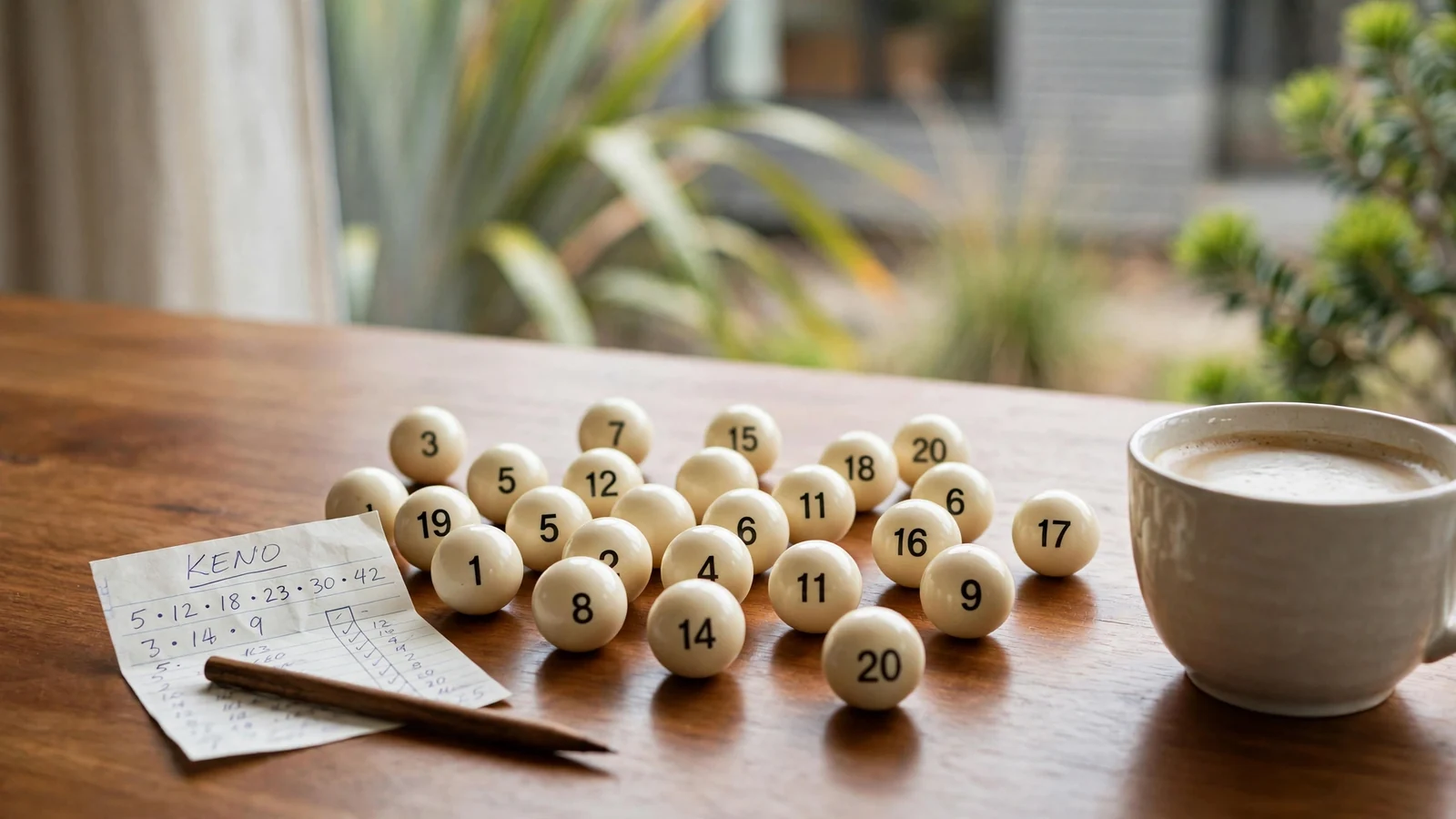
A blackjack odds calculator is only as useful as the game details entered into it. Its basic card-value model should treat number cards at face value, picture cards as worth ten, and an ace as either one or eleven, depending on which total is more useful without exceeding twenty-one. That flexible ace value matters when a hand contains more than one ace: the calculator must reassess the total as further cards are added.
The phrase “four aces” can describe a particular hand or a question about a deck, but those are different calculations. A hand calculation needs the cards already held and the dealer’s visible card if the tool uses that information. A deck-based calculation also depends on the number of decks and the cards assumed to remain available. Without those inputs, a displayed figure may describe a different situation from the one being assessed.
Game rules are another essential input. A specialist review notes that blackjack games can differ in deck count, the dealer’s treatment of soft seventeen, surrender availability and natural-blackjack payout. A calculator that assumes one set of rules cannot reliably represent another. The result is conditional on those settings, not a universal property of blackjack.

Before interpreting an output, check what it measures. A tool may estimate an outcome under specified conditions, compare possible decisions, or report a return based on a payout rule. Those are not interchangeable figures. The label, assumptions and selected rules matter as much as the displayed result.
A sensible check is to change one input at a time and observe whether the result changes. If the tool does not identify its assumptions, or does not let the relevant table rules be entered, its output has limited value. It can organise a calculation; it cannot repair missing game information or turn an estimate into a promised result.
Dealer Bust Odds and the Insurance Question
A dealer bust is one possible ending to a blackjack hand, not a result that can be read in isolation. Players compete against the dealer, aiming to finish closer to 21 without going over. Whether the dealer exceeds 21 therefore matters, but it does not by itself determine the player’s result: the player’s own total and the comparison between the two hands still count.
The question “what are the odds of dealer busting in blackjack” has no single answer that applies to every game. The cards available and the rules in force shape the calculation. A figure without those details can sound precise while describing a different table. The relevant blackjack dealer odds are conditional on the game being played, not a fixed property of blackjack as a whole.

Dealer busting also should not be confused with blackjack player odds. A dealer going over 21 can settle a hand in the player’s favour only if the player has not already gone over. If the player busts first, a later dealer bust does not turn that hand into a win. That distinction is why a dealer-outcome estimate cannot stand in for the chance of winning an entire hand.
Insurance is a separate wager, not protection that changes the main hand’s total or outcome. Its appeal rests on treating one possible dealer result as a bet of its own. That extra wager has its own terms, so it should not be assumed to improve the value of the original hand. For most players, avoiding insurance as a bet is the more cautious choice; a favourable-sounding possibility is not enough to establish a favourable price.
A useful assessment keeps the questions separate: how likely the dealer is to bust under the table’s rules, how the player’s hand compares with the dealer’s, and whether an optional insurance wager offers terms worth accepting. Without the rules and the relevant cards, a precise dealer-bust figure would be false precision.
Insurance Wagers Insurance is a separate wager that does not improve the original hand’s value or outcome; avoiding it is generally the more cautious choice.
Blackjack Payouts: 3:2 Versus 6:5
A natural blackjack can carry different payout terms, so the return attached to the hand is part of the odds at blackjack—not a detail to infer from the game’s name. A specialist review describes natural-blackjack payouts of 3:2 at some tables and 6:5 at others. Those terms are not universal; the table’s stated rules determine which applies.
The ratio describes the profit paid relative to the original wager. At 3:2, the profit is three parts for every two parts wagered. At 6:5, it is six parts for every five parts wagered. For the same stake, 3:2 pays more profit than 6:5 when a natural blackjack qualifies. The difference matters only when that hand occurs, but it changes the return attached to it.
That is why a blackjack payout odds comparison cannot stop at whether the player has made a natural. The payout term changes the value of that winning outcome, and therefore affects the game’s overall odds. A game with otherwise similar rules can still offer a different return on a natural blackjack if its payout differs.
The label also needs to be read precisely. A natural blackjack is not simply any total of 21; it is the initial combination that qualifies for the special payout under the table’s rules. A later hit that brings a hand to 21 is not automatically paid on the same basis. The payout line should therefore be checked alongside the definition of a qualifying natural.
Payouts are only one term in the table’s economics. Specialist reviews note that game rules can differ, including the payout for blackjack, so a ratio reported for one table should not be carried over to another. The useful comparison is between the stated terms for the specific game, not an assumed standard. A lower natural payout reduces that hand’s return; it does not by itself describe every possible result or settle the full odds of blackjack.

Deck Count, Side Bets and Faster Online Play
Deck count is one part of a blackjack game’s structure, not a verdict on its odds. A single-deck game is not automatically better for the player: the result also depends on the table’s other rules, including how the dealer handles soft 17, whether surrender is available, and the payout terms. A specialist review describes these conditions as variable across games, so the deck label alone cannot settle the comparison.
The same restraint applies to blackjack side bets. Their odds depend on the particular bet’s conditions and payout, not simply on whether the main game uses one deck or several. Without those terms, a side bet cannot be ranked against the main hand on a sound basis. It is a separate wager, and its presence does not establish that the underlying blackjack game offers better odds.
The phrase “free bet blackjack” also needs the actual table rules behind it. The label alone does not show how a particular game handles its bets or pays its hands. A meaningful comparison therefore starts with the stated rules and payout terms, rather than treating the name as evidence of a better return.
Game format affects pace as well as the experience of play. Online RNG blackjack uses software shuffles and can move more quickly than a live-dealer game. Faster rounds mean decisions arrive sooner; speed does not, by itself, improve the odds attached to the rules.
Live-dealer blackjack uses physical cards, giving it the feel of a casino table. Streaming can add delays, and some games may require higher bets. Those are practical differences, not proof that live play has better odds. The relevant comparison remains the game’s rules and terms.
For New Zealand players, an odds comparison is only as useful as the details it includes: deck count, dealer treatment of soft 17, surrender availability and payout terms. A single-deck label, a side-bet offer or a faster software game is not a substitute for those details. When the terms are unclear, the advantage cannot be reliably inferred from the format alone.
Published by the Casino Slots Adviser NZ team.