Roulette Strategies for New Zealanders: Odds & Bets
 Available in US
Roulette formats, payout maths and staking rules shape the risks of a bet, but none can predict or guarantee the next result.

Table of Contents
- Martingale: Larger Stakes Do Not Change the Odds
- The Wheel Matters More Than the Betting Pattern
- What a Roulette Strategy Can—and Cannot—Change
- Double-or-Nothing Bets and the Limits of a Winning Streak
- Choosing a Roulette Format Before Choosing a Bet
- A “Best Strategy” Has to Start With the Payout Math
- A Win Is Possible; a Sure Win Is Not a Strategy
- New Zealand Conditions: Bonuses, Licensing and Practical Limits
- D’Alembert and Line Bets: A Staking Rule Is Not a Prediction
- Flat Betting and the Cost of Even-Money Bets
Martingale: Larger Stakes Do Not Change the Odds
A Martingale roulette strategy increases the stake after a loss, commonly by doubling it, with the aim of recovering earlier losses when a winning bet arrives. After a win, the sequence resets to its starting stake. The method changes the amount risked from spin to spin; it does not make the selected outcome more likely.
That distinction matters because roulette spins are independent. A run of losses does not make a win on the next spin due, and a recent win does not make another one more likely. The wheel does not keep a balance sheet of previous results. A staking chart can show how a proposed sequence grows, but it cannot forecast the next result.
What the progression actually does
The Martingale concentrates exposure into a rising sequence of stakes. Early losses may appear modest, while each additional loss requires a larger next bet if the plan is to recover what has already been lost and still finish ahead by the initial stake. A win can end the sequence, but the losses accumulated before it do not disappear; they are recovered only if the winning bet is large enough and the wager pays as assumed.

The reverse Martingale changes direction. Instead of raising the stake after a loss, it raises the stake after a win and reduces or resets it after a loss. This approach seeks to put some recent winnings back into play during a winning run. It does not make a run continue, however. If the next result loses, the enlarged stake is exposed to that loss.
Neither sequence creates an advantage over the wheel. One reorganises when money is placed at risk; the other reorganises how much is risked after a result. Their outcomes can differ in volatility and in the size of individual wins or losses, but neither alters the probability of a result on a future spin.
Why a “safe” version is still exposed
A safe Martingale roulette strategy cannot be defined by a progression alone. A smaller starting stake may slow the growth of the sequence, but it does not remove the risk of repeated losses. A predetermined stopping point limits how long the progression continues; it also means the sequence can stop before a win recovers its accumulated losses. A table limit can prevent the next planned increase, while a finite bankroll can do the same in practice. Neither condition changes the spin probabilities.

The arithmetic becomes less comfortable as losses accumulate. To pursue recovery, the next stake must rise; to keep stakes low, the recovery target must be reduced or abandoned. There is no staking chart that resolves this trade-off. It only makes the chosen rule visible.
A reverse progression has its own cost: increasing a stake after wins places more money at risk precisely because the sequence has gone well so far. Previous wins do not protect the next wager. Stopping after a set result may contain exposure, but it does not turn the preceding run into evidence about what comes next.
For table roulette strategies, the useful distinction is therefore between a betting rule and a prediction. Martingale and reverse Martingale are rules for sizing bets. They do not read patterns in the wheel, and they do not improve the odds of the chosen bet. An advanced system remains a system for allocating stakes, not a mechanism for changing random outcomes.

No progression makes roulette safe in the sense of ensuring a return. Every real-money bet can lose, and a sequence designed around recovery can require increasingly large stakes before it ends. Any amount put at risk should be limited to what can be afforded to lose; the label “optimal” does not change that calculation.
The Wheel Matters More Than the Betting Pattern
A roulette staking plan operates on top of the wheel’s fixed structure. Before comparing ways to place or size a bet, the relevant baseline is the number of pockets and the share of each stake retained by the house over time. On that measure, European and American roulette are not interchangeable formats.
European Roulette has 37 pockets: numbered pockets from 1 to 36 and a single zero. Its stated house edge is 2.70%. American Roulette has 38 pockets, adding a double zero to the single-zero layout, and its house edge is 5.26%. The extra pocket changes the underlying cost of play. It is not a feature that a staking pattern can offset.
37 pockets (single zero) with a stated house edge of 2.70%.
38 pockets (double zero) with a stated house edge of 5.26%.
The pocket count sets the baseline
The difference is easiest to see by holding the bet type constant. A bet may cover the same category of result on either wheel, but the chance of a winning result depends on how many pockets can produce it. The zero pockets matter because they can defeat many common bets, including even-money choices such as red or black. American Roulette has an additional losing pocket for those bets compared with European Roulette.
That does not make any individual spin predictable. It means only that the wheel’s structure establishes the long-run mathematical disadvantage before a staking sequence is applied. A pattern that changes the stake after wins or losses changes the amounts exposed; it does not remove the extra pocket or alter the stated house edge.
For a single-zero roulette strategy, the essential format check is therefore literal: the wheel must have one zero, not a double zero as well. European Roulette fits that description. American Roulette does not, despite also having a single-zero pocket. The double zero is part of its layout and its stated edge.
Payout percentage and house edge
Payout percentage describes the share returned to players collectively over time; house edge describes the corresponding mathematical advantage retained by the casino. A specialist review gives European Roulette a payout percentage of 97.30% and American Roulette 94.70%. These figures are another way of comparing the formats, rather than a promise about the return from a particular session.

The distinction matters because a short run can finish above or below either percentage. The payout figure does not specify what an individual player will receive, nor does it predict the next result. It is a long-run measure attached to the game’s structure. The house-edge figures provide the direct comparison: 2.70% for European Roulette against 5.26% for American Roulette.
A higher payout percentage does not make a roulette system profitable by itself. It indicates a less costly underlying game on the stated figures. A player can still lose on a European wheel, and a player can win on an American one; neither outcome changes the comparison between their mathematical baselines.
What the comparison can establish
There is no wheel-independent answer to which roulette approach is most profitable. The format must be identified first, because the same broad bet can carry a different underlying cost on wheels with different pocket counts. When the choice is between European and American Roulette, the stated figures favour the European layout on house edge and payout percentage.
This is a comparison of game structure, not a claim that a particular way of staking guarantees a return. A high-percentage approach cannot make American Roulette’s double zero disappear, just as a sequence of changing stakes cannot turn a single-zero wheel into a different game. The numerical baseline belongs to the wheel; betting patterns are applied after it.
What a Roulette Strategy Can—and Cannot—Change
A roulette strategy can govern two practical choices: where a bet is placed and how much is staked. It cannot alter the wheel or make a particular result more likely on the next spin. A plan may organise decisions, limit exposure or set a stopping point; none of those functions turns an uncertain outcome into a forecast.
A roulette strategy can govern where a bet is placed and how much is staked, but it cannot alter the wheel or make a particular result more likely.
The distinction matters because bet placement and probability are separate. Choosing a colour, a group of numbers or a single number changes which results would count as a win for that bet. It does not change how the wheel produces its result. A narrow bet may pay more if it wins, while a broader one may cover more possible outcomes. The payout and coverage differ; the spin remains random.
Past results are not signals
Each roulette spin is independent. A run of one colour does not make the other colour due, and a number’s recent appearance does not make it either more or less likely to appear again. The wheel has no memory. A sequence that looks meaningful after it has happened is not evidence that the next spin can be predicted from it.
This also applies to live roulette. Seeing the wheel and ball in real time changes the presentation, not the independence of the spins. A live betting routine may specify when to place or stop bets, but it cannot use earlier results to increase the probability of a later outcome. The same limitation applies to a so-called working roulette system: if it relies on reading a pattern in past results, that pattern does not provide a mathematical signal for the next spin.
What a system can do
A staking rule can make the amount placed on each bet more consistent or more variable. A bet-selection rule can keep choices within a defined group of outcomes. A bankroll rule can set a boundary on how much is exposed before play stops. These can affect the shape of a session: the size of possible wins and losses, the speed at which a balance changes, and whether a preset limit is respected.

Those are practical effects, not an advantage over the game. Even a cautious approach is not a guarantee against losing: every real-money bet can lose. “Low risk” can describe a smaller stake or a narrower spending limit, but it does not mean that the selected result has become safer in the sense of being more likely to win.
For single-zero European Roulette, the house edge is normally 2.70%. A staking pattern does not remove that edge. It changes the sequence and size of bets, while the underlying game conditions remain in place. Over a session, a chosen pattern can produce a different short-term result from another pattern; that difference is variation, not proof that one method predicts the wheel.
A useful test for any claimed roulette strategy is therefore simple: does it change the bet, or does it claim to change the odds? The first is a genuine choice. The second cannot follow from previous spins. A plan may still help keep decisions orderly, but it should not be treated as a reliable route to profit or a method for securing a win. The only firm control it offers is over the decisions made before a spin, not the result that follows. Roulette play should never put more at risk than can be afforded to lose.
Double-or-Nothing Bets and the Limits of a Winning Streak
A double-or-nothing approach treats a win as a way to recover a loss or reach a chosen profit, then assumes the next result will cooperate. On a roulette table, that assumption has no mathematical support. A winning spin does not make another win more likely, and a losing spin does not make a win due. Each spin is independent.
Risk of Loss
Every real-money bet can lose, and doubling stakes after a loss can quickly increase the amount exposed to risk.
The phrase “double up” can describe different staking choices. A player might increase a stake after a loss, or raise it after a win in the hope of extending a streak. Either way, the change is to the amount at risk, not to the chance of a number, colour or other outcome appearing. A roulette strategy based on doubling therefore cannot turn a random sequence into a dependable source of profit.
The cash-flow effect is less subtle. After a loss, doubling the next stake increases the amount that can be lost on that spin. A later win may offset earlier losses only if its payout and the sequence of results allow it; there is no guarantee that such a win arrives before the available stake or table limits are reached. After a win, doubling instead puts more of the accumulated return at risk. A short winning run can end on the next spin, with the larger stake exposed.
This is why a “highest winning” or “most winning” system cannot be identified simply by its stake progression. A plan may produce frequent small wins while leaving the player exposed to a less frequent, larger loss. Another may generate larger swings in both directions. Neither description establishes an advantage over the wheel. Every real-money bet can lose, so the amount risked should never exceed what can be afforded to lose.

French Roulette offers a different kind of protection, but only under specific conditions. Its wheel has the same single-zero layout as European Roulette, while its special rules affect eligible even-money outside bets when zero lands. These rules do not rescue a double-up progression or improve the odds of a future result; they change what happens to a qualifying stake on zero.
Under La Partage, half of an even-money outside-bet stake is returned when zero appears, and the other half is collected. Under En Prison, the stake is held for the next spin. If that spin wins, the original stake is returned without extra winnings; if it loses, the stake is collected. Neither rule applies to every kind of bet, and neither makes a zero result predictable.
Where La Partage or En Prison applies, the house edge on French Roulette falls to 1.35%. That is a defined reduction in the cost attached to eligible bets, not a reward for staking more aggressively. It is materially different from doubling after a loss: the special rule changes the settlement of a bet under stated conditions, whereas a progression merely changes the size of later bets.
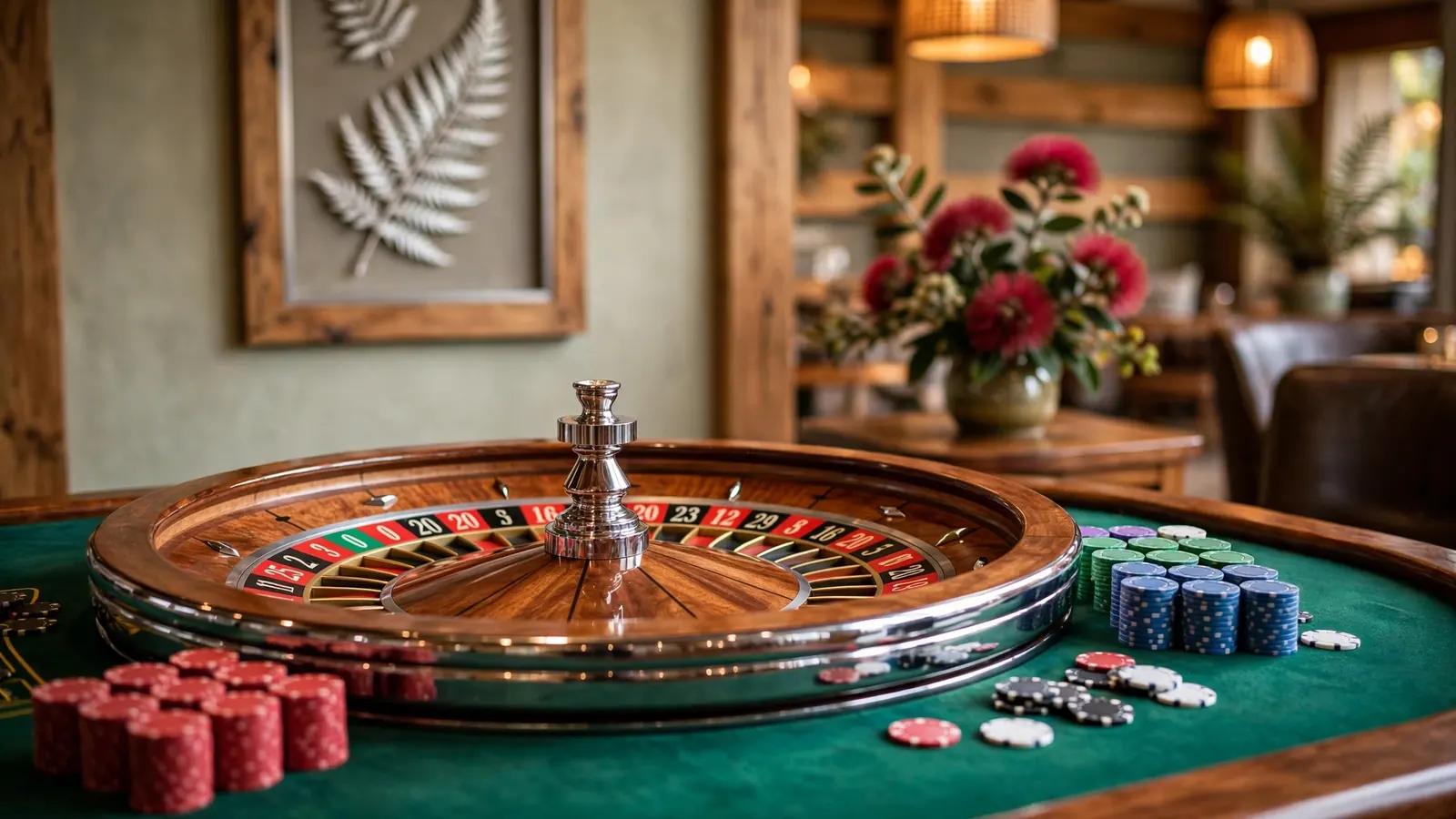
A sensible comparison of online roulette strategies therefore separates two questions: what the rules do to a qualifying bet, and how much money a staking pattern places at risk. The first can be specified in advance. The second can escalate quickly without changing the wheel’s probabilities. No winning streak is a contract, and no double-or-nothing plan makes one.
Choosing a Roulette Format Before Choosing a Bet
A roulette strategy begins with a format, because the wheel determines the set of possible results and the cost built into each bet. A staking pattern or a choice between red and black cannot make two different wheels equivalent. The useful comparison is therefore between the rules and pocket layout, before considering where a stake goes.
European Roulette has 37 pockets: one zero and the numbered pockets. Its stated house edge is 2.70%. American Roulette has 38 pockets, including both zero and double zero, and a 5.26% house edge. The extra pocket changes the underlying terms, even when the bet looks identical on the layout. A red bet, for instance, is still an even-money outside bet, but its result is drawn from the wheel’s full set of pockets.

French Roulette uses the same single-zero layout as European Roulette. Its distinction is the special treatment of zero on eligible even-money outside bets. Under La Partage, half the stake is returned when zero lands; under En Prison, the bet is carried to the next spin. With either rule in force, the house edge for those bets falls to 1.35%. That figure applies to the specified bets and rules, not to every wager on a French table. The format name alone is not enough: the table’s displayed rules determine whether the reduction applies.
Mini Roulette is a materially different choice, not simply a smaller-looking table. It has 13 pockets and a house edge of 7.89%. When La Partage applies, that edge decreases to 3.85%. The comparison shows why a compact wheel should not be treated as a cheaper version of a standard wheel: its stated cost is higher, including after the listed zero rule is applied.
| Format | Pockets | Stated house edge |
|---|---|---|
| European Roulette | 37 | 2.70% |
| American Roulette | 38 | 5.26% |
| Mini Roulette | 13 | 7.89%; 3.85% with La Partage |
French Roulette is not shown as a separate pocket-count row because its wheel uses the European single-zero layout. Its lower stated edge is conditional on La Partage or En Prison and applies only to even-money outside bets when zero lands. That qualification matters more than the label on the table.
Bet names can also mislead when the layout is mistaken for the wheel. Called bets are grouped by the positions of numbers around the wheel, not by the numbers’ placement on the betting table. A called bet therefore refers to a wheel-based grouping; it is not just another name for a row or area printed on the layout. This distinction is relevant when comparing table options, because a familiar label does not change the wheel’s pocket count or the applicable rules.
Terms such as “roulette strategy” can refer to different decisions: the game format, the placement of a bet, or the way stakes are varied. Those are separate choices. A format comparison establishes the wheel and its stated cost; it does not establish a staking method as preferable. European and French single-zero tables, American Roulette and Mini Roulette carry different stated terms, so the format is the first decision to settle.
A “Best Strategy” Has to Start With the Payout Math
Roulette strategies can help you think through how to play, but they cannot guarantee a win. Use this list as a reference when considering operators for roulette play in New Zealand.
License: Malta Gaming Authority, licence no. MGA/B2C/394/2017 N1 Casino is listed with a Malta Gaming Authority licence, number MGA/B2C/394/2017.
License: Curaçao Gaming Authority, licence no. OGL/2024/165/0185 BitStarz is listed with a Curaçao Gaming Authority licence, number OGL/2024/165/0185.
License: Tobique Gaming Commission, licence no. 0000064 Neospin is listed with a Tobique Gaming Commission licence, number 0000064.
Payout speed: 1-3 business days Lamabet’s stated payout speed is 1–3 business days.
License: Tobique Gaming Commission, licence no. 0000091 7Bit Casino is listed with a Tobique Gaming Commission licence, number 0000091.
License: Tobique Gaming Commission, licence no. 0000002 Ricky Casino is listed with a Tobique Gaming Commission licence, number 0000002.
License: 07017519840 · Payout speed: 1-3 business days Zotabet lists licence number 07017519840 and a payout speed of 1–3 business days.
License: Malta Gaming Authority, licence no. MGA/B2C/370/2017 Play Grand is listed with a Malta Gaming Authority licence, number MGA/B2C/370/2017.
Payout speed: 1-3 business days Wintino’s stated payout speed is 1–3 business days.
A staking pattern and a payout percentage describe different things. A staking pattern determines how the amount wagered changes from one bet to another. A payout percentage describes the stated return associated with a roulette format over play. Changing the stake sequence does not alter that return figure, so it cannot establish a universally best way to bet.
A specialist review reports a payout percentage of 97.30% for European Roulette and 94.70% for American Roulette. Read as comparative figures, they put the European game ahead on stated returns. They do not mean that a particular session returns those proportions, nor do they identify a staking rule that can produce them. Session results depend on the spins that occur; the percentage is a longer-run measure, not a receipt for an individual player.
The same distinction matters when considering 100/1 roulette. A specialist review gives its payout percentage as a range from 92.86% to 96.19%. A range does not support one fixed comparison without identifying the specific version being assessed. It also says nothing about whether flat stakes, increasing stakes or another sequence is preferable. The game’s stated return and the way a player sizes bets remain separate calculations.
Payout Math
A progression may change the size and timing of exposure, but it does not convert a lower stated return into a higher one.
That is why the phrase “best strategy” needs a defined measure. If “best” means the highest stated payout percentage among the cited figures, European Roulette leads American Roulette, while the reported 100/1 range varies. If “best” means the staking pattern most likely to suit a particular budget or session length, these payout figures do not answer the question. They contain no evidence that a particular progression improves a player’s return.
A sensible comparison therefore starts with the return attached to the game, then treats stake size as a separate decision. A progression may change the size and timing of exposure; it does not convert a lower stated return into a higher one. Nor does a larger wager make the payout percentage more favourable. The arithmetic is not impressed by the name attached to a betting system.
There is no single most successful roulette strategy demonstrated by these percentages. They compare stated returns, not systems, and the highest figure is not a promise of profit. The figures are useful for distinguishing game terms; they are not proof that any staking rule can overcome them. A claimed best roulette approach that skips the payout comparison has omitted the cost side of the calculation.
A Win Is Possible; a Sure Win Is Not a Strategy
A roulette session can produce a win, including a large one. Neither outcome can be secured by a staking plan, a sequence of chosen bets or a rule based on what appeared earlier. A sure-win roulette strategy would require a way to make a future result certain. Roulette spins do not provide one.

On a European wheel, there are 37 pockets, including a single zero, and the house edge is 2.70%. That edge describes the game’s built-in disadvantage to the player over repeated betting; it does not predict the result of a particular spin. A bet can win, but the wheel can also land on a result that makes it lose. A run of wins does not cancel that risk, and a run of losses does not make a win due.
Each spin is independent. Previous results do not change the probability of outcomes on the next spin. A streak, a pattern in recent results or a long absence of a particular number may feel informative, but none gives the next spin a memory. Treating past results as a forecast can make a roulette strategy to win big look more persuasive than its underlying odds justify.
The same distinction applies to an electronic roulette machine. Its screen may present results in a different format, but a betting sequence or a record of earlier outcomes is not evidence that a future result has become more likely. The relevant question is still what the game’s rules and wheel layout are, not whether a display makes a pattern easier to notice.
Attention Previous results do not change the probability of outcomes on the next spin, as each roulette spin is independent.
Progressions can also create a sense of control. They prescribe how a stake changes after a win or loss; they do not establish that the next bet will succeed. A larger stake can increase the amount won if that bet wins, but it also increases the amount exposed to a loss. No progression turns uncertainty into certainty.
Claims of guaranteed results therefore fail on the point that matters: every real-money bet can lose. A sensible limit on exposure is not a method for beating the wheel, but it prevents a losing sequence from becoming a larger financial problem. Stakes should never exceed what can be afforded to lose.
New Zealand Conditions: Bonuses, Licensing and Practical Limits
A roulette plan in New Zealand in 2026 sits within a changing regulatory framework. The Online Casino Gambling Act 2026 took effect on 1 May and created the country’s first domestic licensing system for online casino gambling. The Gambling Act 2003 still bars online casinos from being based in New Zealand; the new framework regulates providers rather than authorising domestic casino operations.
The Department of Internal Affairs is New Zealand’s primary gambling regulator and oversees the online casino licensing framework. The Gambling Commission hears and decides casino licence applications, issues online casino licences and approves changes to licence conditions. The full licensed regime is not expected to be operational until 2027. During the transition, providers that were already serving New Zealand customers before 1 May 2026 may continue until 1 December 2026, subject to the Act’s transitional provisions. Providers that have not applied for a licence must stop conducting online casino gambling in New Zealand by that date. Unlicensed operation is expected to become an offence around mid-2027, and operators may face enforcement, including fines of up to NZ$5 million.

Advertising online casino gambling to people in New Zealand is prohibited during the transition period. That restriction matters when assessing promotional claims: an offer’s presence on a page does not establish that it is available to New Zealand customers or that its terms suit a particular account.
A bonus changes the amount that can be played under the offer, not the underlying roulette odds. Bonus money must be wagered 50X within 30 days; winnings from free spins must be wagered 50 times within 7 days. Expiry, game contribution, eligibility rules and withdrawal restrictions can further reduce the usable value. A withdrawal request voids all active or pending bonuses, so the balance shown before withdrawal may not be the amount payable.
The practical calculation is therefore conditional: first identify which funds are bonus funds, then account for the wagering requirement, expiry and eligible games, and finally check what happens to the offer if a withdrawal is requested. A roulette strategy cannot make those conditions disappear. It is also not a reason to increase stakes to clear a requirement; every real-money bet can lose, and no more should be risked than can be afforded to lose.
Licensed operators must implement stricter age and identity verification. Those checks and the applicable licence conditions form part of the operating framework, while a staking pattern remains only a way to organise bets.
New Zealand Betting
- Identify which funds are bonus funds
- Account for wagering requirements and expiry
- Check eligible games for the bonus
- Verify the operator’s licensing status
- Set a limit on what can be afforded to lose
D’Alembert and Line Bets: A Staking Rule Is Not a Prediction
D’Alembert describes how a stake changes after results; a line bet describes where the wager is placed. Treating those as the same kind of “strategy” confuses two separate decisions: the amount staked and the numbers covered.
In the conventional D’Alembert progression, the stake rises by one chosen unit after a loss and falls by one unit after a win. That adjustment does not use information about the wheel. A losing result does not make a win more likely on the next spin, and a win does not make another win less likely. Roulette spins are independent, so earlier results do not alter the probabilities of later outcomes.
The size of the unit still matters to the money at risk. A progression can produce changing stakes and a longer sequence of bets, but it cannot turn those stakes into a forecast. A player might also stop at a chosen point, but a stopping rule changes when play ends, not which result the wheel produces.
A line bet, by contrast, is a bet-placement choice on the table layout. It covers a group of numbers represented there; it is not a staking progression. Called bets are a different way of grouping wagers: they follow number positions around the wheel rather than positions on the table. The distinction matters because a label describing placement says nothing by itself about how much to stake, while a staking rule does not specify which numbers to cover.
Labouchère is another progression rather than a prediction. It uses a sequence of stake amounts that is adjusted as wins and losses occur. Its bookkeeping can make the next stake depend on prior results, but the wheel does not use that history. Likewise, doubling a bet after a loss changes the exposure attached to the next wager; it does not increase the probability that the wager wins.
The relevant comparison is therefore between rules for managing stakes and choices about bet placement—not between methods that supposedly read the next spin. Every real-money roulette bet can lose. Stakes should remain within an amount that can be afforded as a loss, including when a progression calls for a larger wager than the one before it.
Flat Betting and the Cost of Even-Money Bets
Flat betting means placing the same stake on each spin rather than changing it in response to wins or losses. The method makes the amount committed per bet predictable; it does not alter the roulette rules, improve the chance of a result or remove the house edge. A constant stake is a budgeting choice, not a way to make the wheel more favourable.
That distinction matters when assessing what might be called a safer roulette betting strategy. Keeping stakes level can limit fluctuations caused by escalating bet sizes, but every real-money bet can still lose. Outcomes remain random, and no staking method makes a future result certain. The stake therefore needs to remain within an amount that can be lost without affecting essential spending.

The payout calculation also depends on the bet and the table rules. Even-money outside bets—such as red or black—pay an amount equal to the stake when they win. On a standard single-zero European wheel, the stated house edge is 2.70%. French Roulette has the same single-zero layout, but La Partage and En Prison can change the treatment of eligible even-money bets when zero appears.
With either special rule in force, the house edge on those eligible bets falls to 1.35%. Under La Partage, half the stake is returned when zero lands; under En Prison, the bet is carried forward for another spin. These provisions do not apply to every bet on the table, so the lower edge should not be assigned to straight-up numbers or other wagers.
Flat staking and French rules address separate parts of the calculation. Flat staking fixes the size of each bet. The French zero rules reduce the cost of qualifying even-money bets. For those bets, French Roulette offers the more favourable stated odds; the advantage comes from the rules, not from keeping stakes constant.
Prepared by the Casino Slots Adviser NZ editorial staff.