Prezzy Card Casinos in NZ: What Can Be Verified
 Available in US
The search phrase signals interest in card payments, but it does not confirm that any online casino accepts Prezzy Card.

Table of Contents
What “Prezzy Card Casino” Searches Are Looking For
The phrase brings together a named payment product and online casino gambling. In ordinary terms, it points to an interest in whether Prezzy Card can be part of the payment arrangements at an online casino connected with New Zealand. That describes the subject of the search, not a confirmed feature of any gambling site.
The distinction matters because a payment method’s name appearing beside “casino” does not establish that an operator supports it. A page can discuss the possibility, repeat a search phrase, or mention the product without showing that the two work together. The wording alone is not evidence of an available payment option, a current arrangement, or a particular operator’s terms.
“Prezzy Card casino” can also stand for several different kinds of interest. One person may be looking for a casino that lists the card as a payment choice. Another may be trying to understand whether the product can be used for online gambling at all. Someone else may simply be comparing payment options before deciding whether to open an account. Those are related interests, but they are not the same question, and they require different evidence.
The phrase “Prezzy Card casinos in NZ” adds a location to that interest. It signals a New Zealand context, but it does not by itself establish where an operator is based, what rules apply to it, or whether its services are accessible to Kiwi users. Location words identify the reader’s frame of reference; they do not verify a business relationship between a card provider and a casino.


A useful way to read the phrase is as a topic label rather than a recommendation. It does not identify a verified group of casinos, and it should not be treated as a shortlist. No operator can be inferred from the wording itself. Nor does the presence of a payment brand in casino-related material prove that the brand has approved gambling transactions or that an operator has made the method available.
This is especially important when the wording appears in a headline, a category label, or a comparison table. Labels can group subjects for convenience, but the underlying evidence has to establish the actual connection. A listing that places a card name beside a casino name may describe an asserted payment option, an old arrangement, or merely a topic being discussed. Without direct, current terms from the relevant parties, the label leaves those possibilities unresolved.
The scope here is therefore narrow: the interest is in the relationship between Prezzy Card and online casinos, viewed from New Zealand. It is not a list of casinos, a ranking, or a statement that the card works at any particular site. It also does not settle separate questions about a transaction, a deposit, withdrawals, fees, account requirements, or promotional conditions. Each of those would depend on specific terms, and none follows automatically from the search wording.
That separation prevents a common category error. A payment product may be familiar in one setting, while online gambling involves a separate operator, its own account arrangements, and its own stated payment conditions. Similar names or general references to card payments cannot bridge that gap. A conclusion about one arrangement cannot be carried over to another without evidence connecting them.


The wording can also create an impression of a ready-made category: casinos that take a particular card. But a search phrase is not a market classification. It may reflect what someone hopes to find rather than a verified set of options. Treating the phrase as proof would turn intent into fact, which is a poor basis for any decision involving money.
For an informed assessment, the relevant distinction is between a general discussion of Prezzy Card and a clear statement from an operator about its available payment methods. The latter would need to relate to the actual service and its current conditions. Even then, a payment option being displayed would not by itself answer every question about how it can be used or what conditions apply. The details belong to the specific operator’s terms, not to the phrase used to describe the topic.
The New Zealand wording should be read with the same care. It locates the question in the reader’s market, but does not make every site mentioned in connection with it a New Zealand operator or establish a particular local status. A market label is not a regulatory finding. The phrase also says nothing about whether an individual casino has supplied accurate, current payment information.
The practical value of defining the term is modest but important: it prevents an assumption from being mistaken for a result. Interest in using Prezzy Card at an online casino is clear; acceptance, availability and terms are separate matters that require evidence. Until those are established for a named operator, the phrase identifies a subject of investigation, not a payment promise.
Online Casinos and Prezzy Card Acceptance
If you plan to use a Prezzy Card at an online casino in New Zealand, check directly whether it is accepted and review the payment terms before depositing. The details below provide a limited reference point, not confirmation of Prezzy Card support.
License: Malta Gaming Authority, licence no. MGA/B2C/394/2017 N1 Casino lists a Malta Gaming Authority licence, number MGA/B2C/394/2017.
License: Curaçao Gaming Authority, licence no. OGL/2024/165/0185 BitStarz lists a Curaçao Gaming Authority licence, number OGL/2024/165/0185.
License: Tobique Gaming Commission, licence no. 0000064 Neospin lists a Tobique Gaming Commission licence, number 0000064.
Payout speed: 1-3 business days Lamabet lists a payout speed of 1–3 business days.
License: Tobique Gaming Commission, licence no. 0000091 7Bit Casino lists a Tobique Gaming Commission licence, number 0000091.
License: Tobique Gaming Commission, licence no. 0000002 Ricky Casino lists a Tobique Gaming Commission licence, number 0000002.
License: 07017519840 · Payout speed: 1-3 business days Zotabet lists the licence identifier 07017519840 and a payout speed of 1–3 business days.
License: Malta Gaming Authority, licence no. MGA/B2C/370/2017 Play Grand lists a Malta Gaming Authority licence, number MGA/B2C/370/2017.
Payout speed: 1-3 business days Wintino lists a payout speed of 1–3 business days.
Finding a page that describes a casino as compatible with a Prezzy Card is not the same as confirming that the card will be accepted by a particular operator. The first is a broad claim; the second depends on the payment options and conditions that apply to that operator at the time. Without operator-specific confirmation, a general label cannot establish acceptance.
The distinction matters because payment descriptions can be imprecise. A site may refer to card payments as a category without identifying which cards it supports. A payment logo may show that a method is discussed or displayed, but it does not necessarily confirm that every card of that type can be used. Nor does a mention of prepaid cards establish that Prezzy Card is included. Those are separate claims, and each needs its own evidence.
The useful question is therefore not whether online casinos can be associated with prepaid cards in general. It is whether the named operator currently lists Prezzy Card as an available method and whether its terms say that this specific card is eligible. If the available wording stops at “cards” or “prepaid cards”, the product-level point remains unresolved. Treating a broad category as confirmation would turn an assumption into a payment decision.

What counts as operator-specific evidence
The clearest evidence would come from the operator’s own current payment information, where Prezzy Card is named directly and the conditions are stated. A generic payment page may be a starting point, but it is not conclusive if it does not identify the card. The same applies to a third-party article or directory: it may summarise information, but it cannot replace a current statement from the operator whose cashier and account terms govern the transaction.
The cashier is another place where an operator may display available methods. Its contents can be more relevant than a general page because they relate to the account interface. Even then, a payment option appearing on screen should be read alongside the operator’s terms. Availability can be subject to conditions that are not obvious from a logo or method label alone. A screen display is evidence of what is being offered in that account context, not a universal promise that the card will work in every circumstance.
- Check the operator’s current payment information for a direct mention of Prezzy Card
- Request written confirmation from support specifically naming the product
- Review the operator’s current terms and conditions for payment eligibility
- Assume acceptance based on a general “cards” or “prepaid cards” label
- Rely on third-party articles or directories as a substitute for operator terms
- Treat a card-payment symbol as a universal promise of compatibility
If the wording is unclear, a written response from the operator can narrow the question. The request should name Prezzy Card specifically and ask whether it is accepted for the relevant account and transaction type. A reply that merely confirms “card payments” does not settle whether this particular product is covered. Keeping the answer in writing also makes it easier to compare the response with the published terms if they differ.
Payment acceptance is not established by the card being issued in New Zealand, by a casino serving customers in New Zealand, or by the operator displaying a familiar card-payment symbol. Those details may look related, but none by itself confirms compatibility. The relevant evidence has to connect the exact card to the exact operator’s current payment rules.
Read the conditions as part of acceptance
“Accepted” can conceal more than one condition. An operator may define which payment products it supports, which account details must match, or whether a method is available only in a particular situation. A statement that does not address the card itself, or that leaves the conditions unstated, should not be stretched into a definite yes.
The distinction between a card brand, a card product and a payment category is especially important in a prepaid-card search. A casino may support a category without supporting every product within it. Conversely, a page might omit a product name while the cashier presents it under a broader label. Neither possibility is proof in itself. The operator’s current information needs to make the relationship clear.
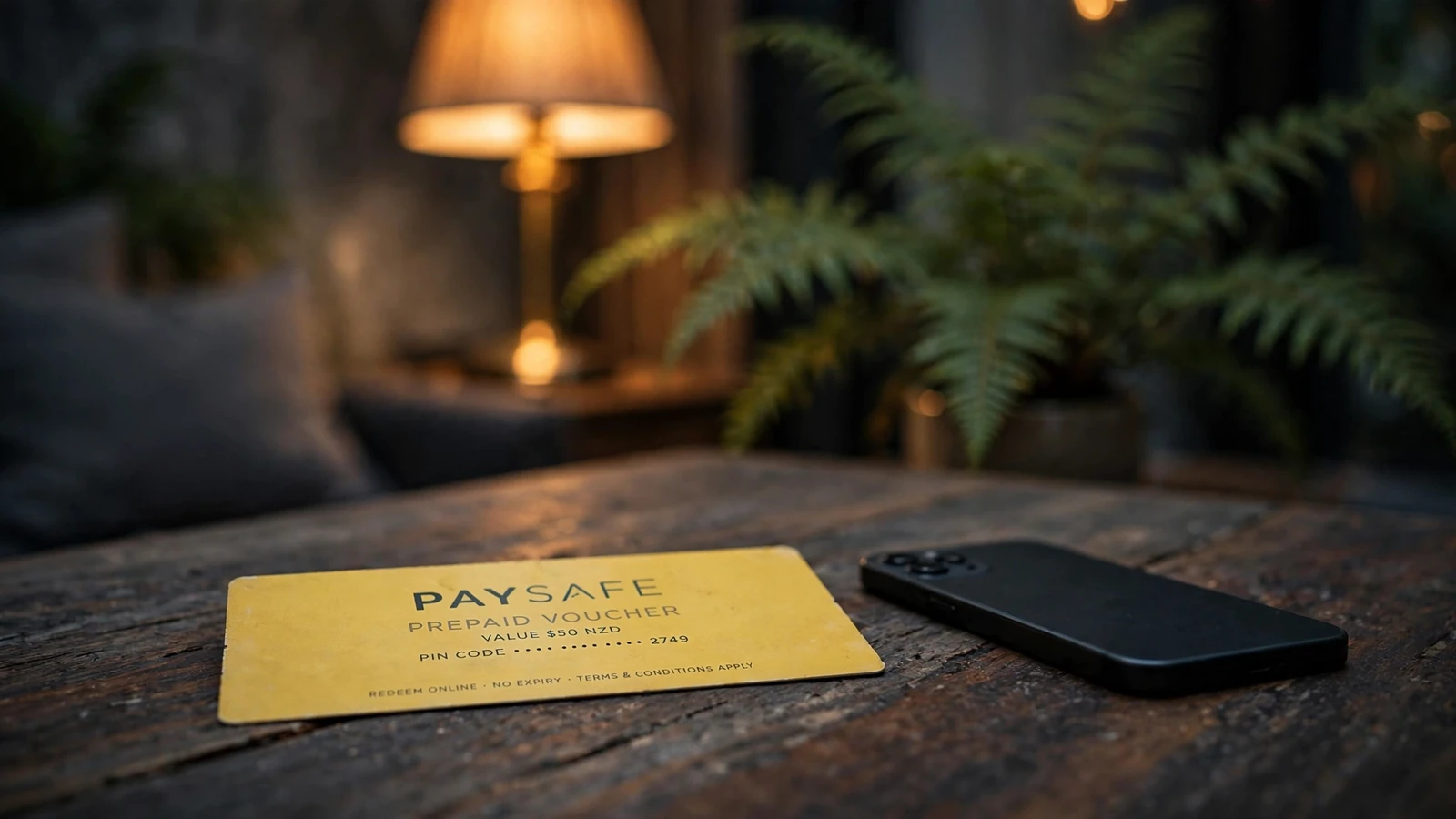
Terms should also be checked for any limits on the payment method’s use, rather than relying solely on a successful-looking selection screen. Where the published information conflicts with a support response or the cashier display, the conflict is itself material. It should be resolved before the card is treated as an accepted method. A payment option whose status changes depending on which operator page is read is not a settled option.
Privacy is part of verification, not an exception to it. A complete prepaid-card PIN should not be sent through live chat or email. A request for confirmation does not require disclosing the full PIN. Any support conversation that asks for it should not be treated as a safe way to prove compatibility.
A practical standard for the claim
A defensible statement of acceptance needs three things: the specific operator, an explicit reference to Prezzy Card, and current conditions that show what the claim covers. If one of those elements is absent, the conclusion should remain limited. “The site lists card payments” is narrower and more accurate than “the site accepts Prezzy Card” when the product is not named.
The same standard applies to comparison pages. A list of payment methods is useful only if it distinguishes confirmed product support from broad card categories and outdated descriptions. Without that distinction, the word “accepts” carries more certainty than the evidence warrants. A search result can point towards a possible lead; it cannot perform the operator’s confirmation on its behalf.
For a Kiwi user comparing payment information, the financial decision is straightforward: do not treat a general card symbol, a broad category or an unqualified third-party claim as confirmation. Check the operator’s own current cashier and terms, and seek a precise written clarification where the product is not named. Until those sources specifically connect Prezzy Card with that operator, acceptance remains unconfirmed—not because rejection has been established, but because a claim of acceptance requires evidence that identifies the card and the operator together.
Verification Standards
- Acceptance requires the specific operator, an explicit reference to Prezzy Card, and current conditions
- Broad card categories or generic logos do not constitute confirmed product support
- Conflicts between support responses and published terms must be resolved before depositing
- Sensitive payment data, such as the full PIN, should never be shared via chat or email
The 2026 Search: What Can Be Verified
A year in a casino-payment search changes the standard of proof. A result dated 2026 would need to establish more than that an operator exists or that a payment logo appears somewhere on its website. It would need to show that the information applies to the relevant period and that the stated payment option is actually available under the operator’s current terms.
That makes a “best” list an unsupported format, not merely an incomplete one. Ranking operators would imply that each entry had been assessed against a defined basis, and naming one as a Prezzy Card option would imply confirmed acceptance. The year in the heading does not supply the missing evidence.
The date also matters because New Zealand’s online-casino framework changed during 2026. The Online Casino Gambling Act 2026 took effect on 1 May 2026, establishing the country’s first domestic licensing system for online casino gaming. It did not mean that the full licensing regime became operational on that date. The transition period runs from 1 May to 1 December 2026, and eligible providers that were already serving people in New Zealand before the Act commenced may continue operating during that interval, subject to the transitional rules.

Consequently, a statement about a casino’s position in the market needs a date and a precise meaning. “Available in New Zealand” during the transition is not equivalent to “licensed under the completed domestic regime.” The full system is not expected to be fully operational until 2027. The law also provides that providers that have not applied for a licence must stop conducting online casino gambling in New Zealand by 1 December 2026; if an application is declined, the provider must leave the market. A page that treats the whole of 2026 as one unchanged period would miss those distinctions.
This legal timeline does not establish anything about Prezzy Card support. An operator’s permission to continue during the transition, its future licensing position, and its payment methods are separate questions. Evidence for one does not answer the others. In particular, a 2026 date attached to a casino page is not proof that a particular prepaid card can be used there.


The date of a payment claim also affects how much weight it can bear. A cached page, old review, or undated list may describe a former cashier arrangement rather than the one available at the time of a transaction. Even a current-looking page may not identify which market, site version, or payment stage its information covers. For a ranking to be meaningful, its entries would need comparable, current evidence—not just names collected under a year label.
For Kiwi users, the practical distinction is between evidence that identifies a specific operator and evidence that confirms a payment option for that operator at the relevant time. General descriptions of prepaid cards, broad statements about casino payments, or search snippets cannot fill that gap. Nor does the use of “best” make a claim more reliable: a superlative needs a verifiable comparison behind it.
New Zealand’s earlier position is relevant to reading older material. Before the 2026 Act, online casinos could not be based domestically under the Gambling Act 2003, and offshore online casino gambling was not licensed or overseen by a New Zealand regulator. Customers using an offshore website in that period had no domestic government recourse. Those historical conditions should not be silently presented as if they describe the full transitional framework introduced in 2026; equally, the new Act should not be treated as proof that every operator or payment method has already been approved.
The legal transition and its dates can be described, but they do not verify a “best” Prezzy Card casino or establish that any named operator accepts the card.
Can Prezzy Card Be Used for Online Casino Gambling?
A reliable yes-or-no answer cannot be given for Prezzy Card and online casino gambling as a category. Whether a particular card can fund a particular gambling transaction depends on conditions that must be confirmed for that card and the operator involved. A card’s prepaid format, or its use for ordinary online purchases, does not by itself establish that a gambling payment will be permitted.

There are two separate decisions behind a completed payment. The casino must make the relevant payment option available and accept the transaction type; the card issuer must also authorise the charge. Either side can prevent a payment from going through. Seeing a card logo, or finding that the card works at another online merchant, would not establish that both decisions will be favourable for a casino transaction.
The first point to establish is whether the card’s terms permit online gambling payments. The relevant terms are those applying to the specific Prezzy Card, not assumptions about prepaid cards generally. If the terms do not clearly address gambling transactions, that is not evidence that they are permitted. The card provider can clarify the card-side restriction, if one applies.
The operator’s payment information is a separate check. It needs to identify the payment method as available for the relevant transaction, rather than merely display a familiar card brand. A payment option shown in a general list may not necessarily be available for every account, website, app or transaction. Where the operator’s information is unclear, its support team can be asked a narrow question: whether it accepts that specific Prezzy Card for gambling payments, and whether any conditions apply. A general answer about card payments is not the same as confirmation about this card and this use.
Even when both parties appear to permit a transaction, authorisation is not guaranteed. A declined payment does not, by itself, identify which condition caused the refusal. It could not establish whether the issue was the card’s terms, the operator’s payment setup or another authorisation decision. Repeated attempts would not resolve that uncertainty; they could simply produce more declined transactions.
A useful check therefore has three parts: the terms for the card, the operator’s current payment information, and a clear confirmation where either is ambiguous. The wording should concern gambling payments specifically. If the card’s conditions exclude that use, a casino’s willingness to accept card payments would not override the exclusion. If the operator does not support the relevant payment, permission from the card provider would not make it available there either.
Security Warning
Never send your complete prepaid-card PIN through casino live chat or email, as this exposes sensitive payment information without proving compatibility.
Care is also needed when asking for help. A complete prepaid-card PIN should never be sent through casino live chat or email. Support can be asked about compatibility without disclosing the secret code. Any request to share it through those channels would expose sensitive payment information without answering the underlying question.
The distinction matters because “can it be used?” can mean several things: whether the card terms allow gambling, whether the operator offers the payment route, or whether a particular payment will be authorised. Those are not interchangeable. Confirmation of one does not settle the others, and a successful purchase elsewhere would not prove casino compatibility.
There is no basis for treating Prezzy Card as universally usable or universally unusable for online casino gambling. The defensible answer is conditional: use cannot be confirmed without checking the applicable card terms and the operator’s current payment conditions for that exact use. Until those checks align, compatibility remains unresolved—not a reliable yes, and not a proven no.
Prezzy Card Casino Deposits: No Verified Process Available
A Prezzy Card casino deposit has no confirmed, operator-specific process that can be set out as a sequence of steps. There is no established basis for saying that a casino cashier will show Prezzy Card as a payment option, that entering card details will complete a deposit, or that a particular fee, deposit limit or processing time applies. Those details depend on the terms presented by the card provider and the individual operator; they should not be inferred from the card’s prepaid format.

The distinction matters because a payment option appearing on a general list is not the same as an available method for a particular account. A cashier may display only methods currently offered to that account, and its displayed terms may govern the transaction. Without a specific Prezzy Card option and clear instructions in the cashier, there is no reliable deposit procedure to follow. A logo, search result or general statement about card payments does not establish that the card will work.
What the deposit amount would need to cover
A prepaid balance is finite, so the amount entered at checkout and the amount ultimately charged need to match the card’s available balance and any applicable transaction conditions. It would be unsafe to assume that the amount typed into a cashier is the only amount relevant to the payment.
The same distinction applies to fees. A casino could state a charge in its payment terms, while the card provider could set separate conditions for card use. Neither a zero-fee assumption nor a fixed fee can be supported as a general rule for this payment route. Before treating a deposit amount as its final cost, the relevant terms would need to identify any operator charge and any card-related cost. If those terms are unclear, the total cost is unclear too.
Attention A displayed confirmation at one stage of a transaction does not necessarily establish when funds will be available for play or how a pending charge will be handled.
Timing is not a single event
A payment can involve several separate stages: a cashier accepting the method, the card transaction being authorised, the casino crediting the account, and any later settlement between payment providers. A displayed confirmation at one stage does not necessarily establish when funds will be available for play or how a pending transaction will be handled.
For that reason, claims such as “instant” should not be treated as a dependable promise unless the relevant operator’s current payment information explains exactly what the timing refers to. A delay, a declined transaction and a completed deposit are different outcomes, with different implications for the card balance. The process should be judged by the actual status shown by the cashier and the card provider, not by a general description of prepaid payments.
If a charge appears on the card but the casino balance does not change, that discrepancy should be treated as an unresolved transaction rather than a completed deposit. Repeating the payment before the first attempt has a clear status could create a second charge or authorisation.
Avoid assumptions about reversals and refunds
There is no confirmed rule establishing how a failed or interrupted Prezzy Card casino payment would be reversed, how long that would take, or whether the casino or card provider would handle the enquiry. A payment that does not appear in a casino account should not automatically be assumed to have been cancelled. Equally, a pending card entry should not be described as a final charge without its status being clear.
Any complaint or payment query should use the transaction reference and the official contact route provided by the relevant service. The complete prepaid PIN should not be sent through casino live chat or email. That detail is not a substitute for a transaction reference, and sharing it creates an avoidable security risk.

Conditions to establish before any attempt
For a deposit route to be verifiable, the cashier would need to name Prezzy Card or give explicit instructions that identify it as supported. The associated terms would need to explain the permitted deposit amount, any costs, how the payment is authorised, when the casino credits the account, and how a failed payment is handled. If any of those points are absent, the cost or result of the transaction remains uncertain.
Bonus terms are another separate condition. A payment being accepted would not by itself establish that it qualifies for a promotion or contributes towards its requirements. No Prezzy Card-specific bonus treatment can be stated as a general rule. The payment method, deposit eligibility and promotional conditions would need to be assessed separately.
The practical accounting position is therefore straightforward: without explicit cashier instructions and applicable terms, there is no confirmed deposit sequence, fee, limit or timing to rely on for Prezzy Card. Treating a prepaid balance as proof of casino compatibility would turn an assumption into a payment decision.
Prezzy Casinos in New Zealand: Evidence and Limits
A New Zealand setting changes the regulatory context of an online casino, but it does not by itself establish anything about a payment method. The phrase “Prezzy casinos in New Zealand” can point to two separate matters: whether an online gambling service is available to people in the country, and whether a particular operator supports Prezzy Card. Those questions require different evidence. A local-market description cannot stand in for operator-specific payment terms.
The legal framework changed in 2026. The Online Casino Gambling Act 2026 came into force on 1 May 2026 and established New Zealand’s first domestic licensing regime for online casino gaming. That change did not immediately make the full regime operational. The transitional period runs from 1 May to 1 December 2026, and online casinos that were already providing services to people in New Zealand before the Act came into force may continue during that period, subject to its transitional provisions. Full operation of the licensing regime is not expected until 2027.
This matters because “available in New Zealand” and “licensed under the completed New Zealand system” are not interchangeable descriptions during the transition. The Gambling Act 2003 does not allow online casinos to be based in New Zealand, and domestic online casinos are prohibited. Before the 2026 Act, online casino gambling provided from outside the country was not licensed or supervised by a New Zealand regulator. A customer wagering with an offshore website during that era had no domestic government recourse. The new legislation creates a domestic licensing route; it does not make every online casino a New Zealand-licensed service.
The transitional rules also set a deadline for providers. A provider that has not applied for a licence must cease conducting online casino gambling in New Zealand by 1 December 2026. If an application is declined, the provider must stop all such operations in the country and exit the market. Unlicensed operation is expected to become an offence from around mid-2027. These provisions describe the provider’s regulatory position, not the payment options available within a casino account.
The country’s rules on access and the operator’s rules on payment are separate layers. A service may be accessible to people in New Zealand without that fact showing which cards it accepts. Conversely, the appearance of a payment name on a cashier screen would not establish the operator’s regulatory status. Neither location nor a payment label supplies the other piece of information.

A New Zealand-specific assessment therefore has to keep its claims narrow. The regulatory framework can establish whether a provider falls within the transitional arrangements or the later licensing regime. Payment terms need to be assessed at the level of the operator and the transaction. A general statement about online gambling in New Zealand cannot establish that a named casino accepts Prezzy Card, and a payment claim cannot establish that a casino is licensed locally.
The distinction is especially important in 2026 because the market is in transition rather than operating under a fully implemented licensing system. References to a casino as “for New Zealand” may describe its audience or accessibility, but those words alone do not prove that it holds a domestic licence. Before the legislation, offshore provision was not supervised by a New Zealand regulator; during the transition, only providers already operating in the market may continue, subject to the Act’s provisions. The later licensing regime is a separate stage.
Advertising is another part of that local context. Operators are prohibited from advertising online casino gambling services to people in New Zealand during the transition period. Once licensed, operators may advertise only under tight rules, and sponsorships are prohibited. A payment-related claim should not be treated as an invitation to gamble or as an endorsement of a service. The regulatory facts describe boundaries for providers; they do not certify a particular payment arrangement.
The practical limit of a New Zealand-focused label is therefore straightforward: it identifies the market being discussed, not a verified combination of casino, card and transaction terms. Those terms can only be established together when the operator’s current payment conditions and its position under the applicable New Zealand rules are clear. Until then, a local label is a geographic description, not proof of card support or domestic licensing.
Why was my Apple Pay casino deposit declined?
A gambling block on the debit or credit card linked to Apple Pay can cause a deposit to be declined.
Can NZ players withdraw to Apple Pay?
Winnings are returned to the deposit method up to the amount deposited, so a withdrawal to Apple Pay may be possible when the operator supports it. Availability can vary by operator, website or app, and device.
How fast is an Apple Pay payout?
After the operator approves it, a card credit commonly takes around two to four business days, sometimes longer, and moves only on New Zealand banking days.
Written by the editors at Casino Slots Adviser NZ.